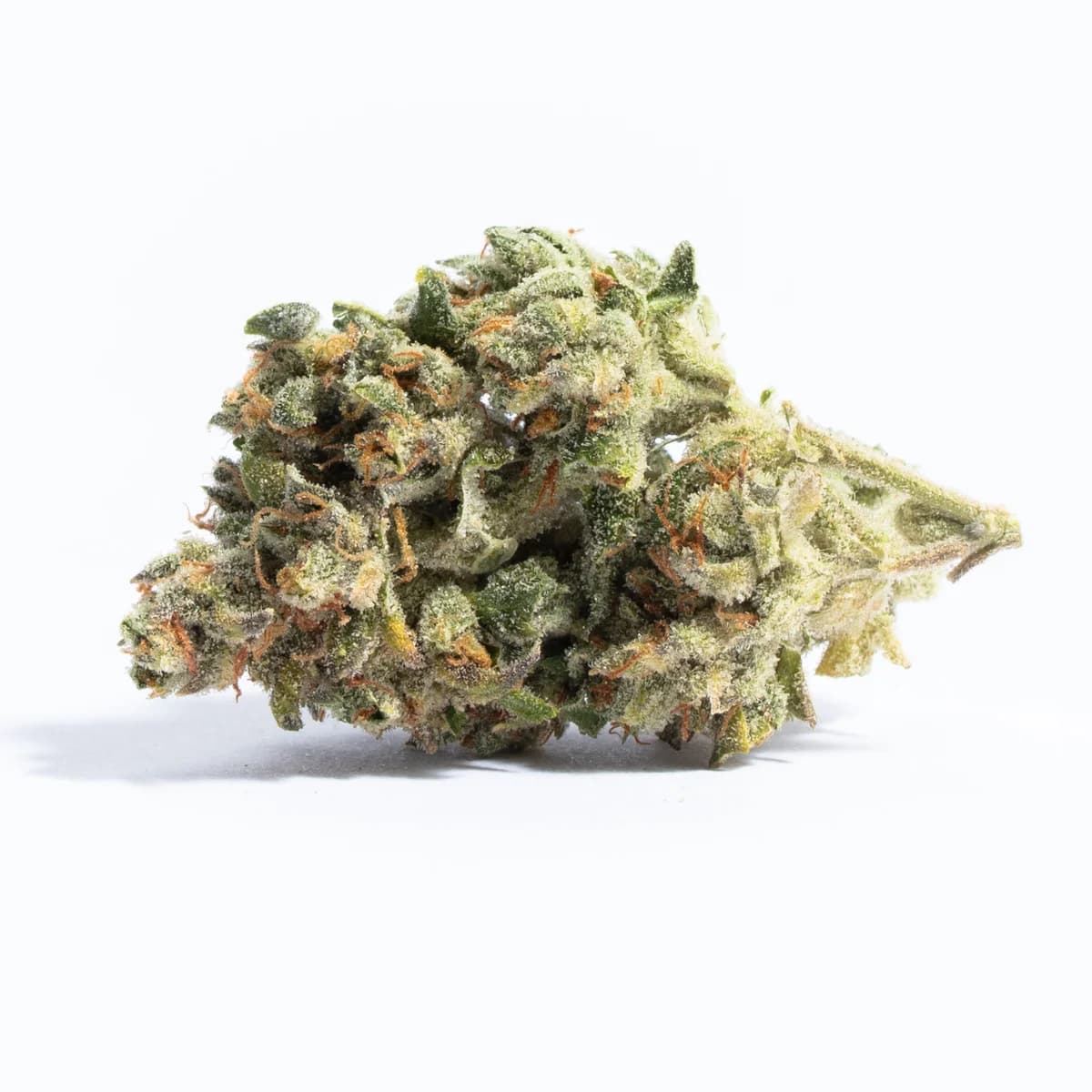
Percentages are catalog reference values, not sample lab results. “Not reported” means the source did not supply a value. Reported effects are subjective tags, not predictions.
Big Bud is presented by Leafly as a indica catalog entry. The source account says: Big Bud's reported background combines Afghani, Northern Lights and Skunk #1. Leafly traces its history from the United States to the Netherlands; the three names are recorded as ancestry without inventing a crossing order. This context is retained as an attributed account, not as genetic authentication of every sample carrying the name. Reader-reported flavor descriptors include Earthy, Spicy/Herbal, Woody. The catalog lists Myrcene, Ocimene, Pinene as terpene labels. Those fields describe different evidence layers and do not establish a fixed chemical profile, medical effect or response for an individual sample.
Black Domina is presented by Leafly as a indica catalog entry. The source account says: Four reported contributors are modeled as ancestry; intermediate crosses and generations are not inferred. This context is retained as an attributed account, not as genetic authentication of every sample carrying the name. Reader-reported flavor descriptors include Pepper, Spicy/Herbal, Woody. The catalog lists Caryophyllene, Myrcene, Pinene as terpene labels. Those fields describe different evidence layers and do not establish a fixed chemical profile, medical effect or response for an individual sample.
Harlequin is presented by Leafly as a sativa catalog entry. The source account says: Colombian Gold, Nepali indica, Thai and Swiss landrace ancestry are reported. Immediate parents and crossing order are not specified. This context is retained as an attributed account, not as genetic authentication of every sample carrying the name. Reader-reported flavor descriptors include Earthy, Spicy/Herbal, Woody. The catalog lists Caryophyllene, Myrcene, Pinene as terpene labels. Those fields describe different evidence layers and do not establish a fixed chemical profile, medical effect or response for an individual sample.
Haze is a broad sativa-associated family that Leafly places in Santa Cruz in the 1960s. Its account names Colombian, Mexican, Thai and South Indian ancestry without defining a complete sequence of crosses. The profile's spicy or herbal, tobacco and earthy tags describe reader impressions. This family-level history is useful when exploring descendants, but the word Haze in another strain's name is not enough to prove a direct parent relationship or identical chemistry.
Hindu Kush is presented by Leafly as a indica catalog entry. The source account says: Hindu Kush takes its name from the mountain region spanning parts of Afghanistan and Pakistan. This entry documents that regional background and the source's catalog traits without assigning an unsupported parent cross. This context is retained as an attributed account, not as genetic authentication of every sample carrying the name. Reader-reported flavor descriptors include Earthy, Spicy/Herbal, Woody. The catalog lists Caryophyllene, Limonene, Pinene as terpene labels. Those fields describe different evidence layers and do not establish a fixed chemical profile, medical effect or response for an individual sample.
Mazar I Sharif is presented by Leafly as a indica catalog entry. The source account says: Regional Afghan identity; no specific parent cross is documented. Narrative speculation about CBD is not imported as measured chemistry. This context is retained as an attributed account, not as genetic authentication of every sample carrying the name. Reader-reported flavor descriptors include Earthy, Floral, Spicy/Herbal. The catalog lists Caryophyllene, Linalool, Myrcene as terpene labels. Those fields describe different evidence layers and do not establish a fixed chemical profile, medical effect or response for an individual sample.
Red Congolese is presented by Leafly as a sativa catalog entry. The source account says: Leafly notes differing origin accounts. Afghani and Mexican roots are retained only as disputed ancestry for a California version, not as universal parentage. This context is retained as an attributed account, not as genetic authentication of every sample carrying the name. Reader-reported flavor descriptors include Chestnut, Sage, Spicy/Herbal. The catalog lists Caryophyllene, Myrcene, Pinene as terpene labels. Those fields describe different evidence layers and do not establish a fixed chemical profile, medical effect or response for an individual sample.
Skunk Haze is presented by Leafly as a hybrid catalog entry. The source account says: Broad Skunk heritage remains unresolved rather than automatically identifying Skunk 1. The CBD alias does not justify inventing an unreported CBD value. This context is retained as an attributed account, not as genetic authentication of every sample carrying the name. Reader-reported flavor descriptors include Earthy, Skunk, Spicy/Herbal. The catalog lists Caryophyllene, Myrcene, Pinene as terpene labels. Those fields describe different evidence layers and do not establish a fixed chemical profile, medical effect or response for an individual sample.
Skywalker OG has conflicting pedigree statements within the Leafly profile. Its genetics panel lists OG Kush and Mazar x Blueberry, while the description names Mazar and Blueberry OG. The catalog preserves both accounts instead of choosing one without evidence. Earthy, pungent and spicy or herbal are reader-reported flavor descriptors, with caryophyllene, limonene and myrcene listed separately as catalog terpene labels. The conflicting names are an important part of the evidence record; neither version should be treated as a verified universal pedigree for every Skywalker OG sample.