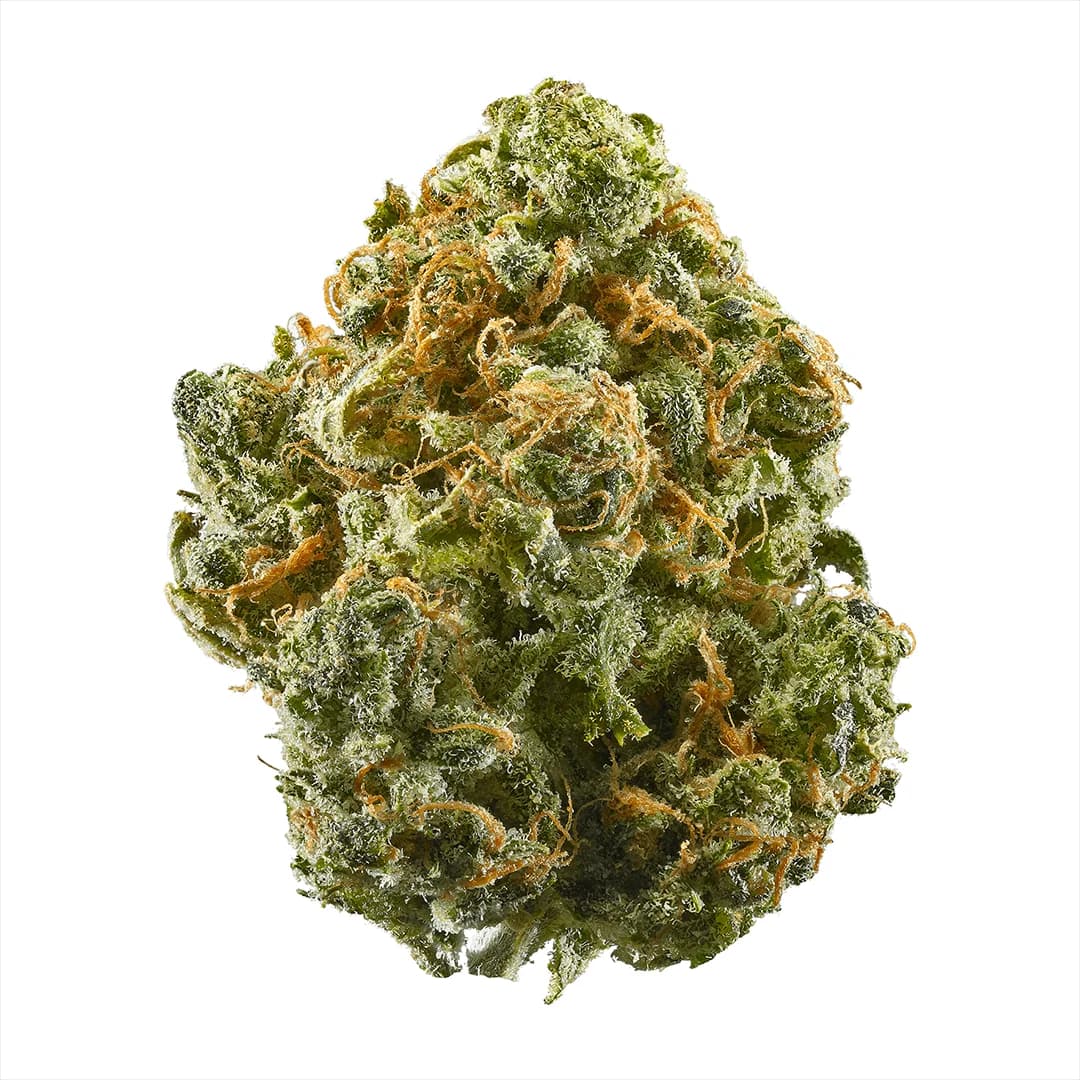
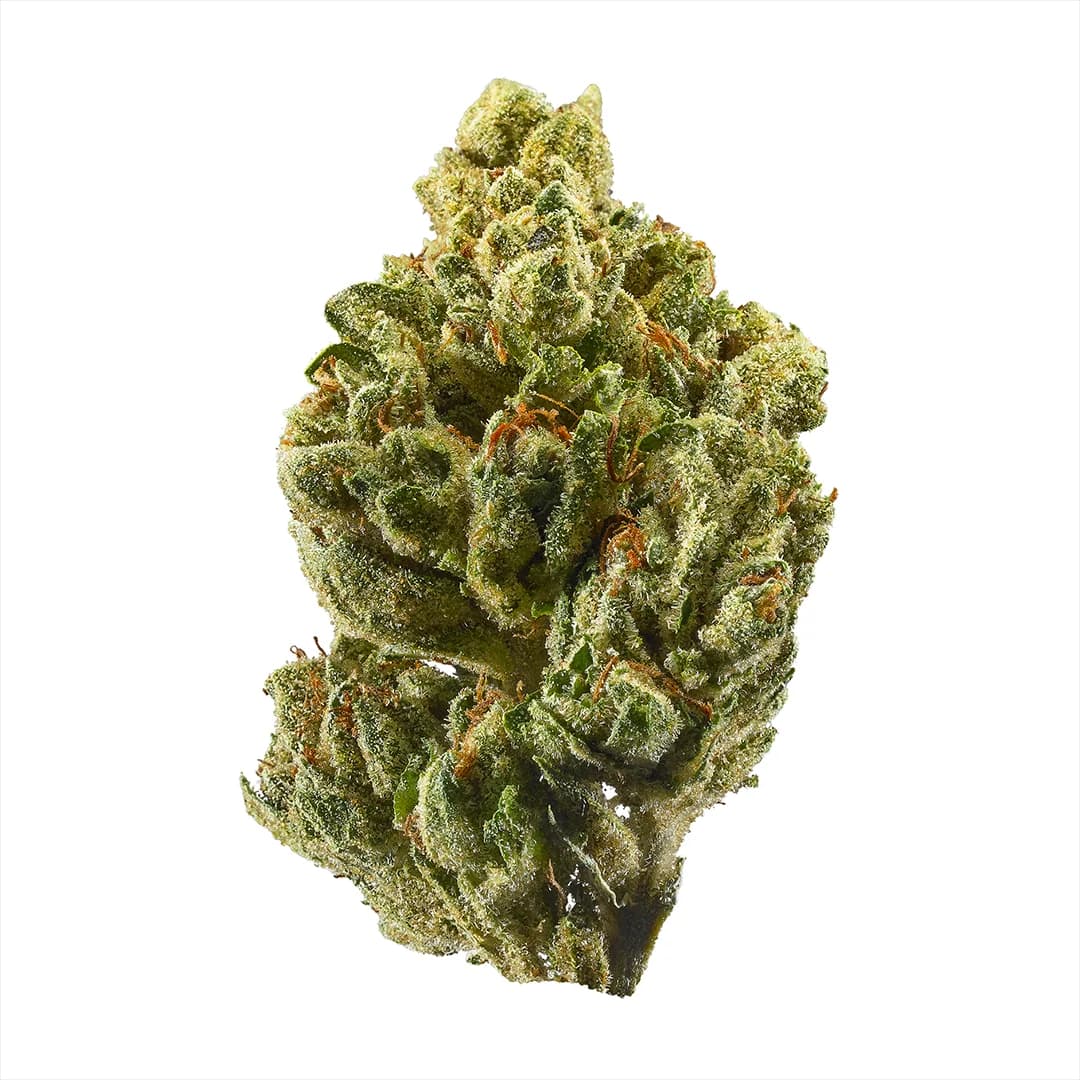
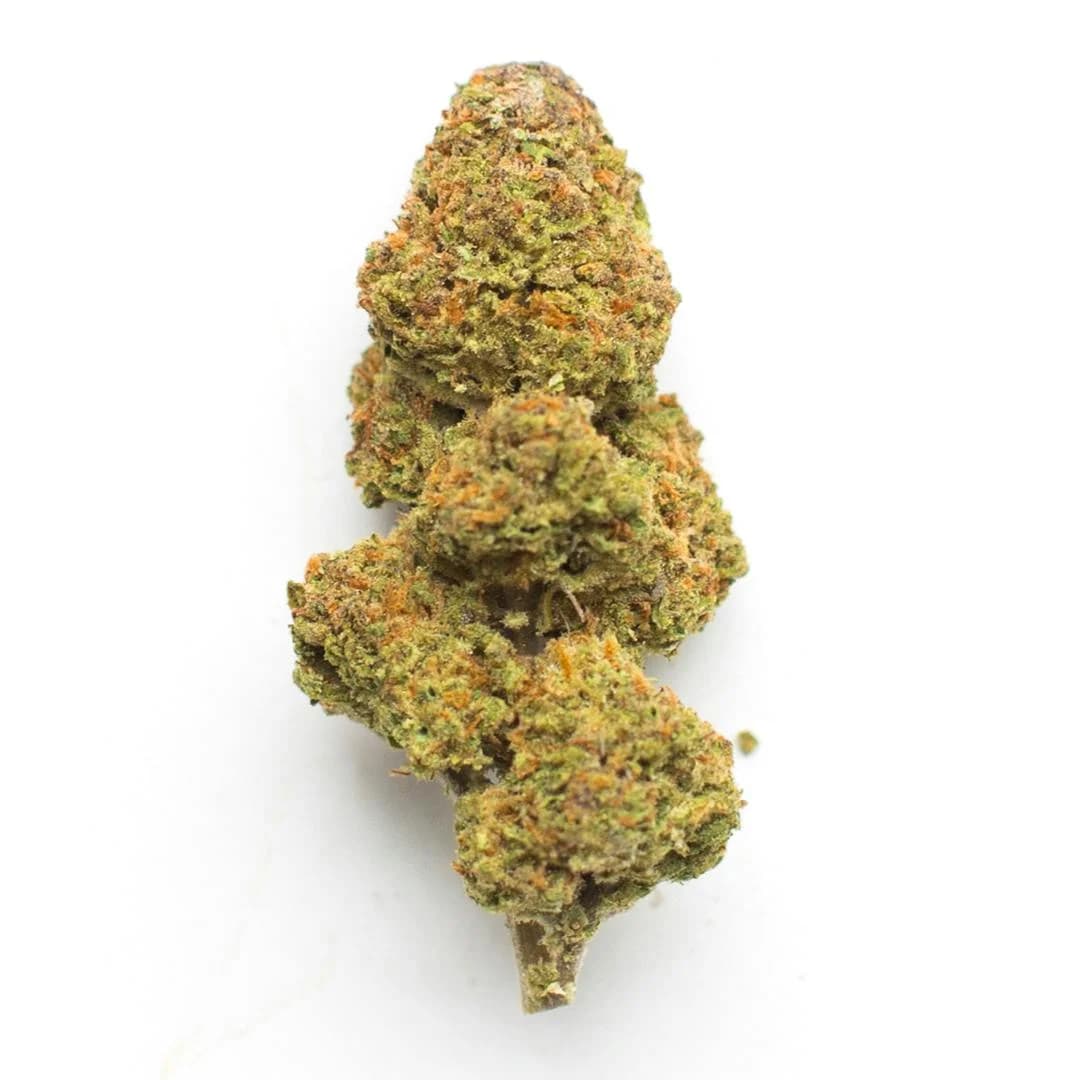
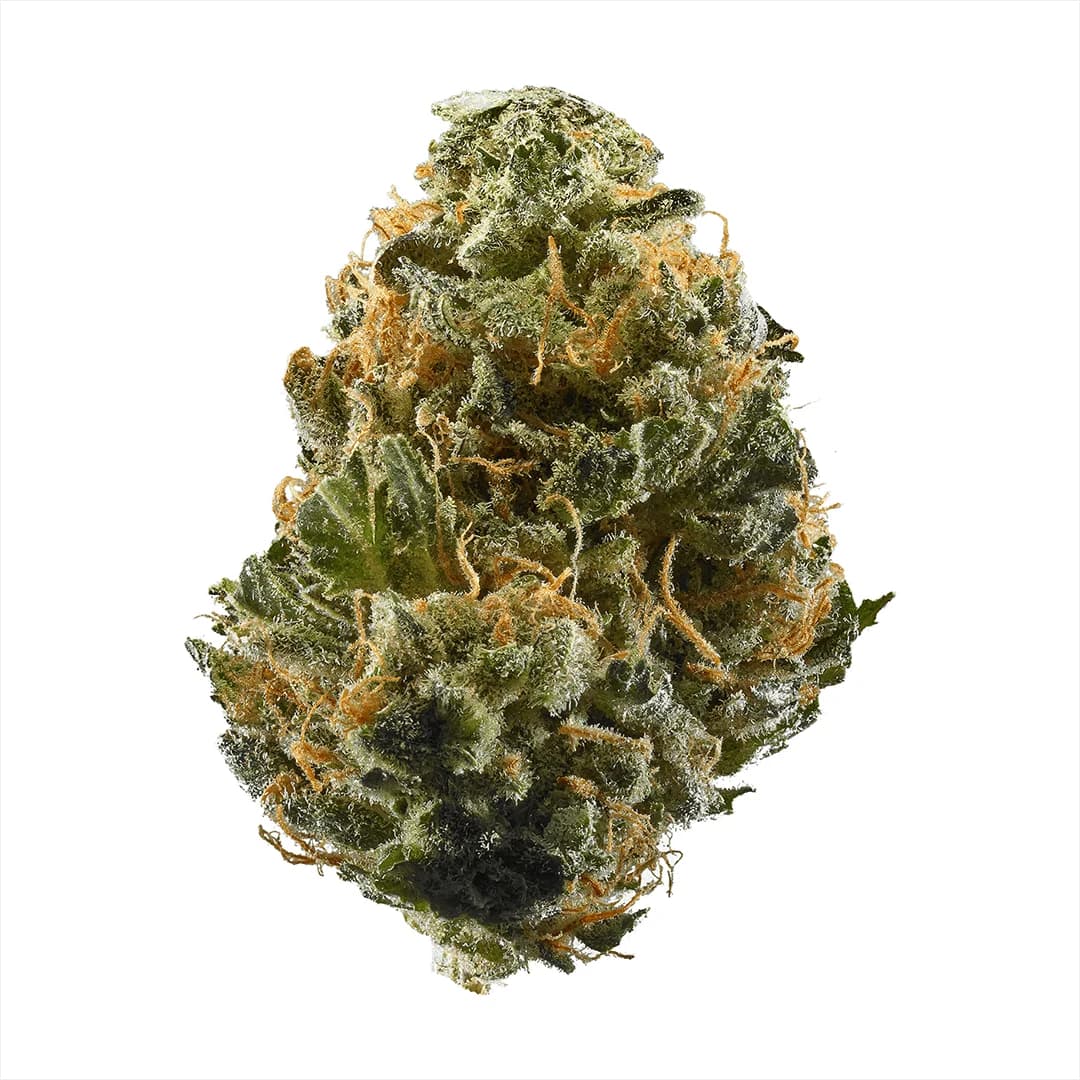
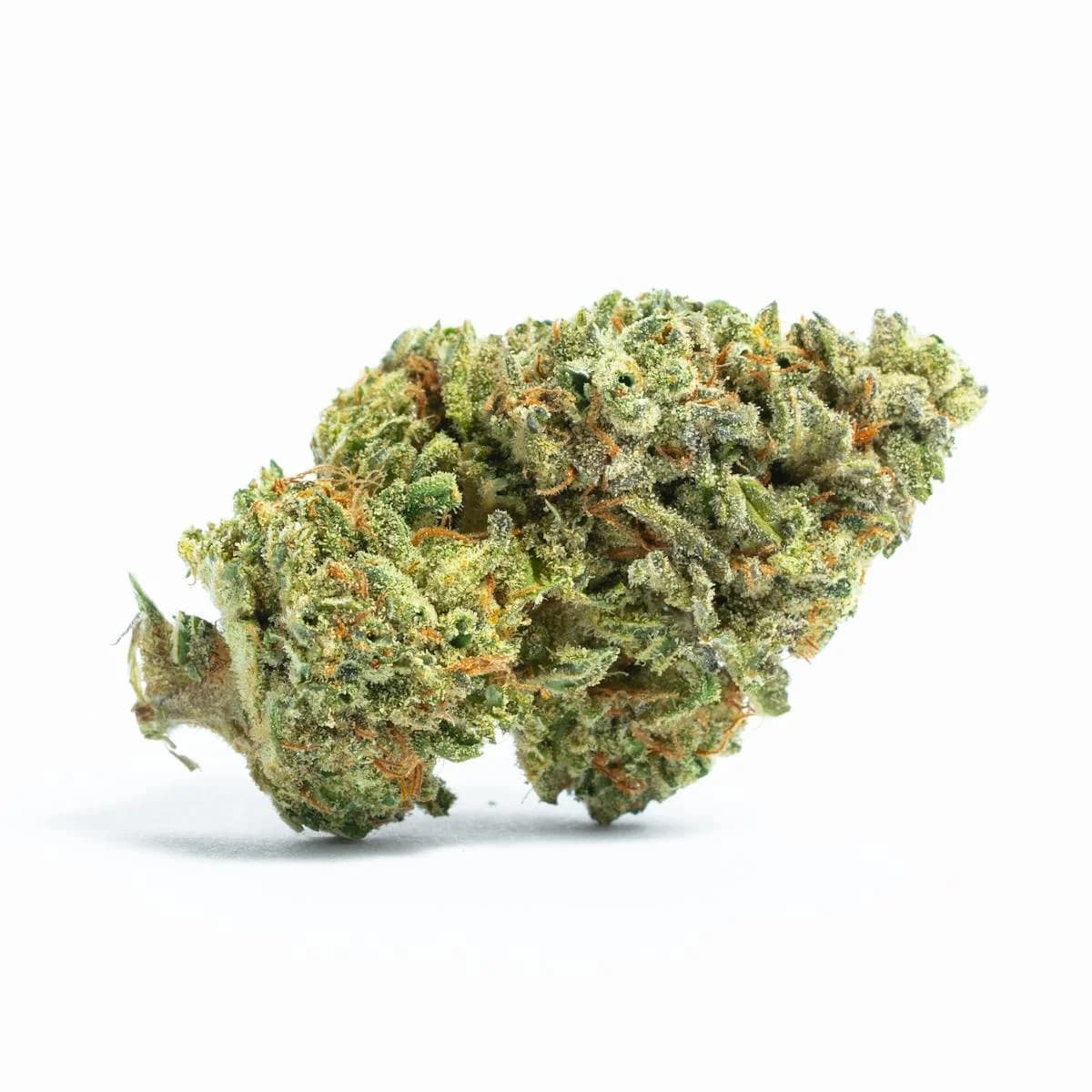
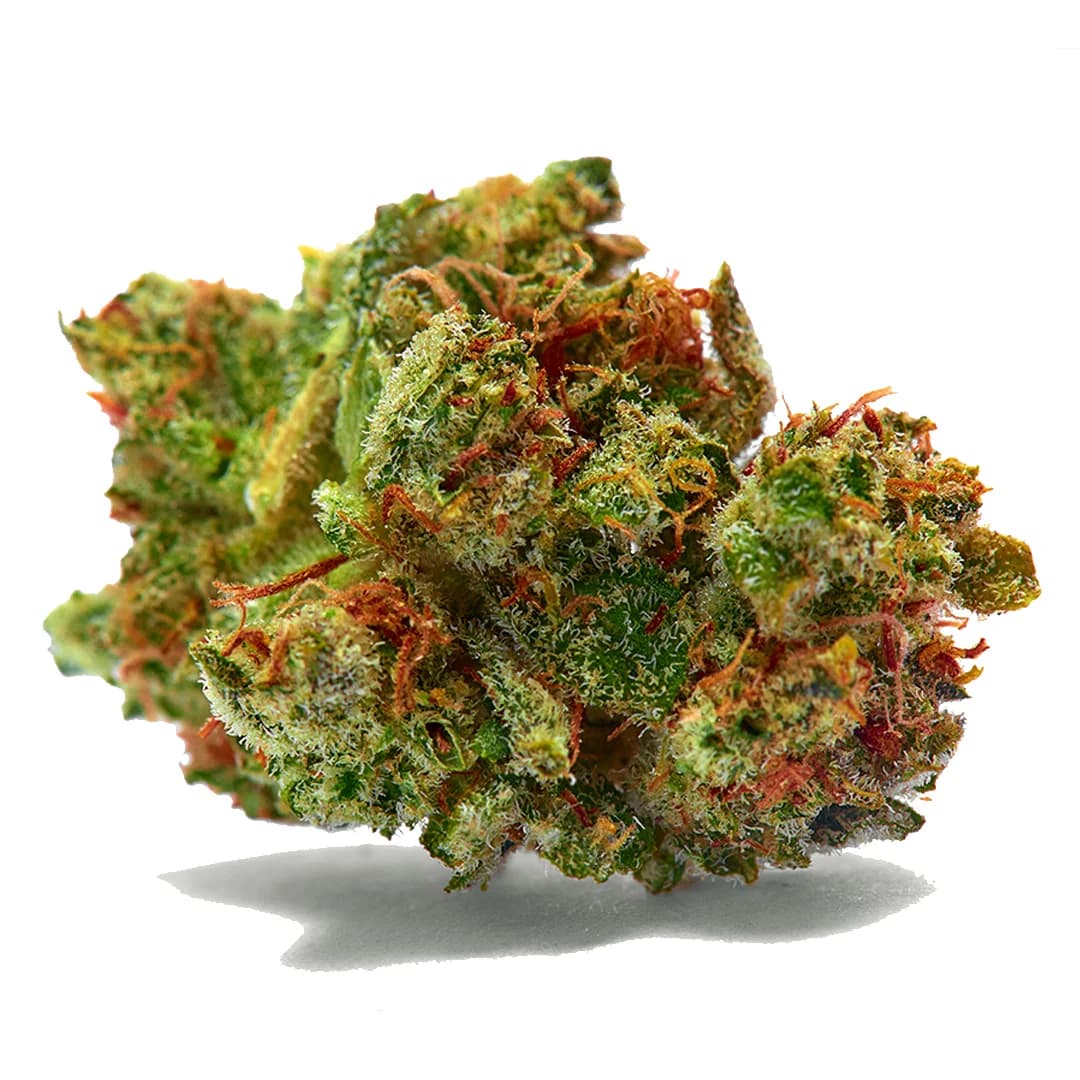
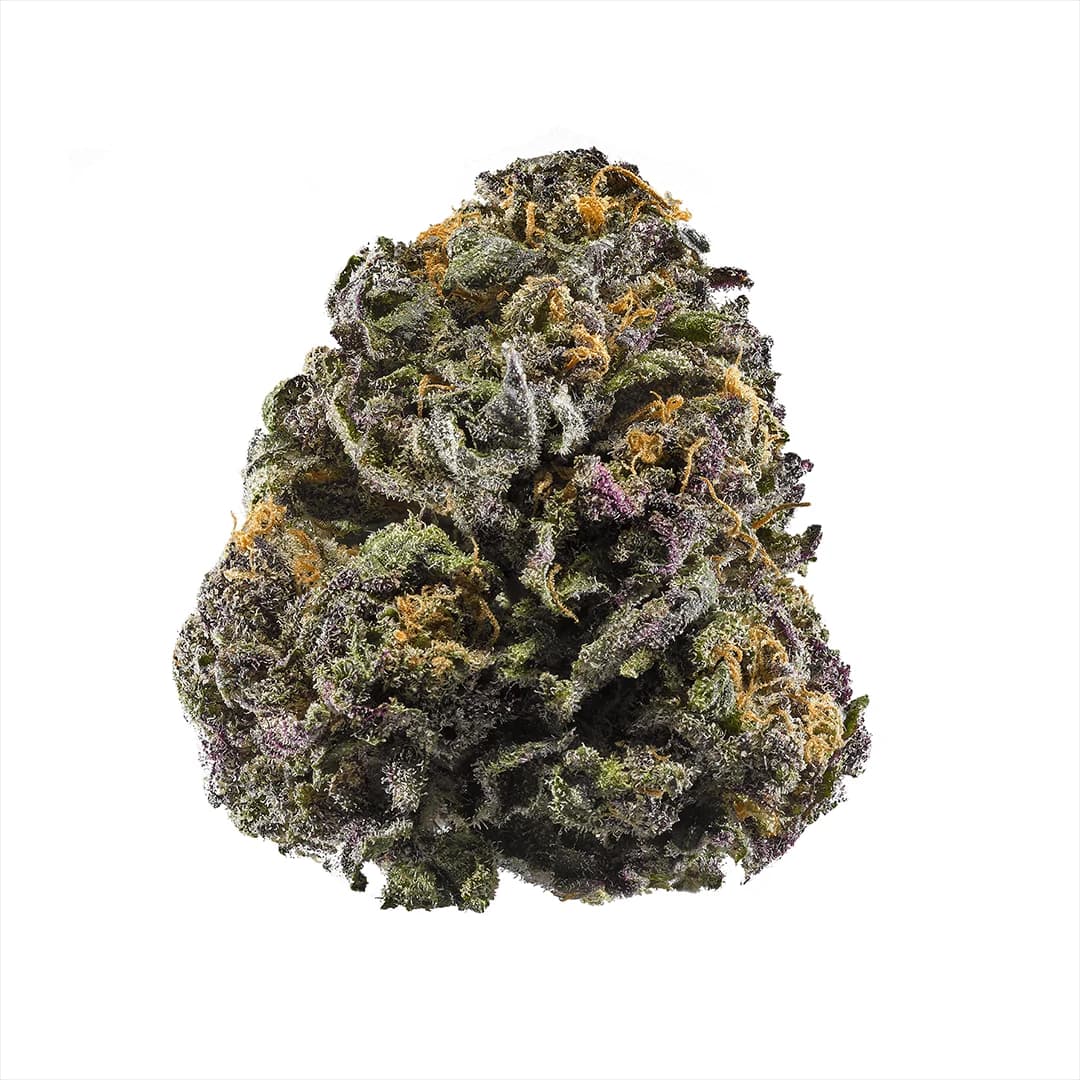
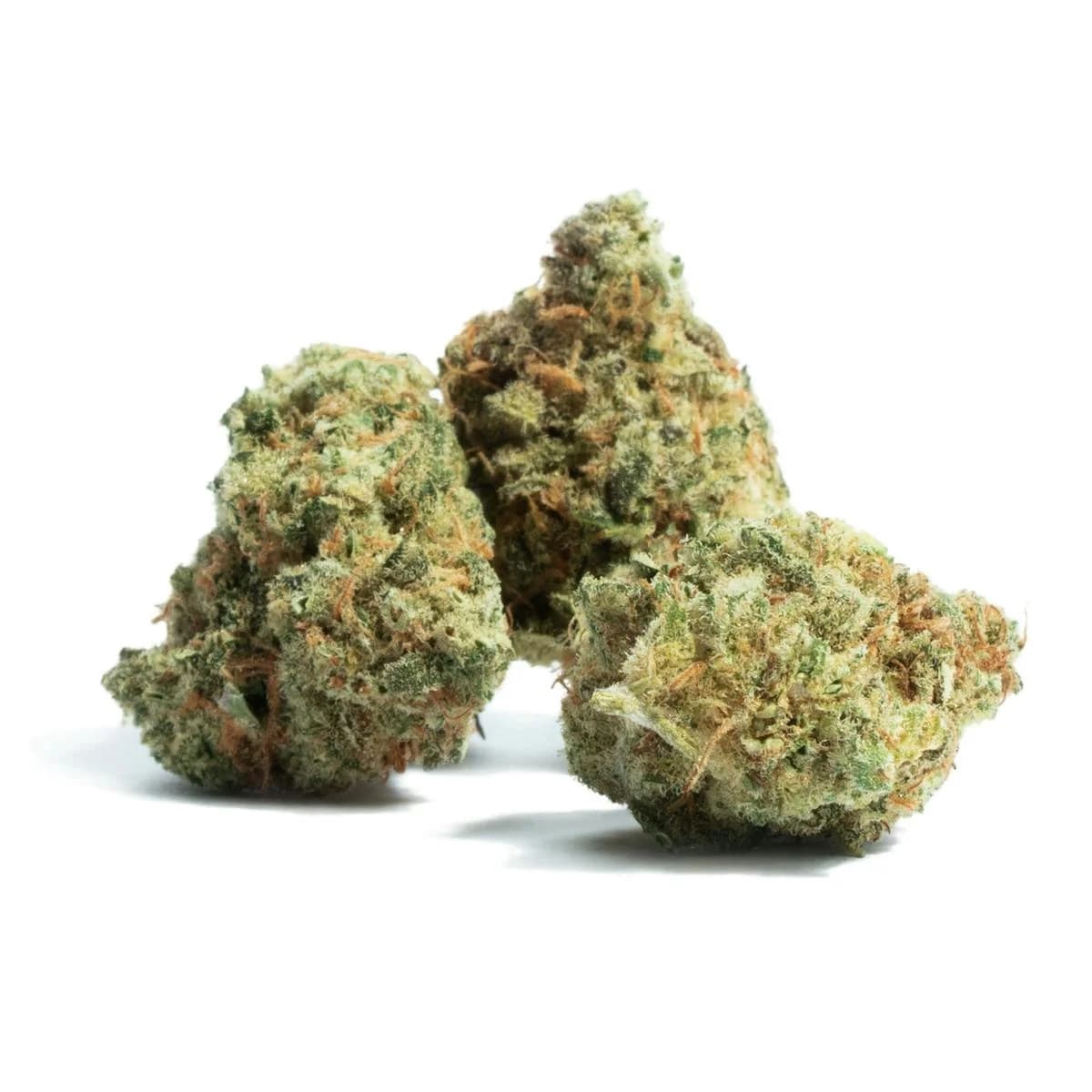
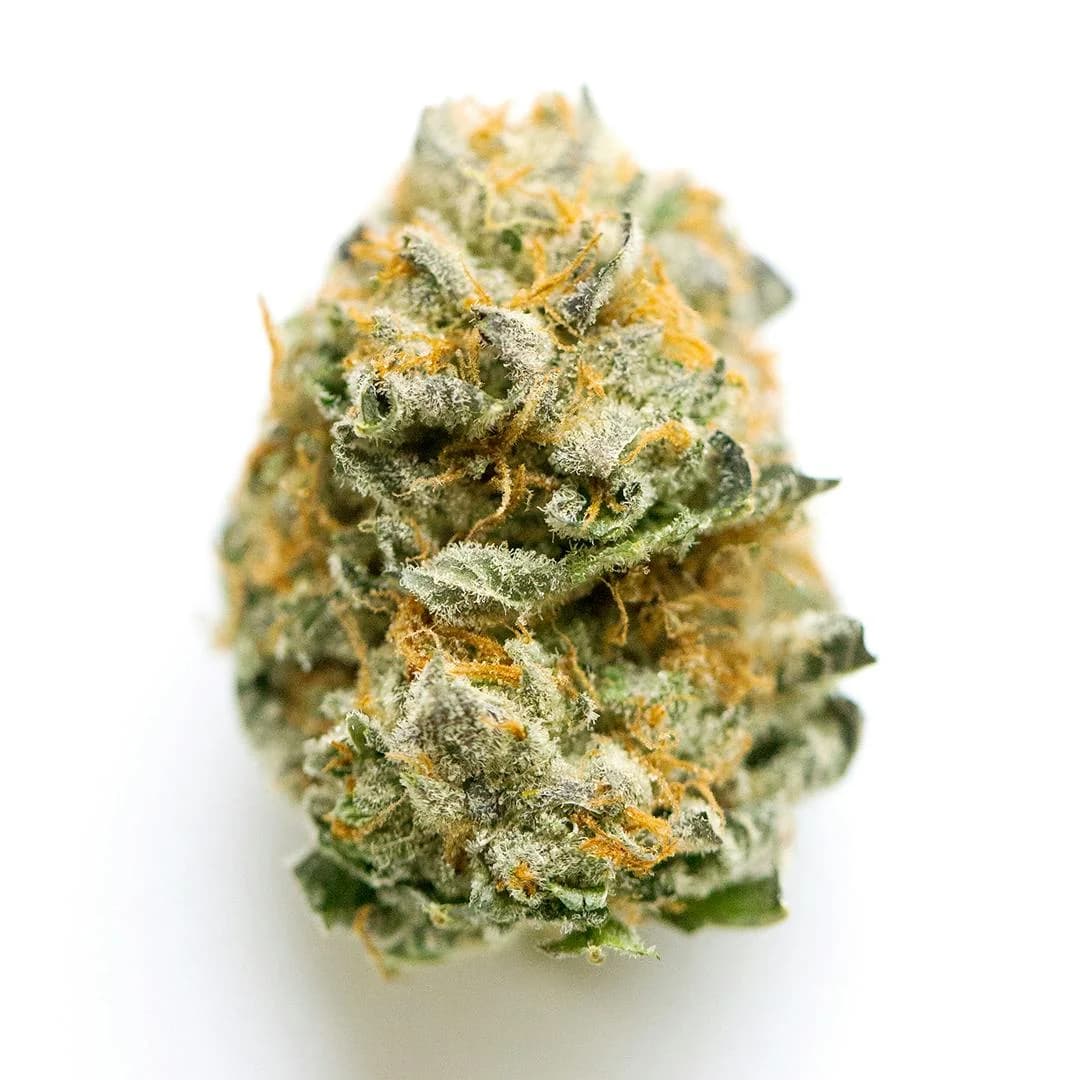
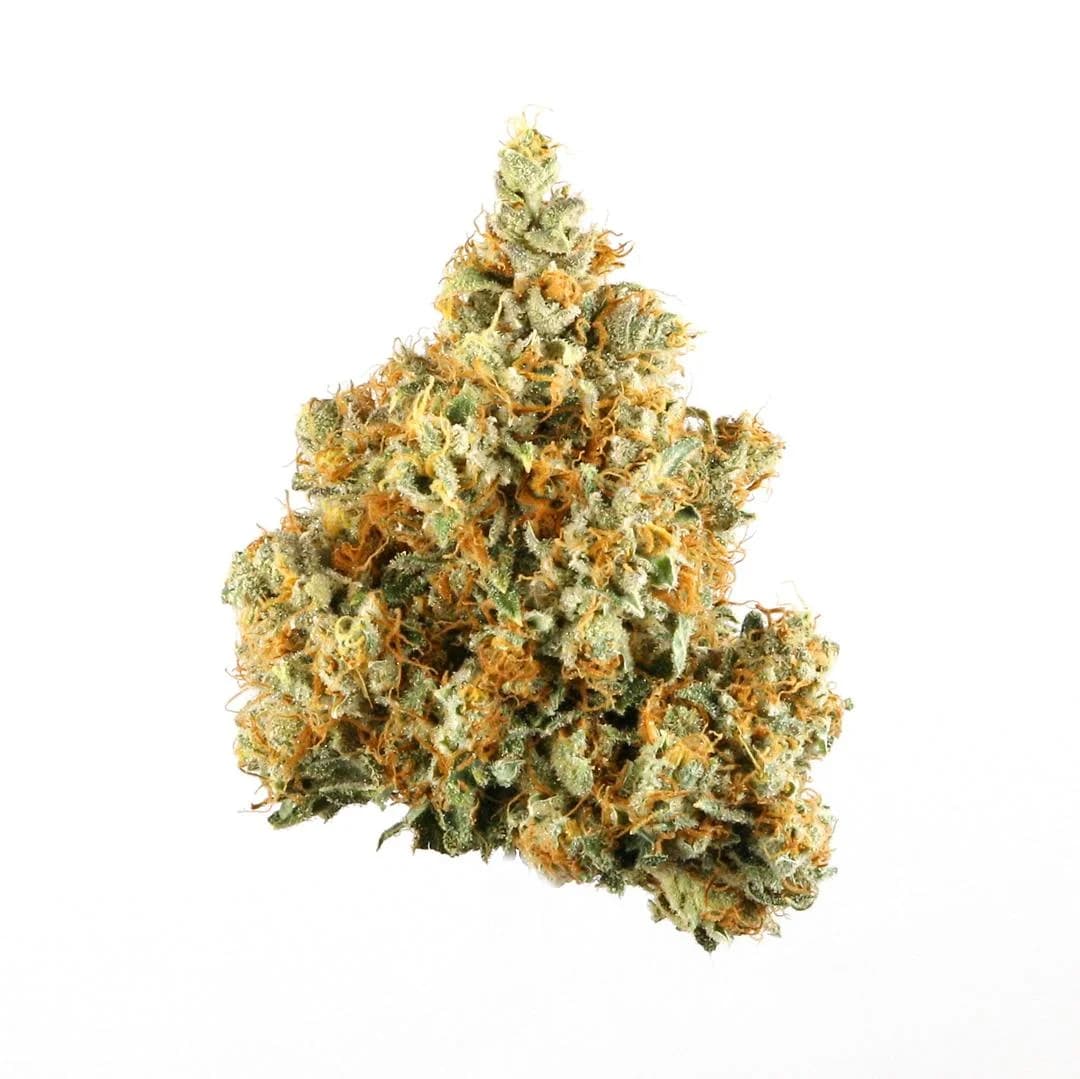
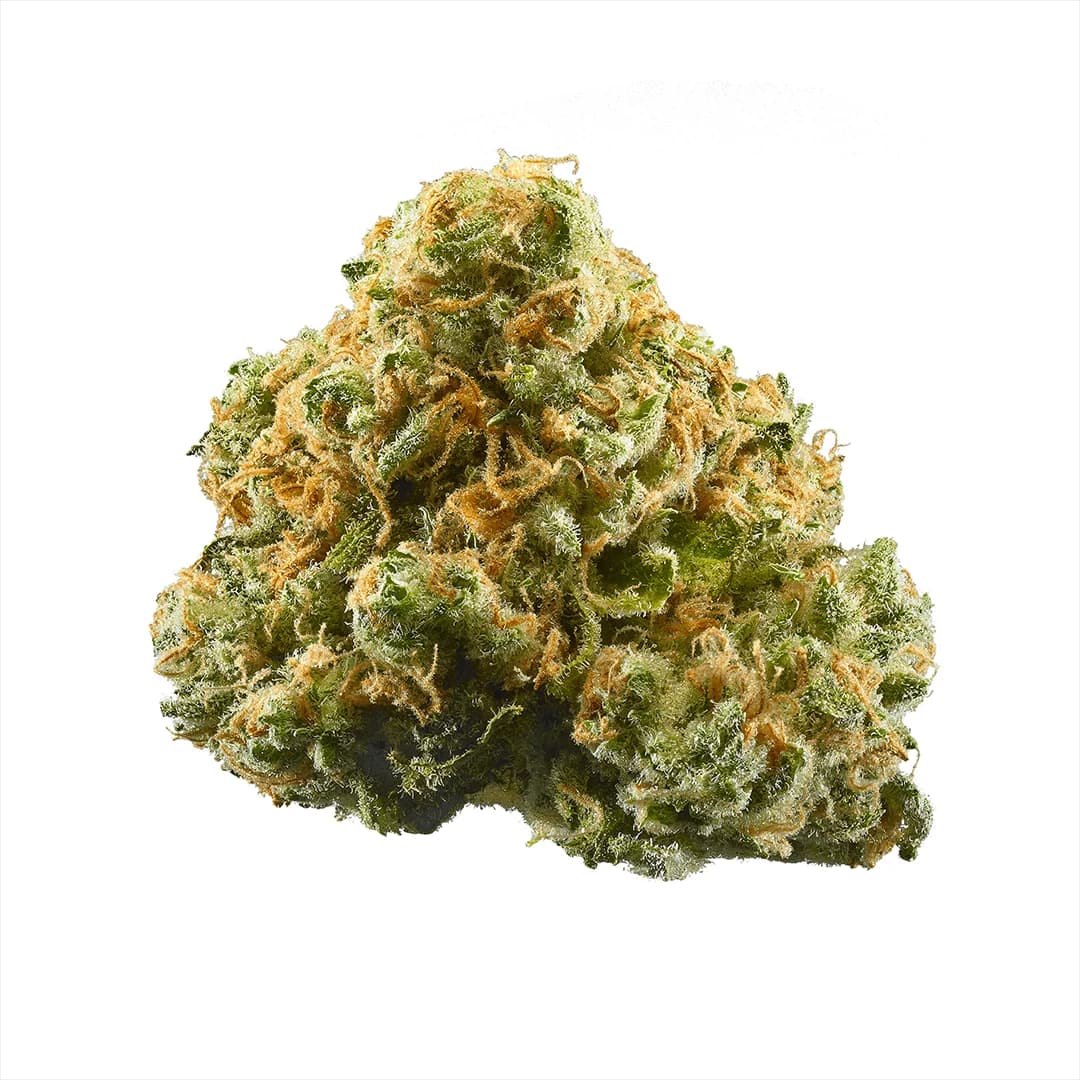
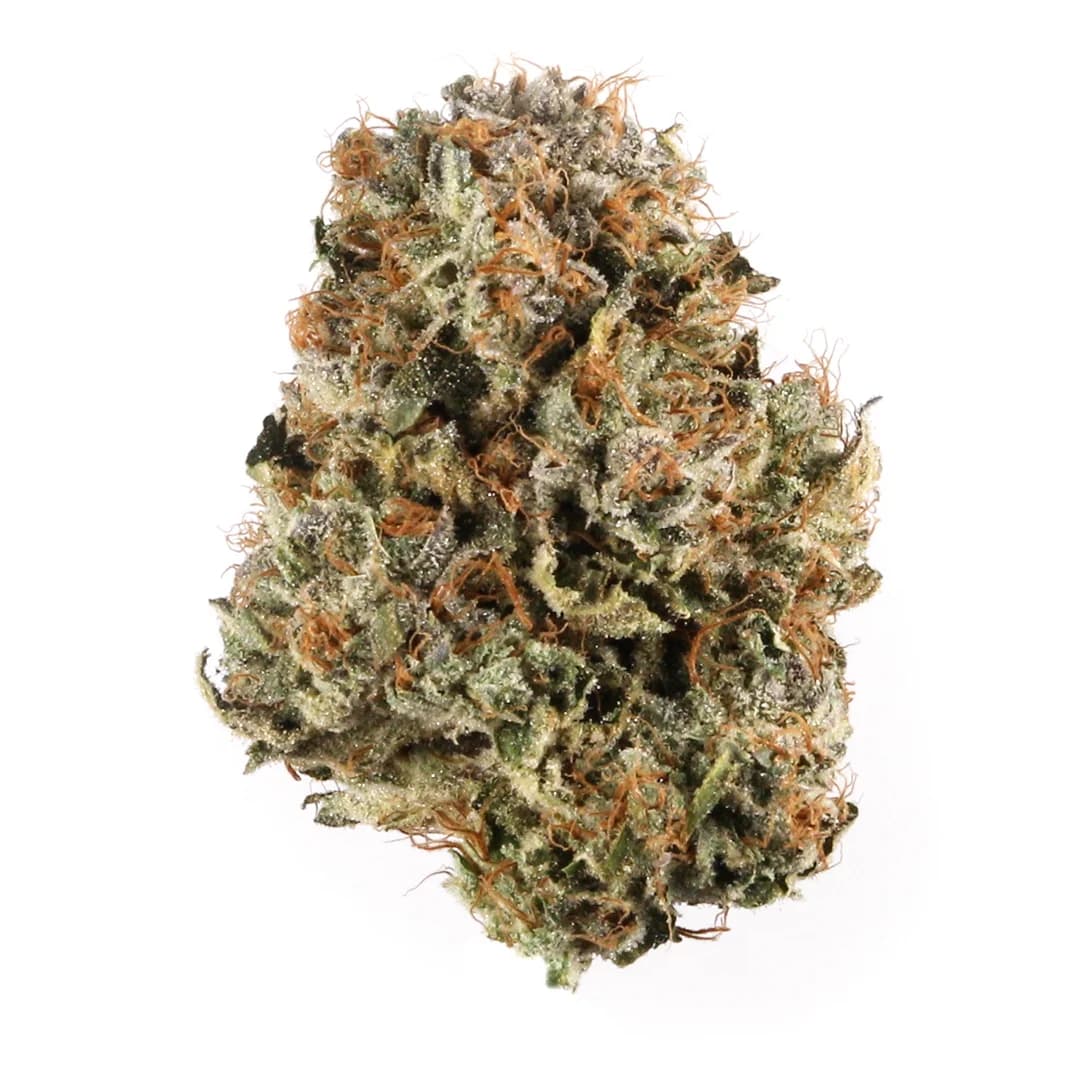
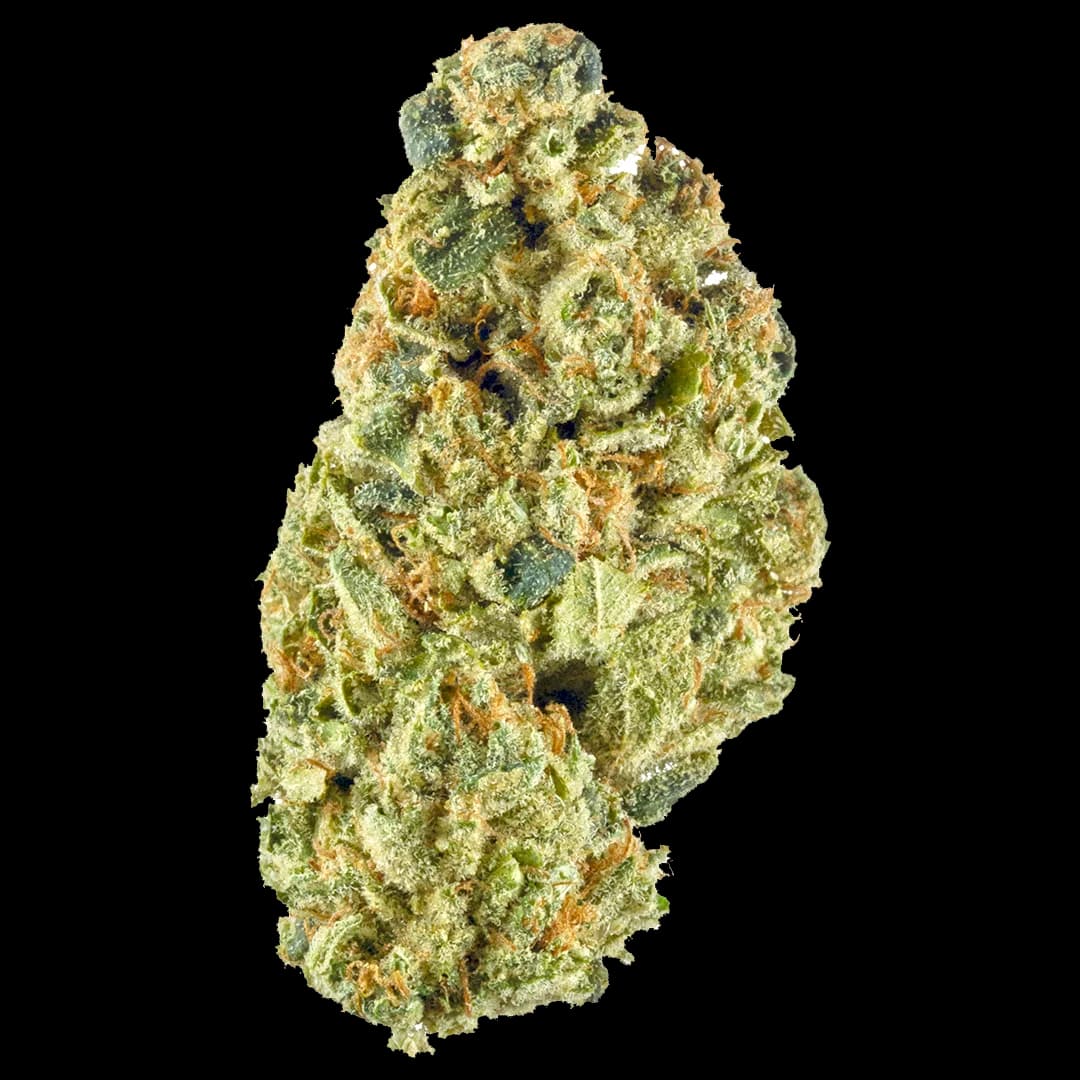
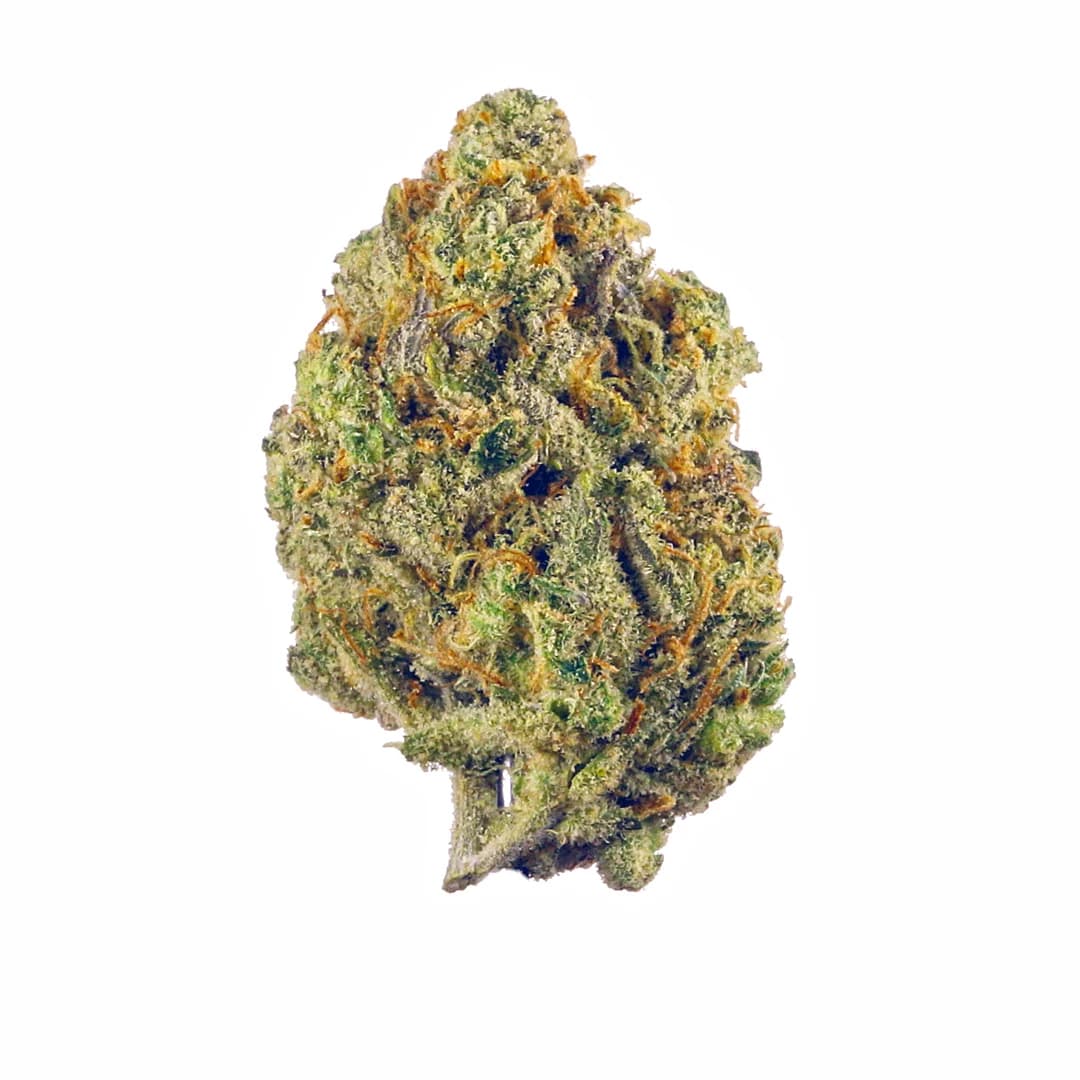
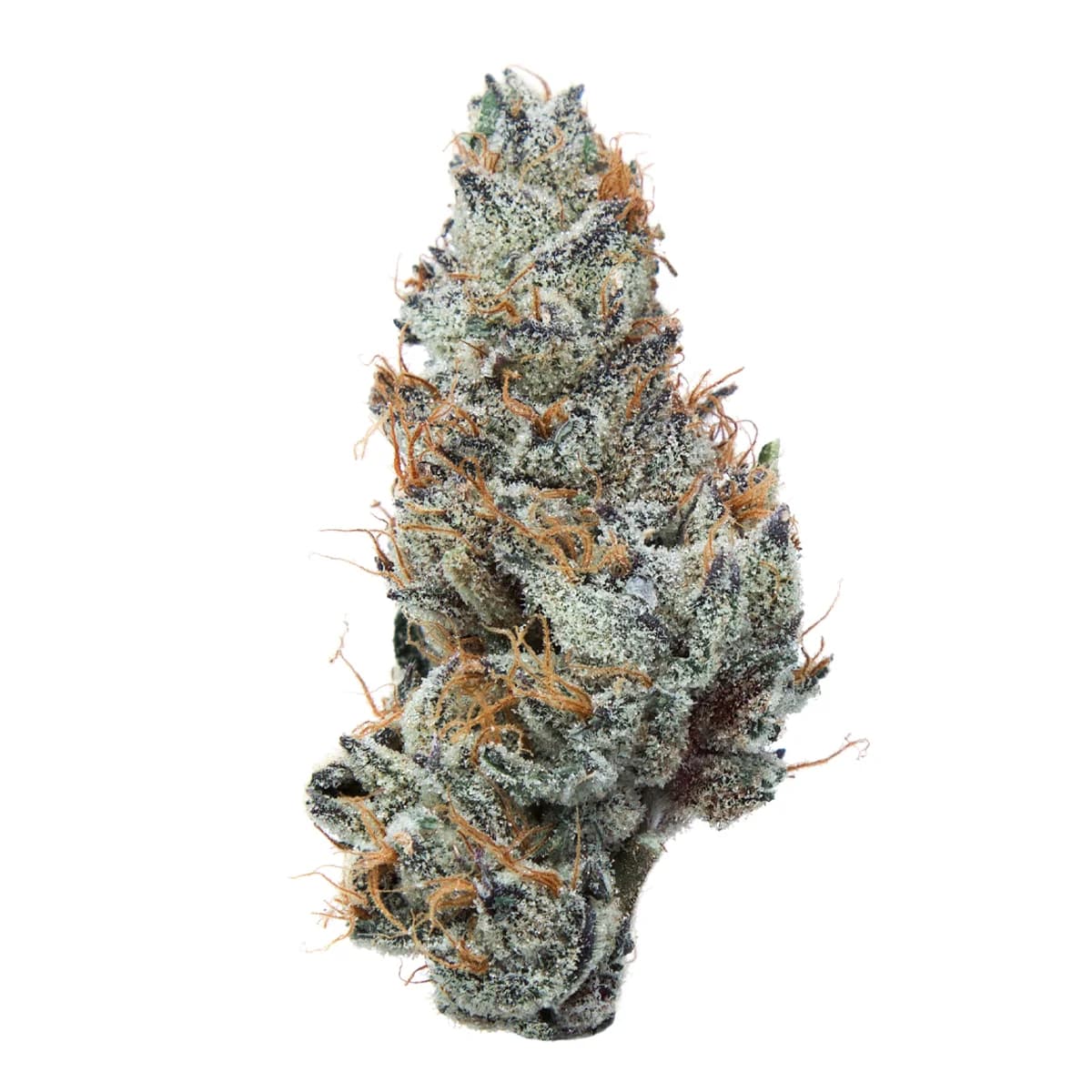
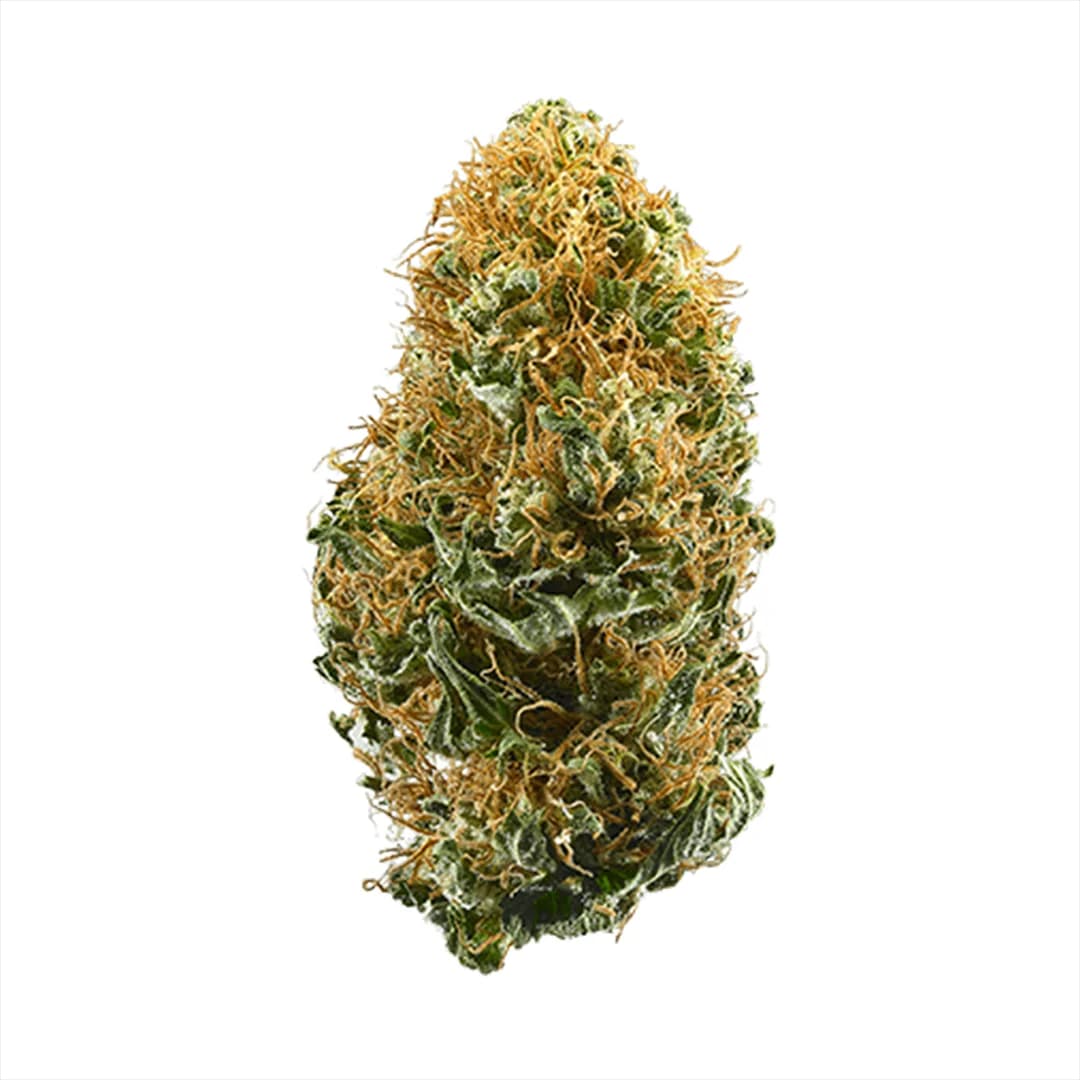
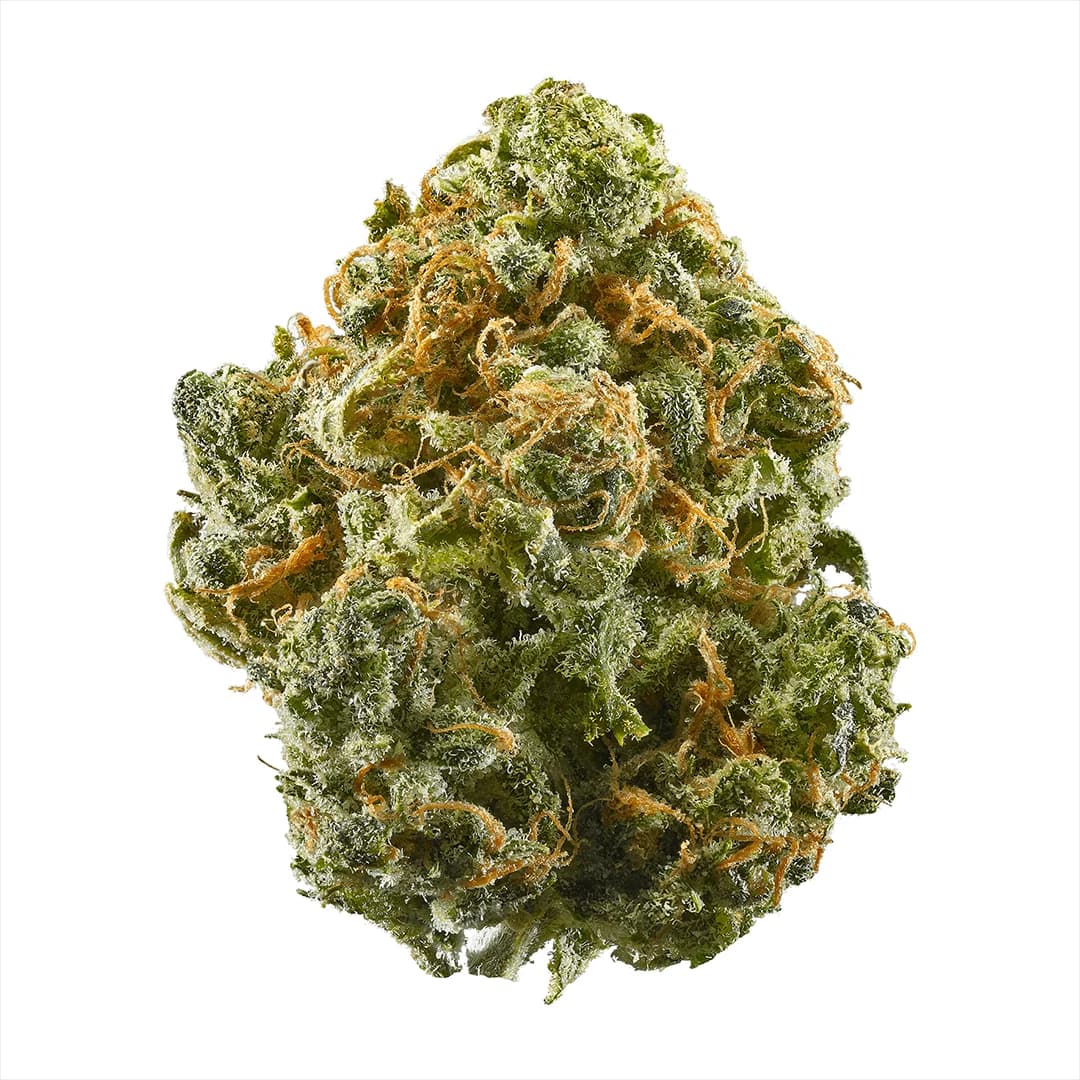
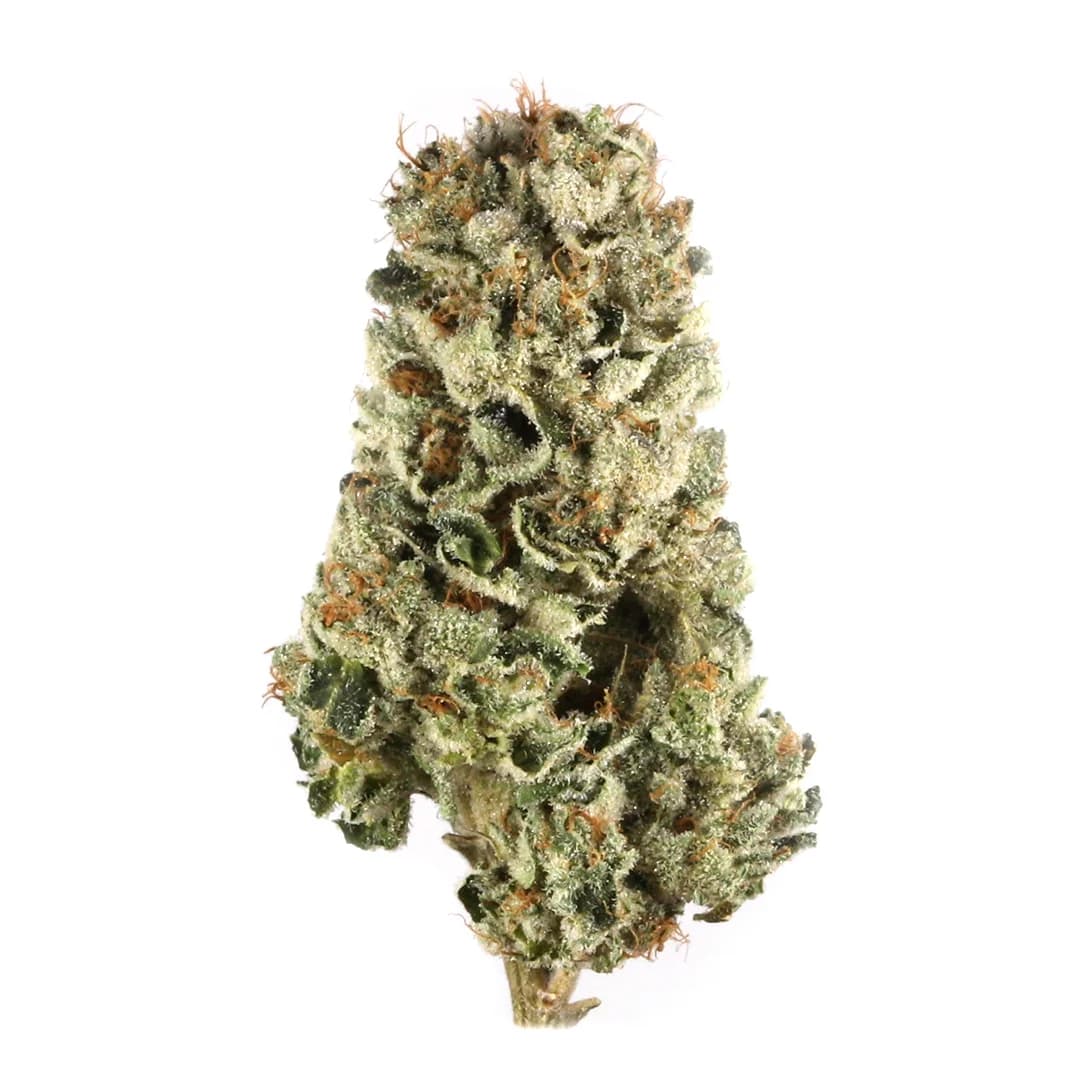
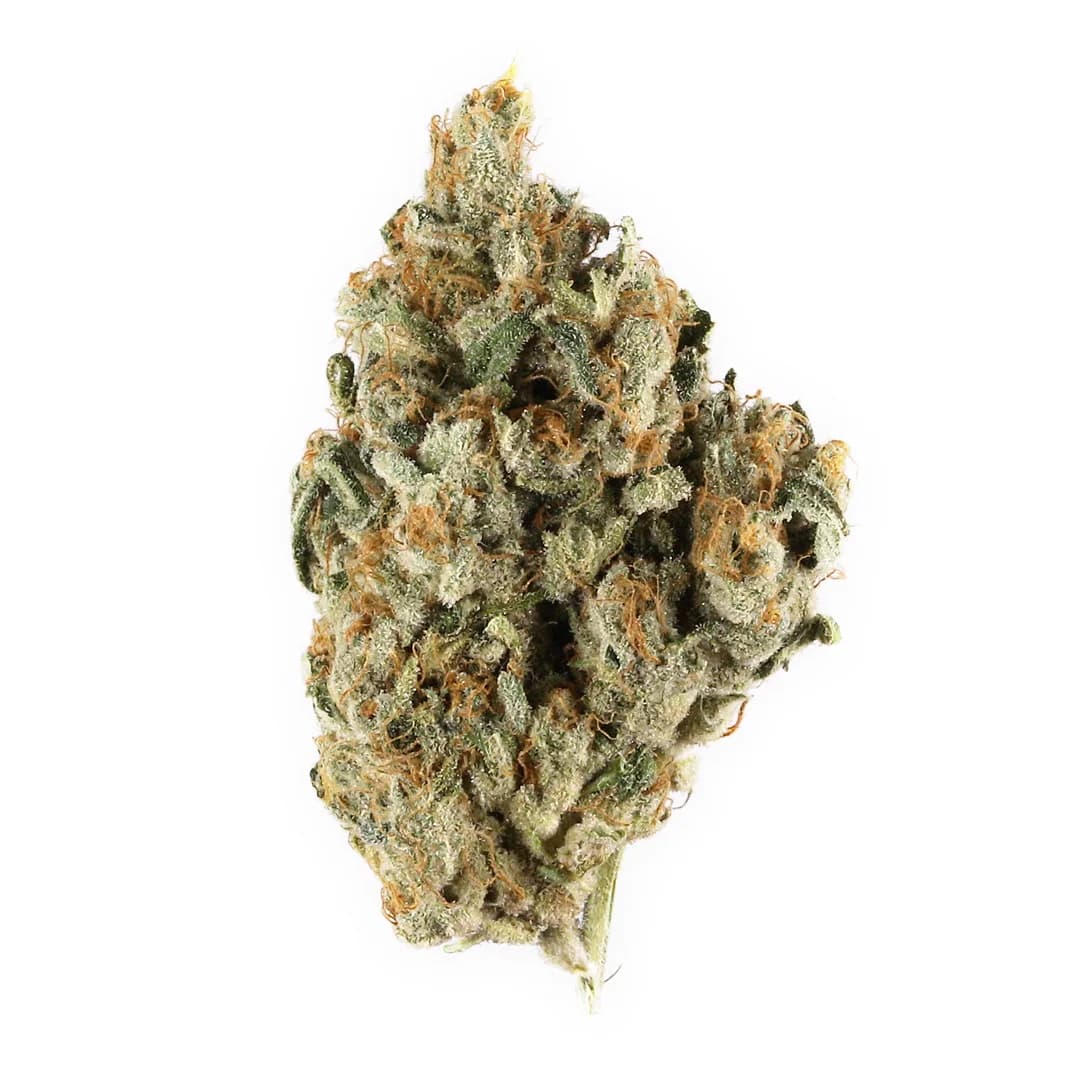
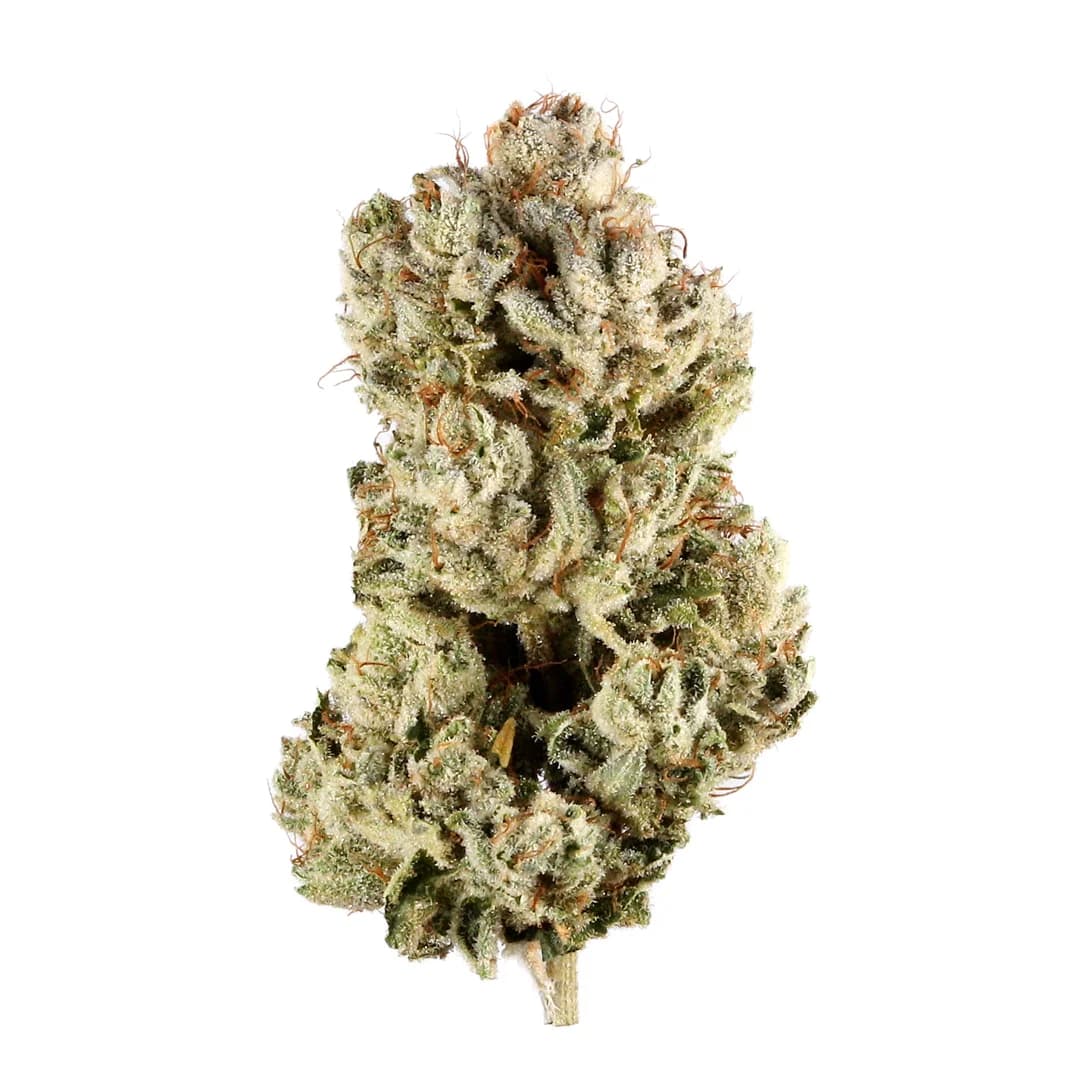
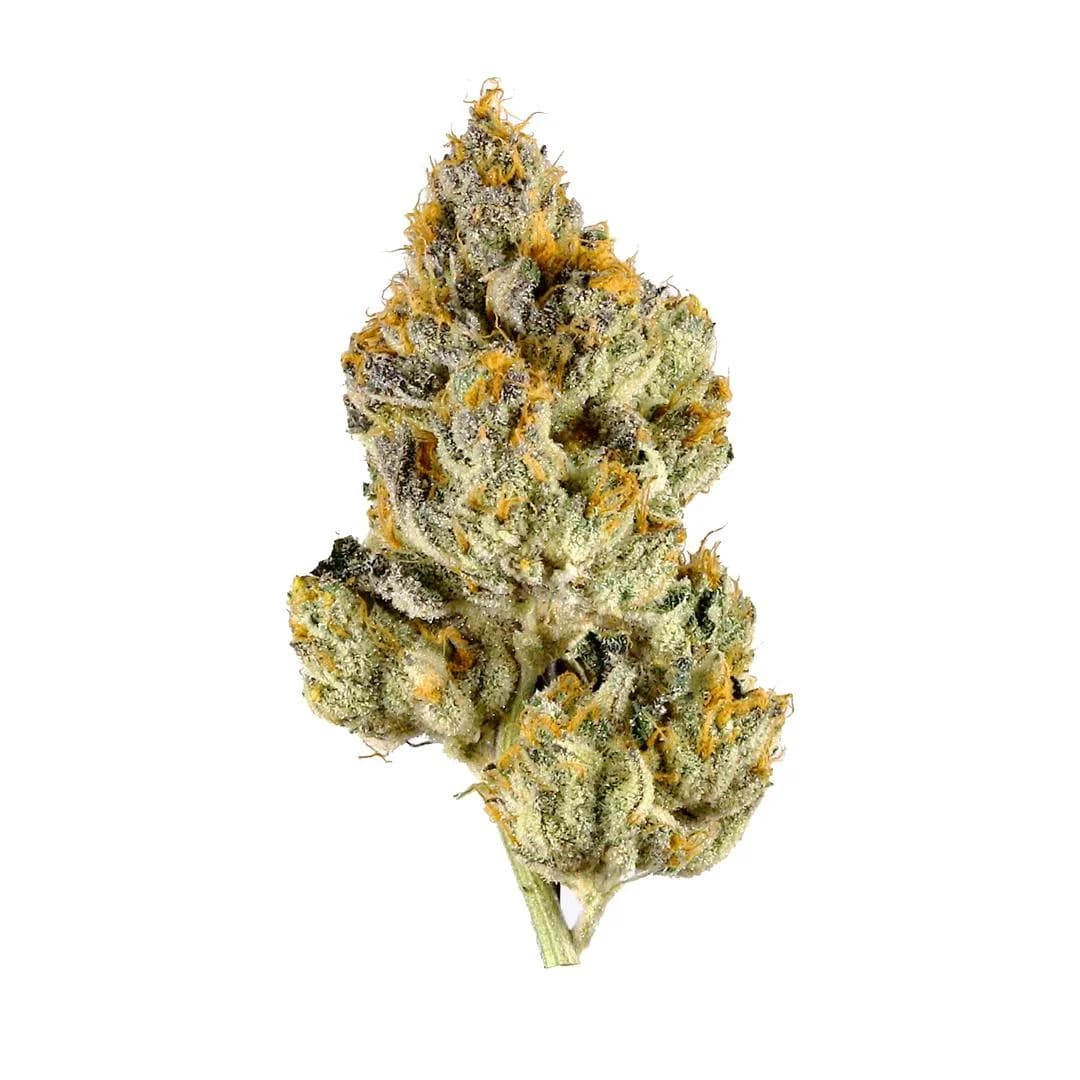
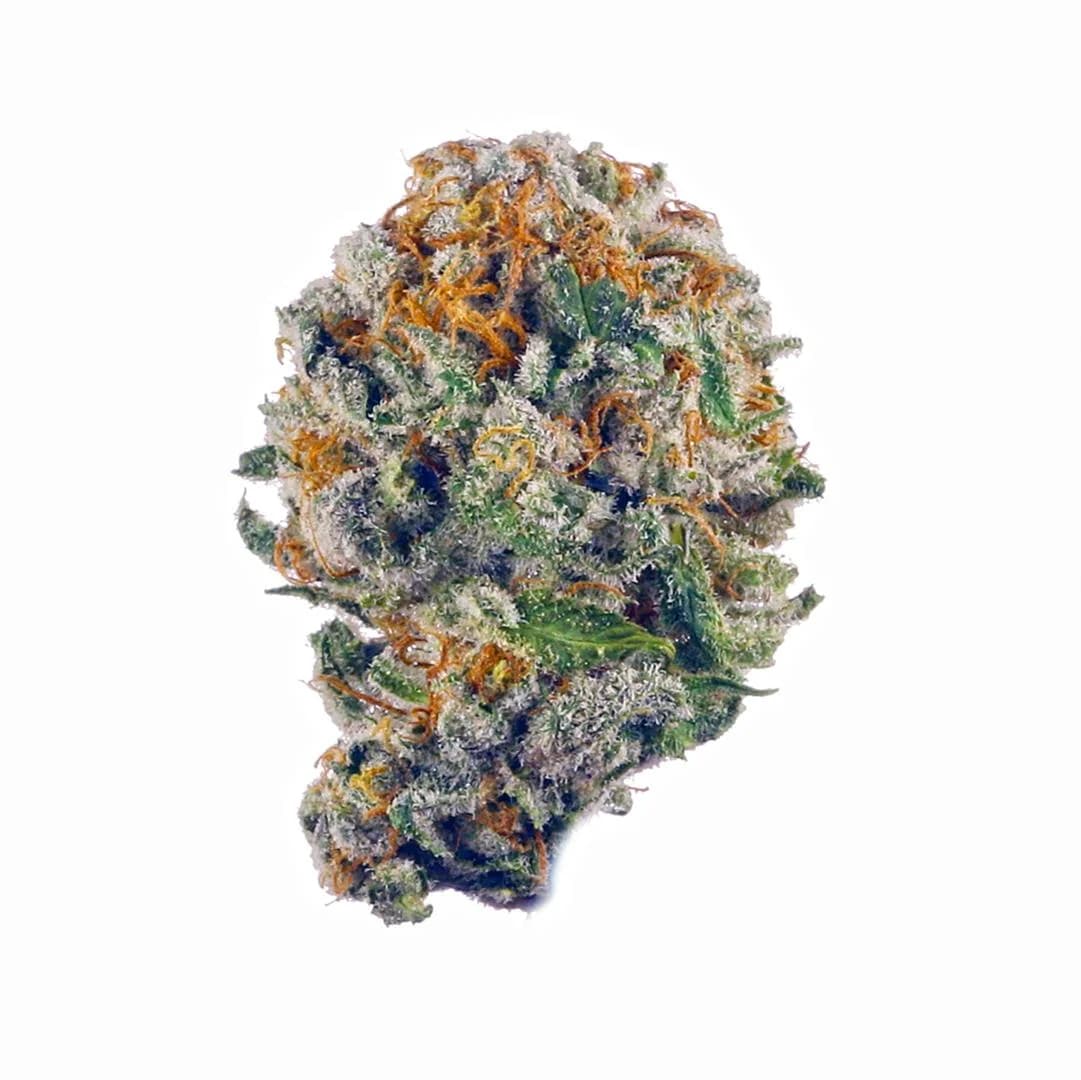
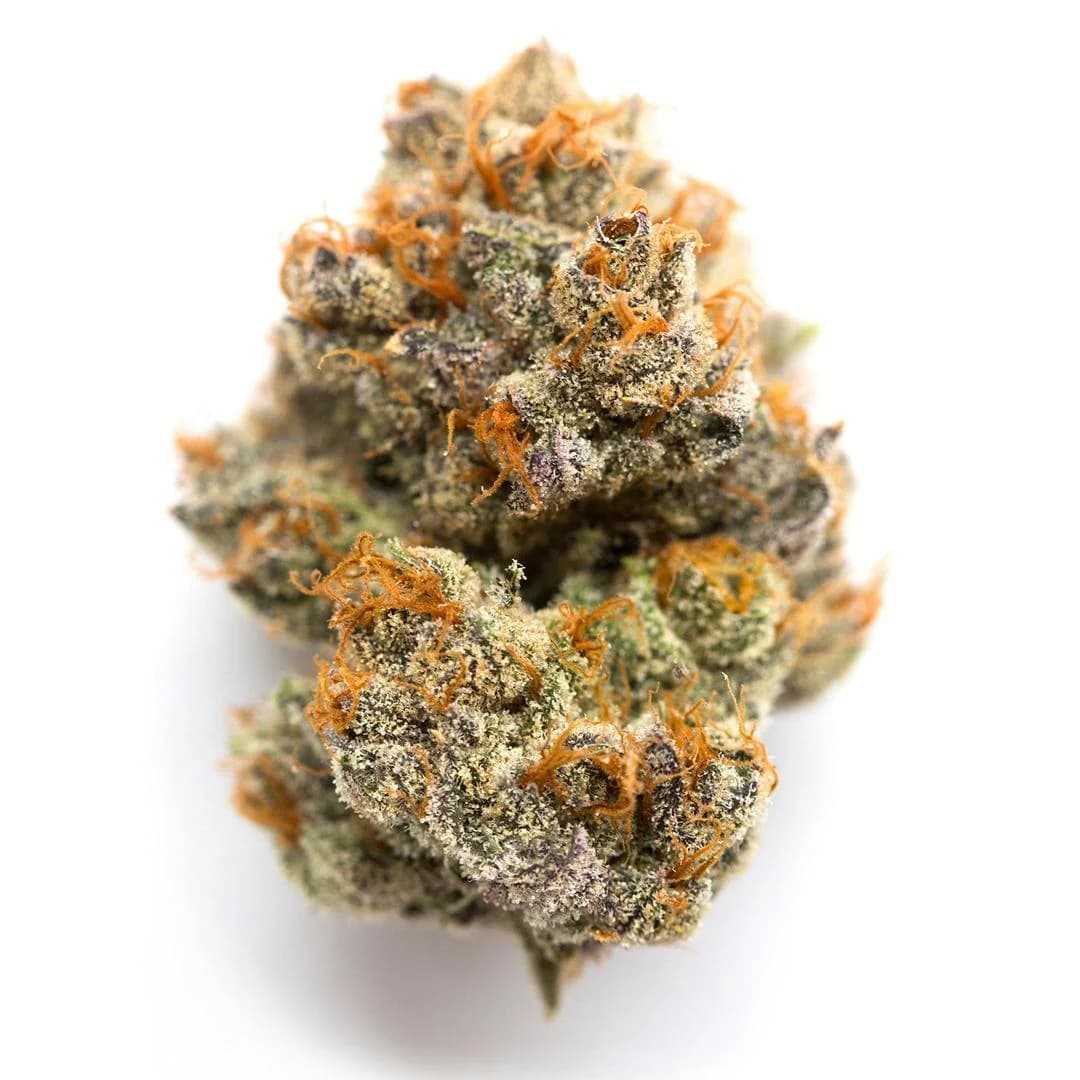
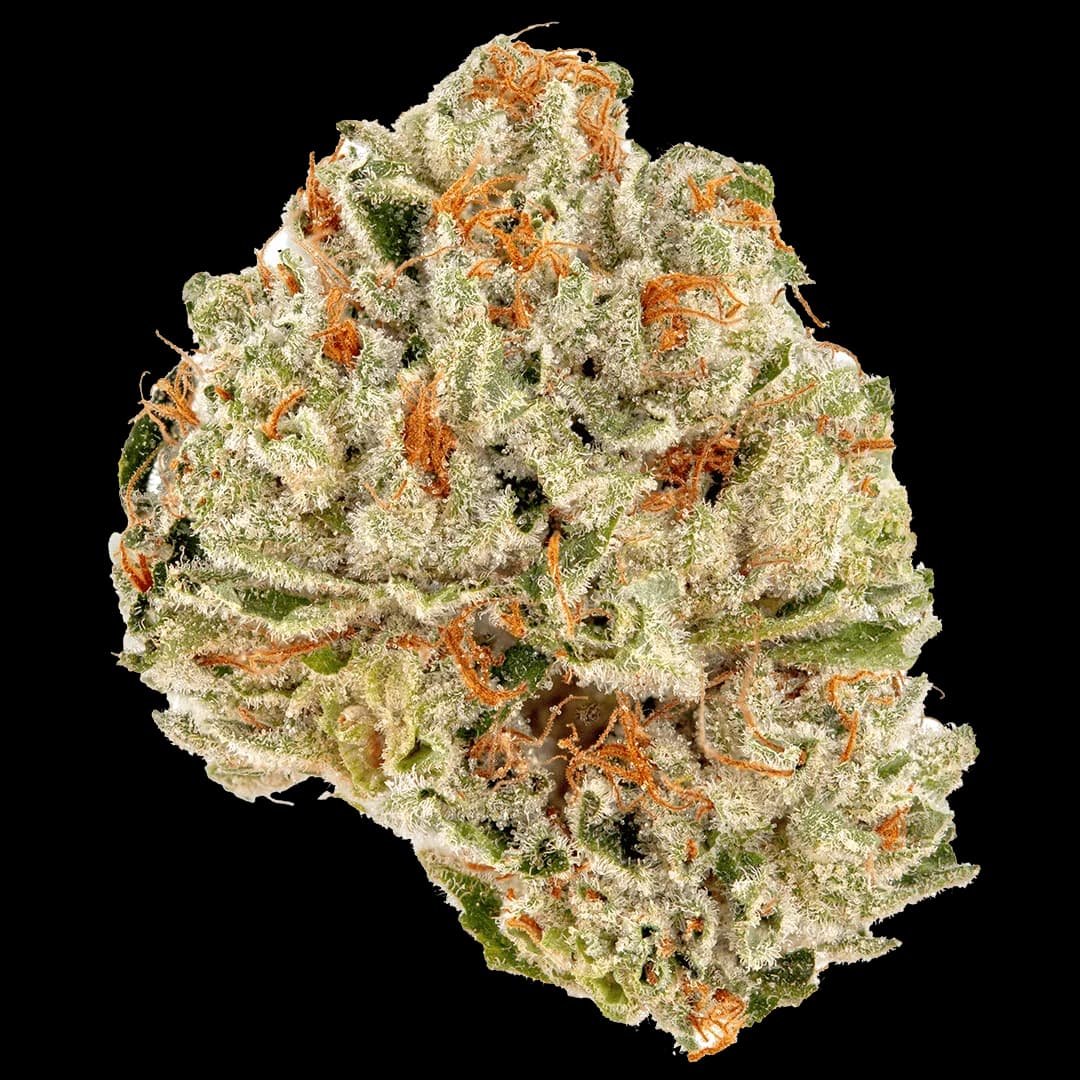
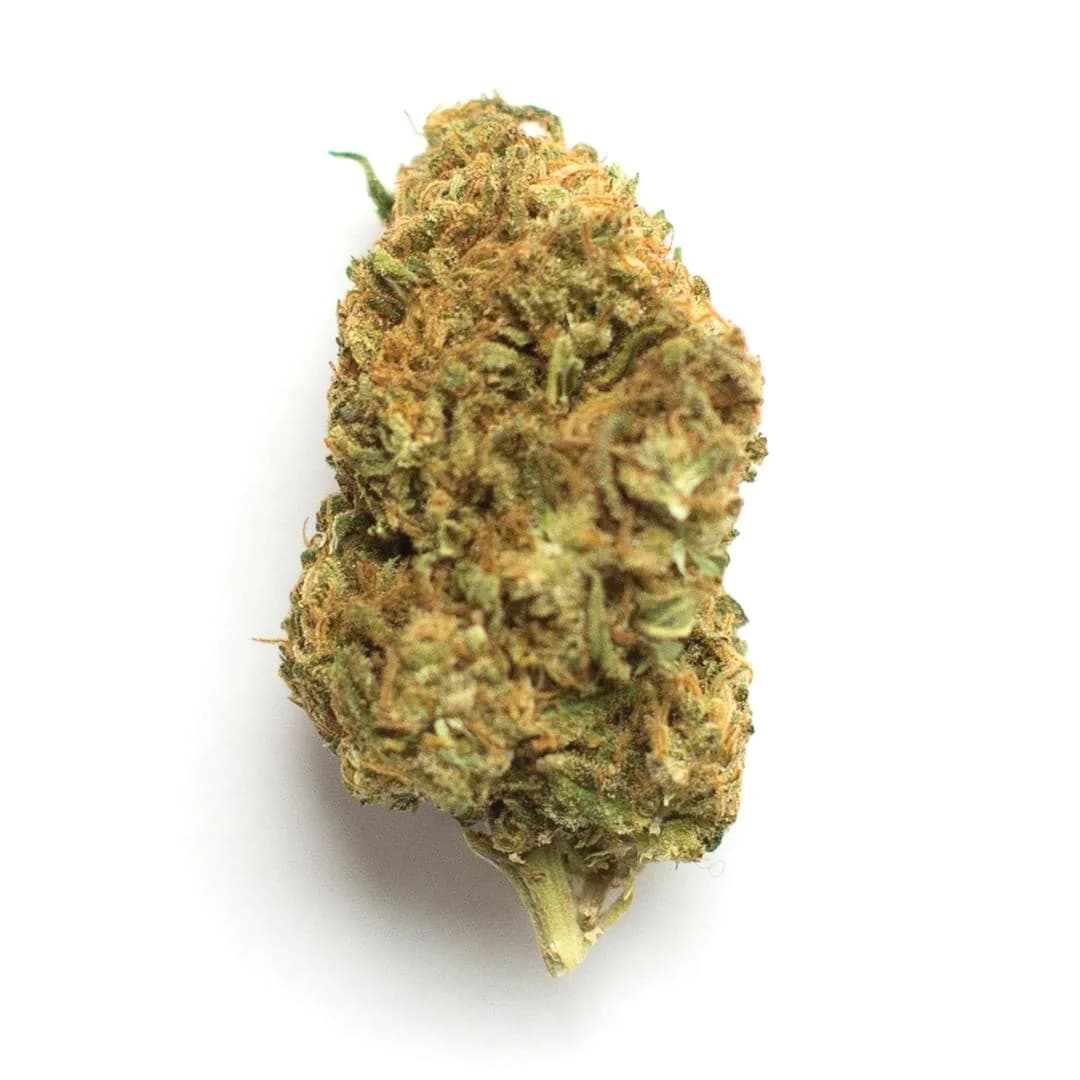
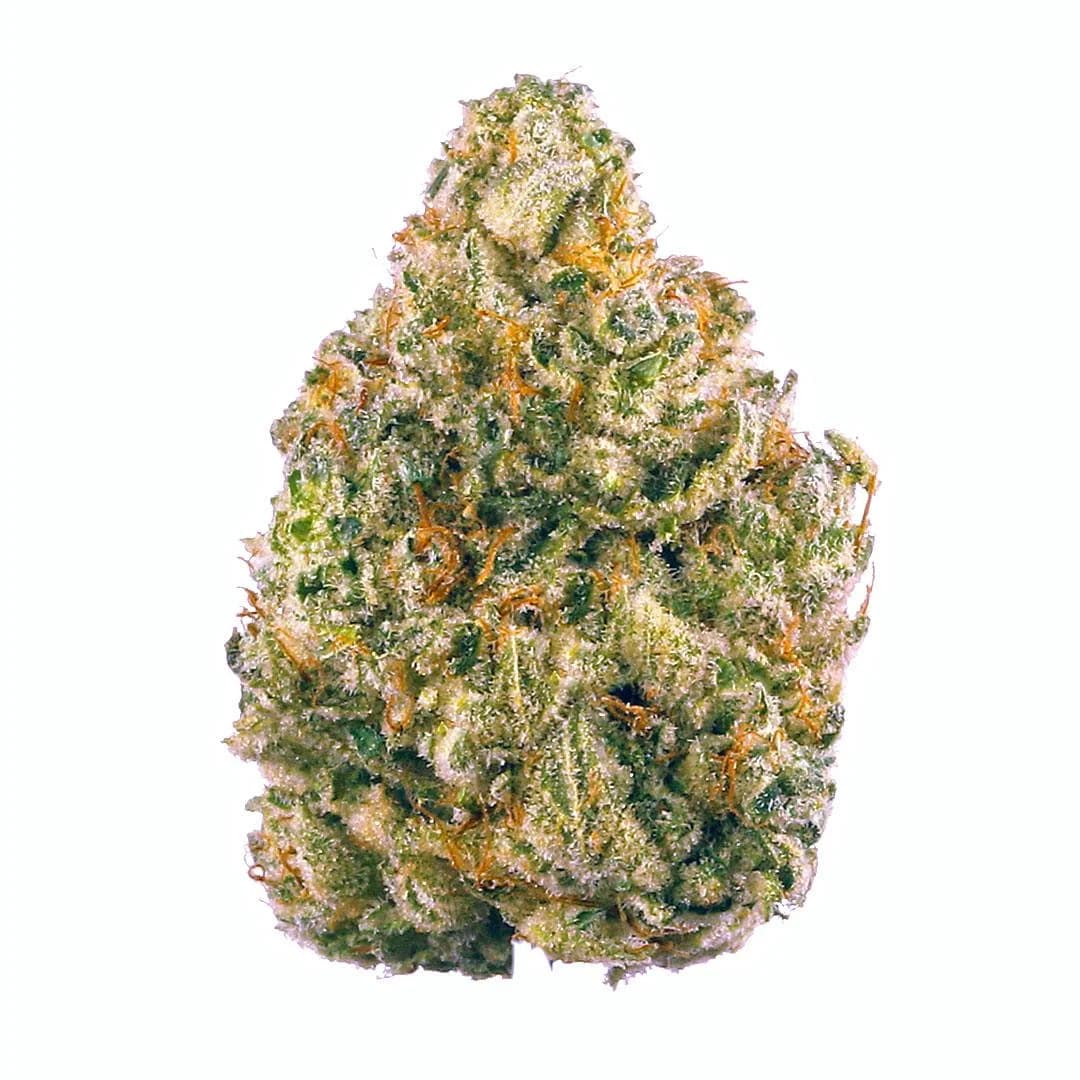
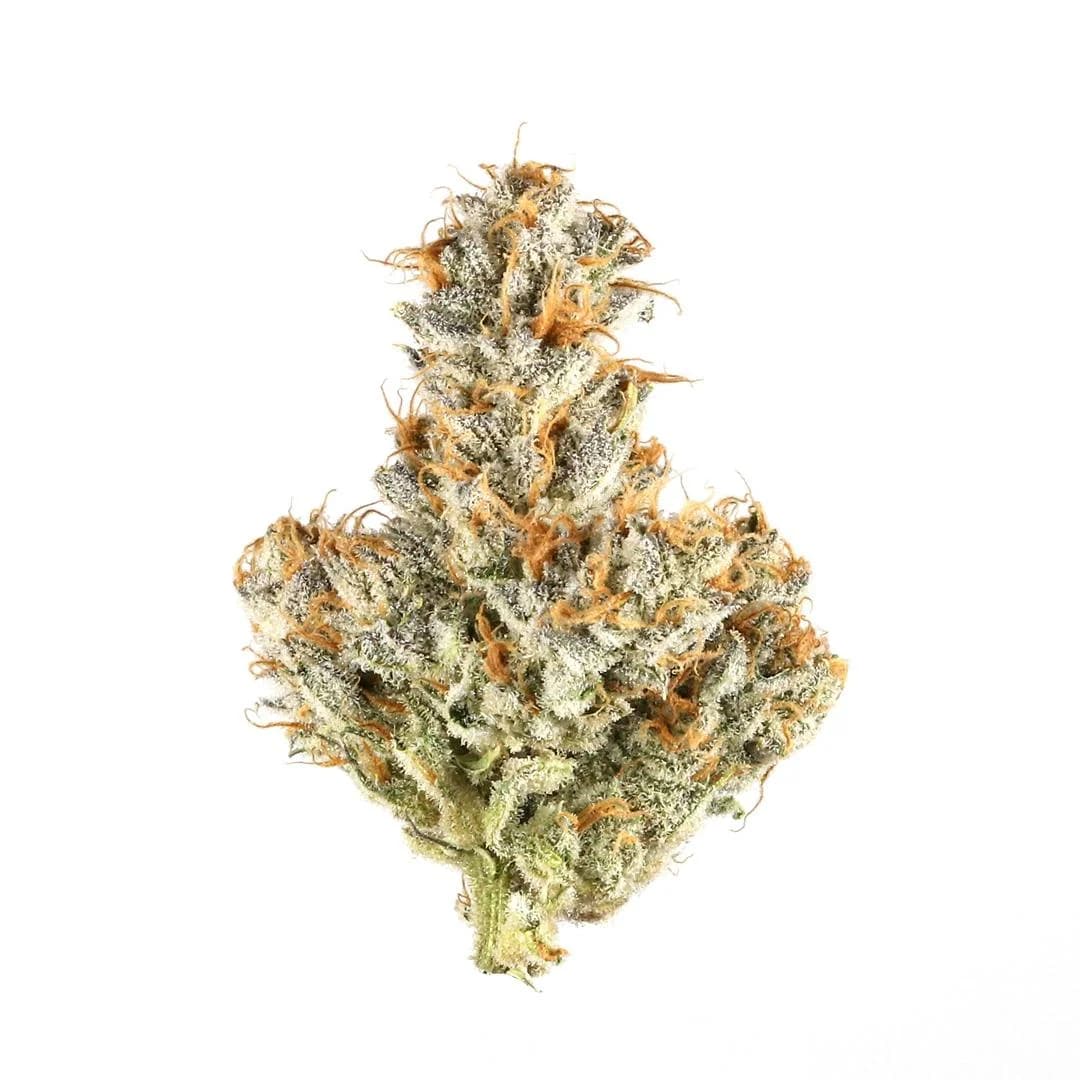
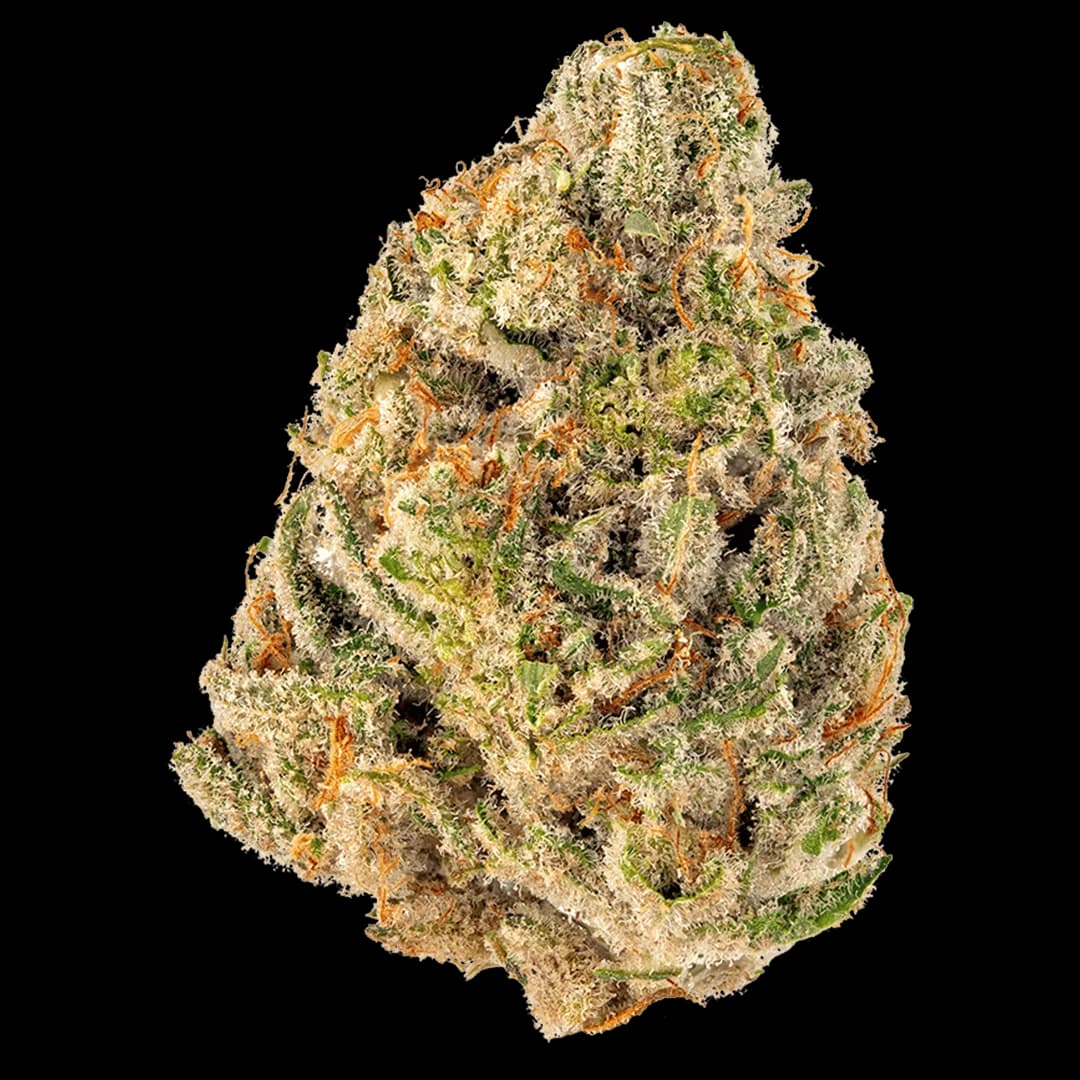
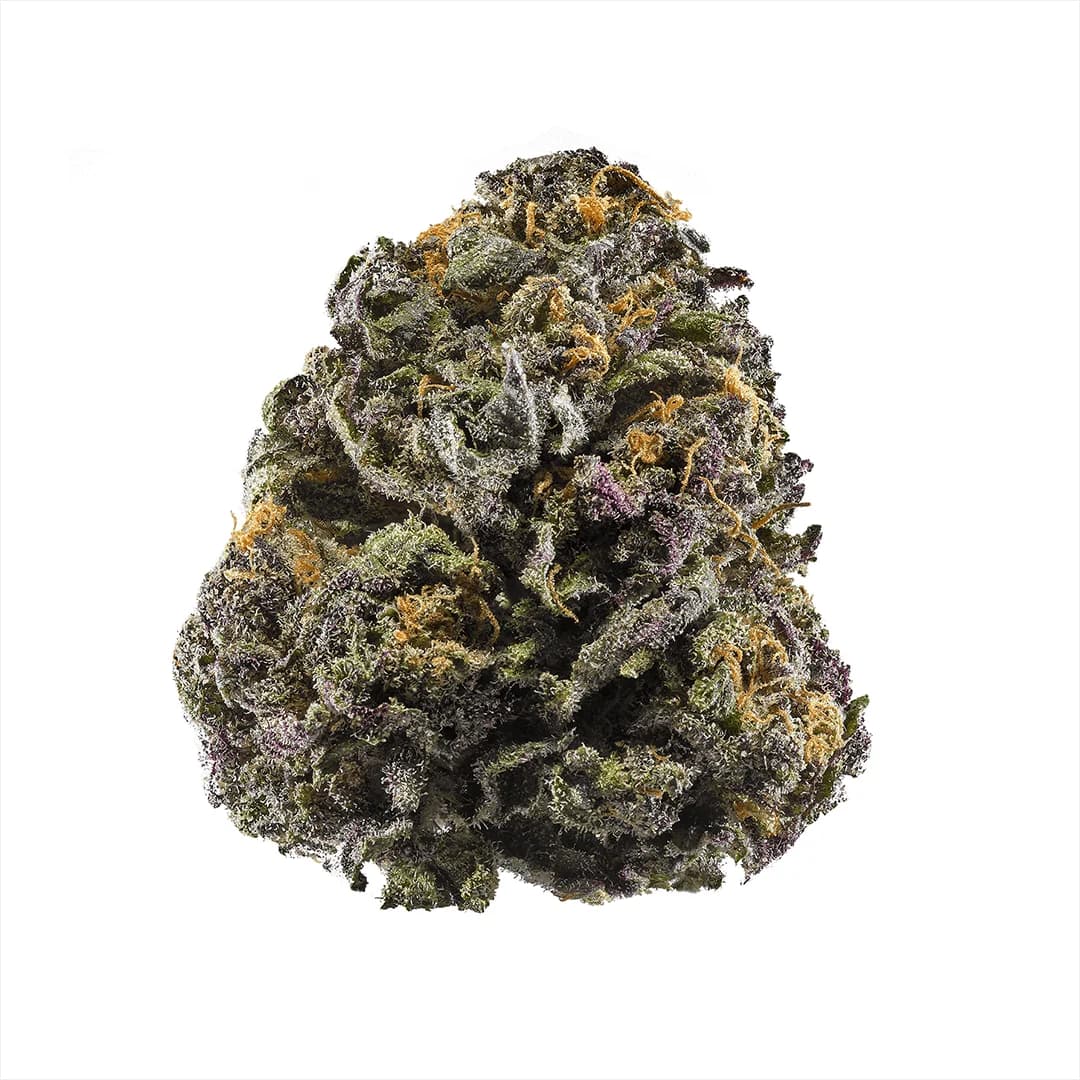
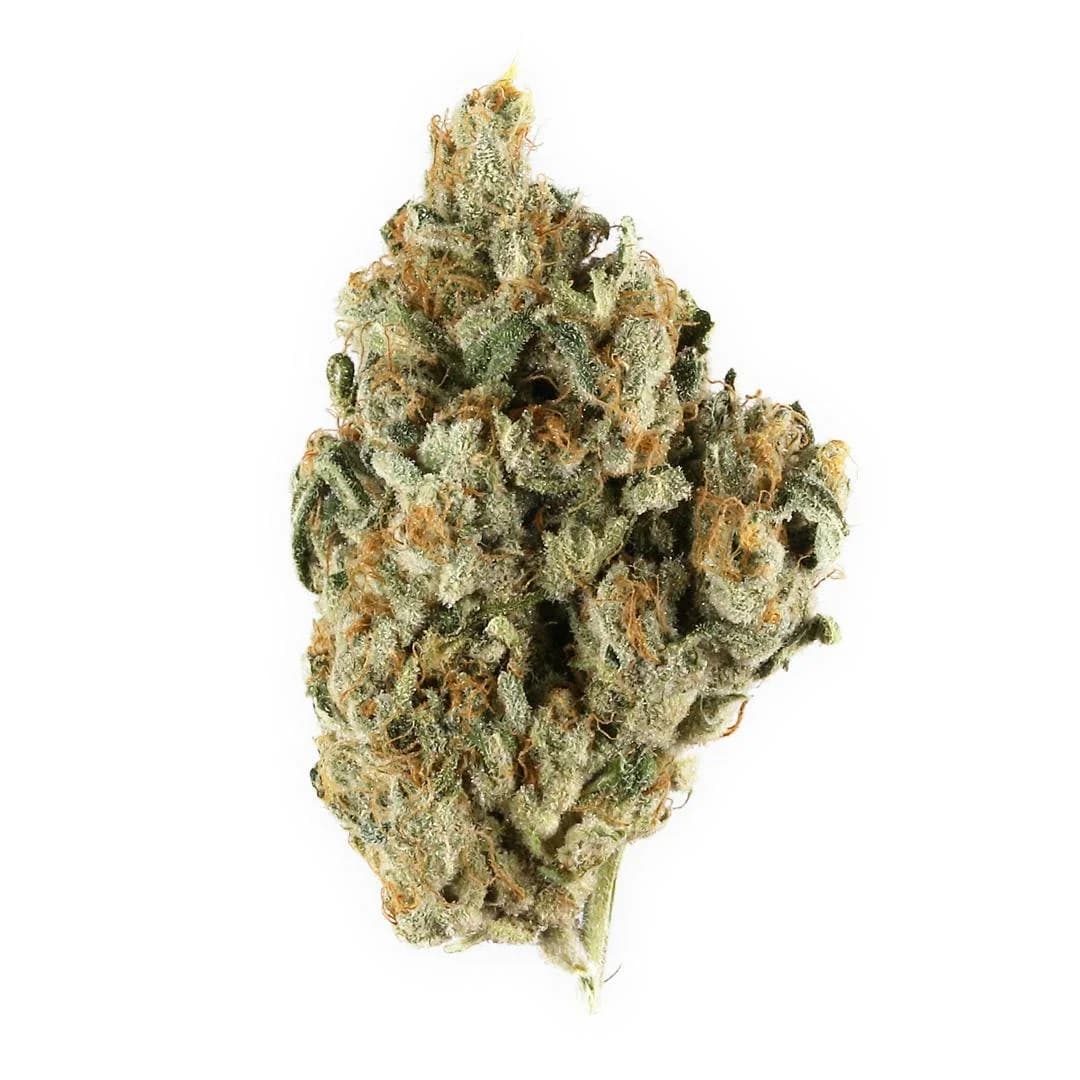
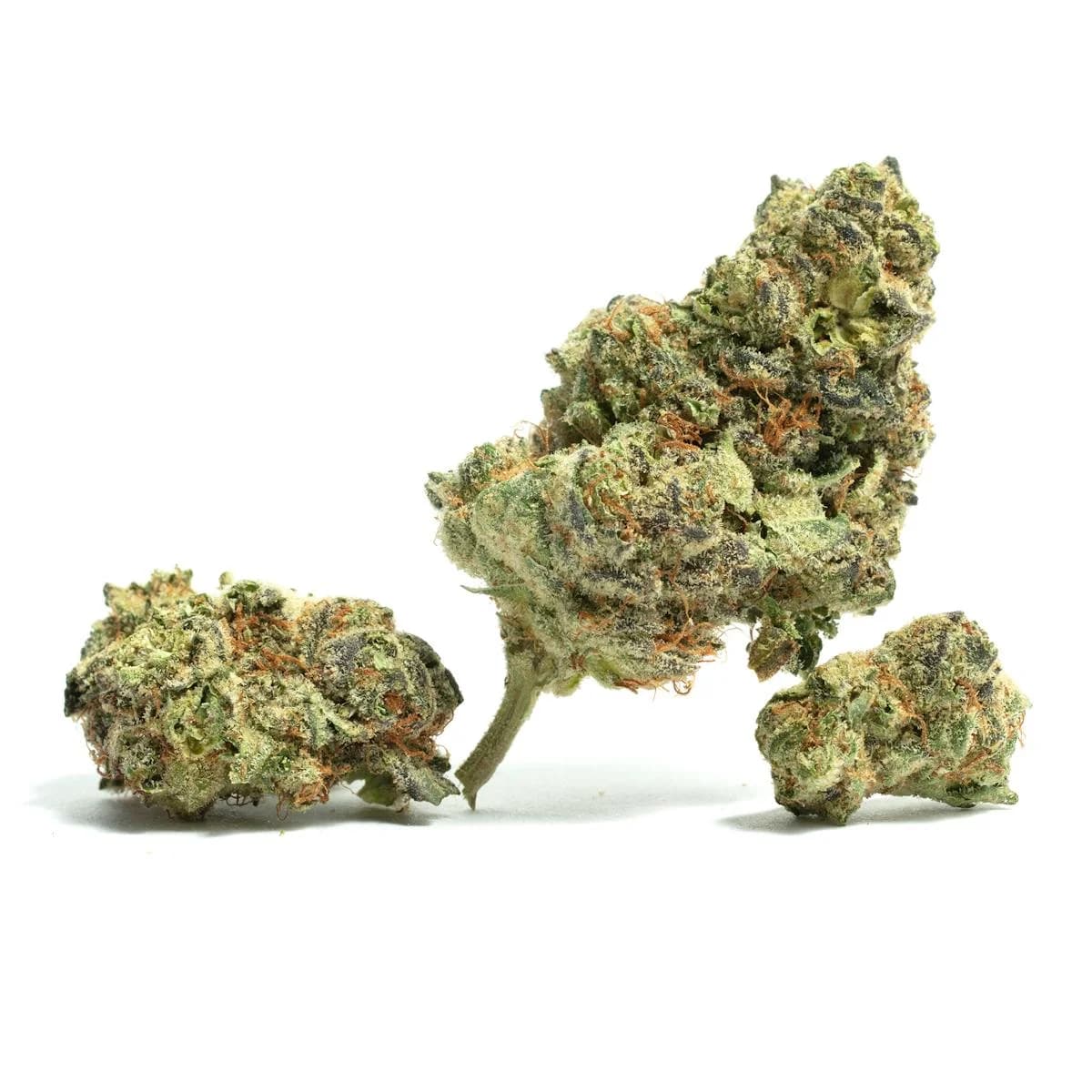
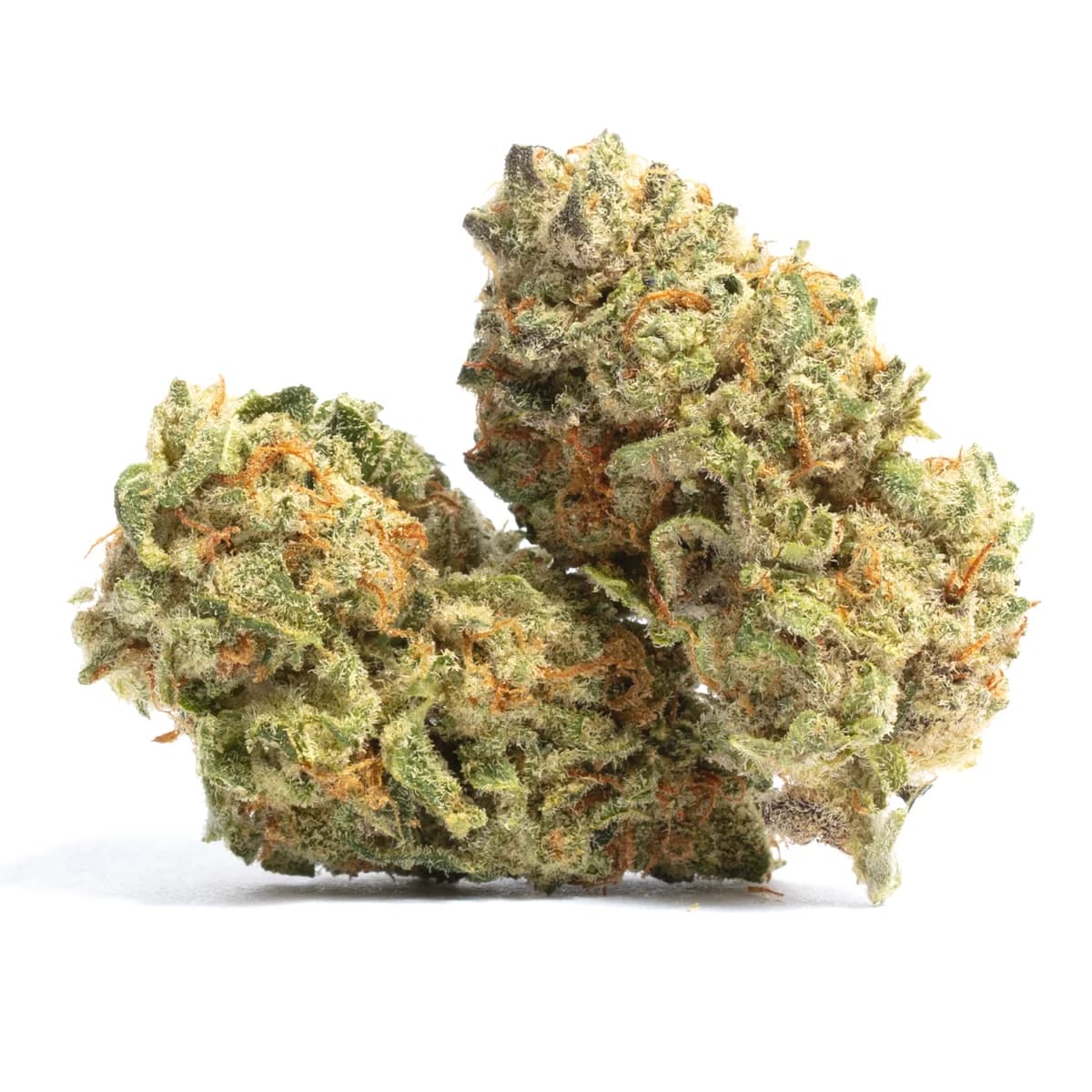
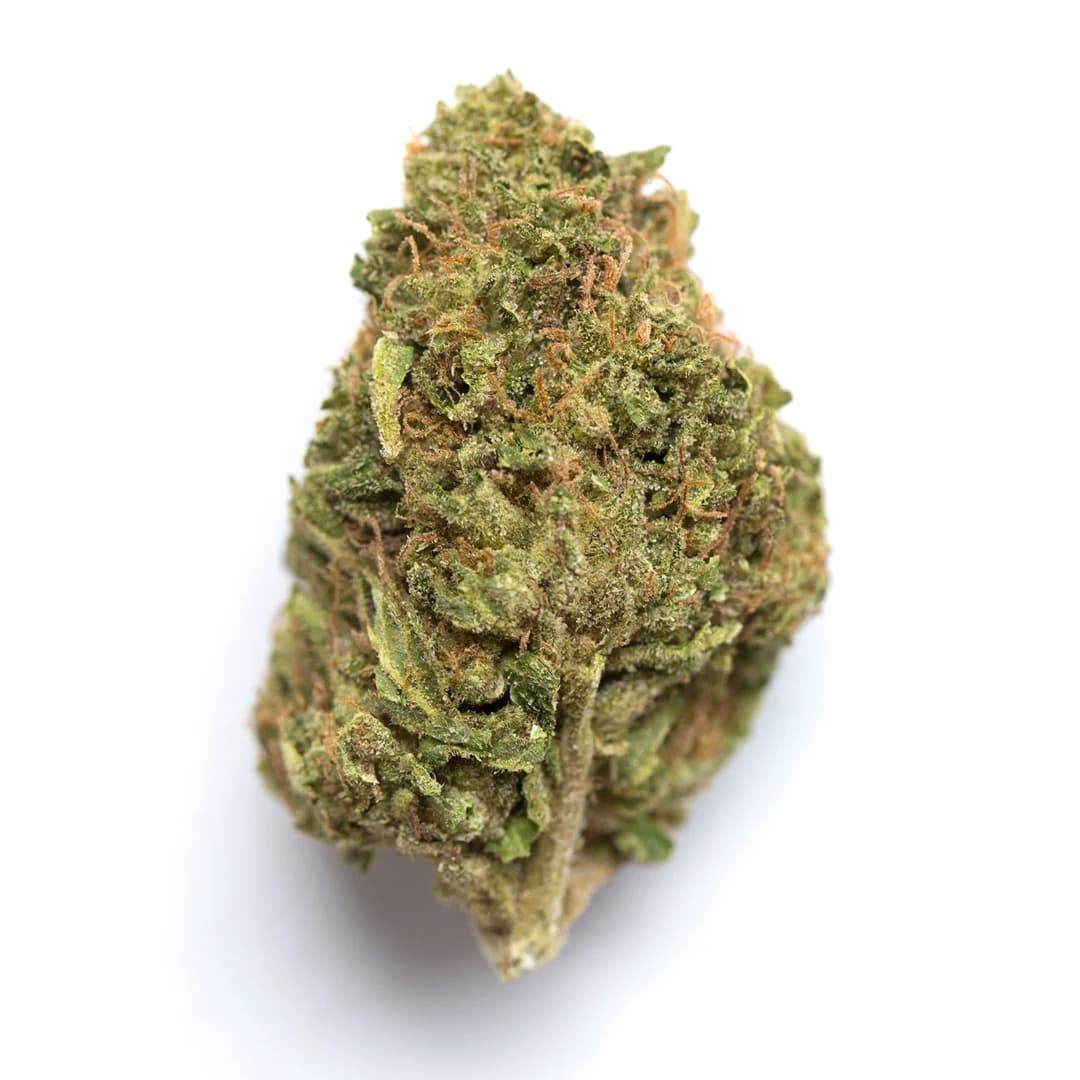
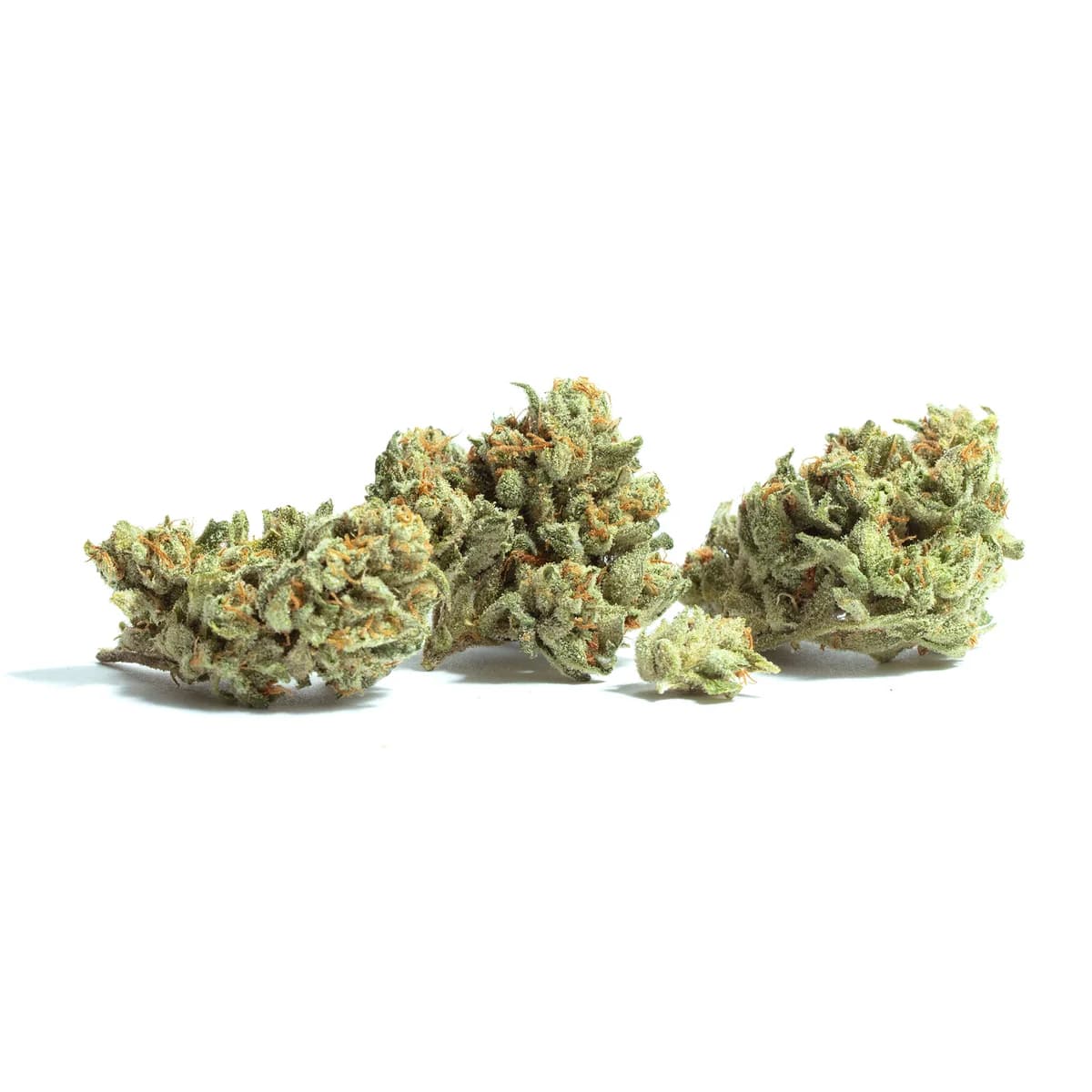
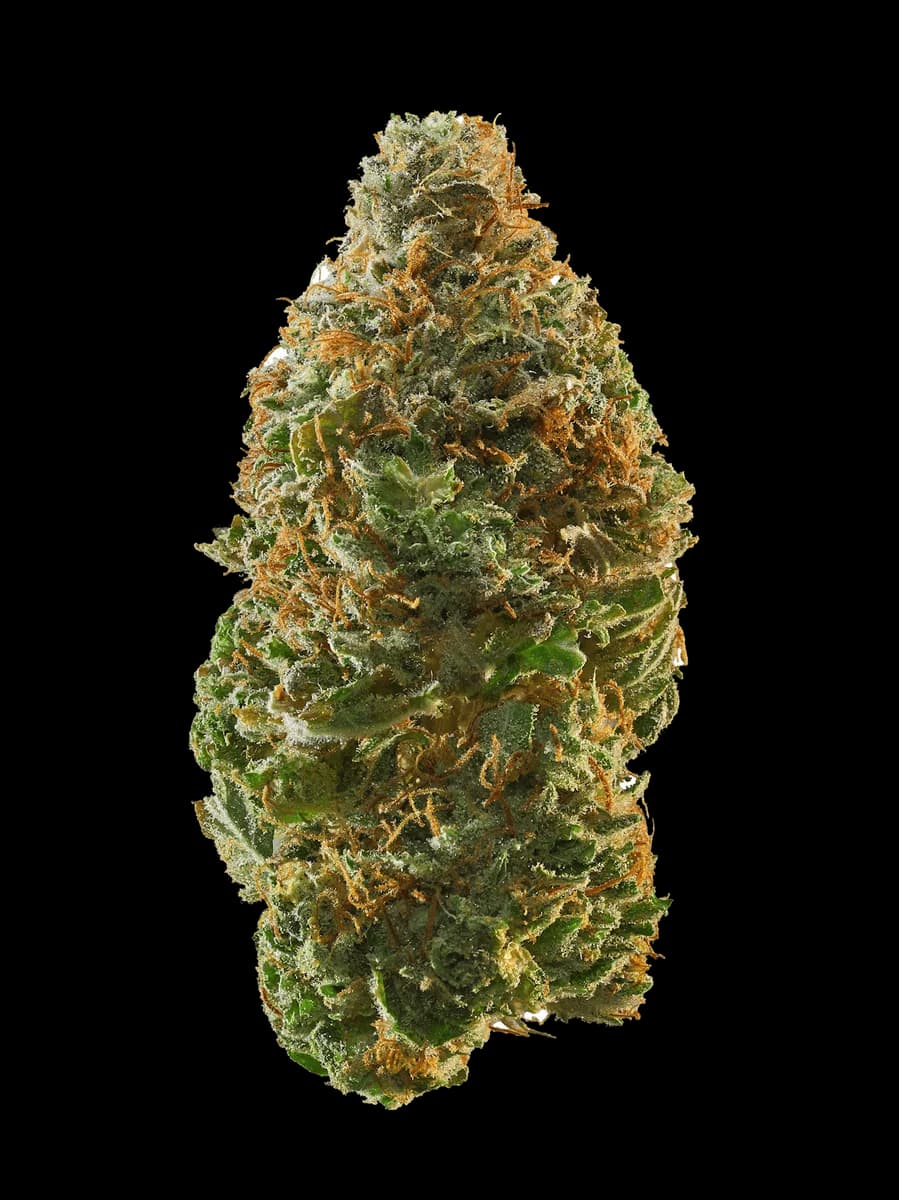
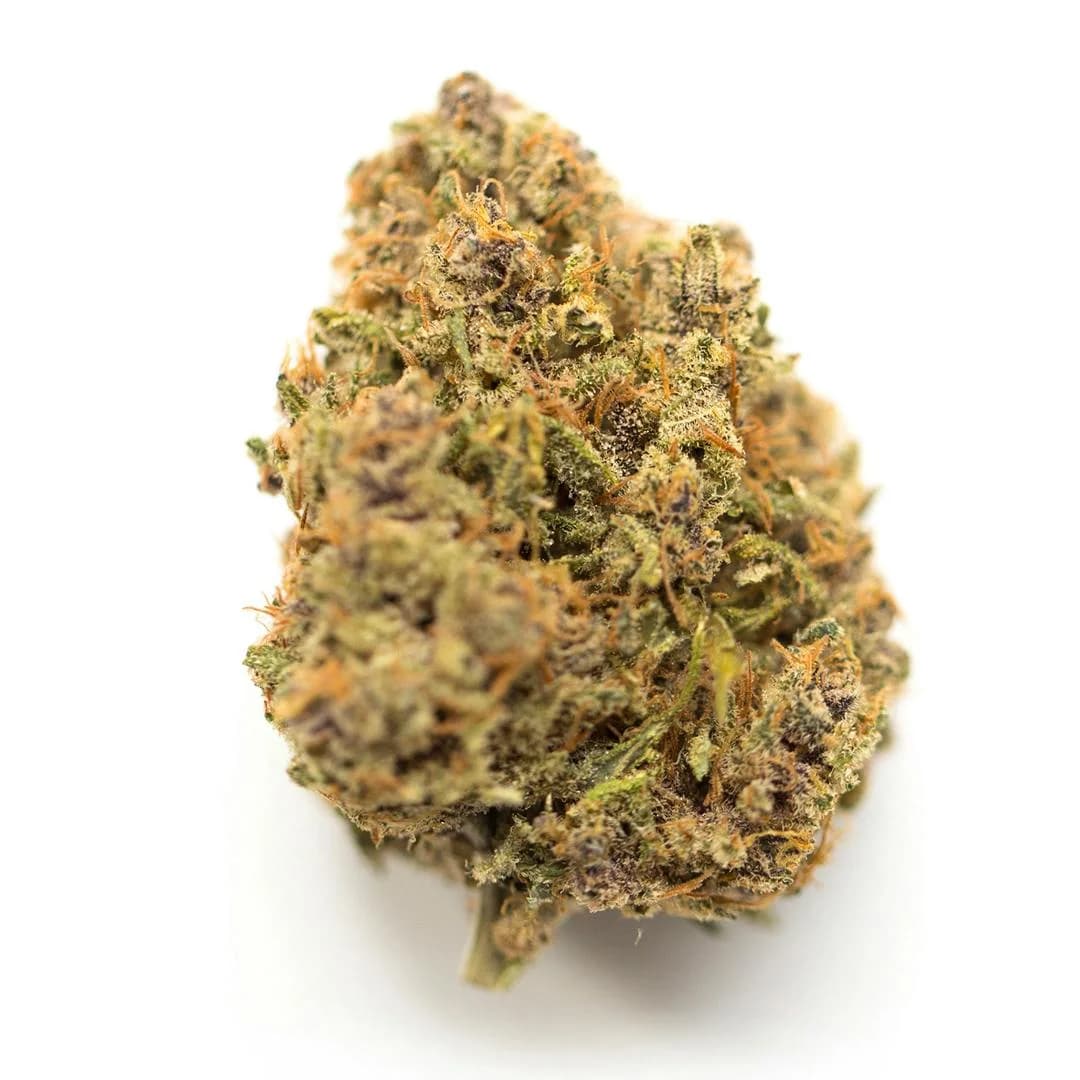
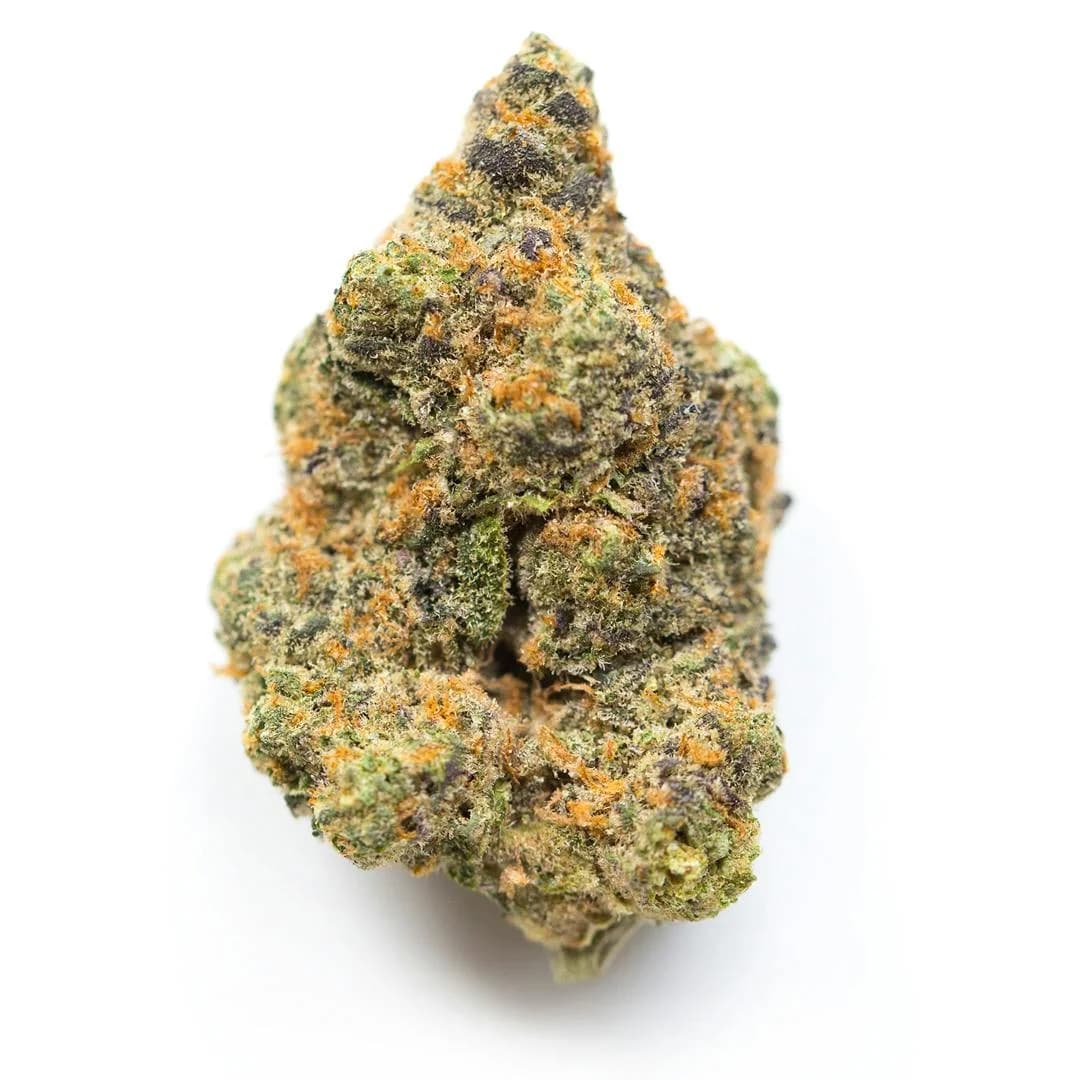
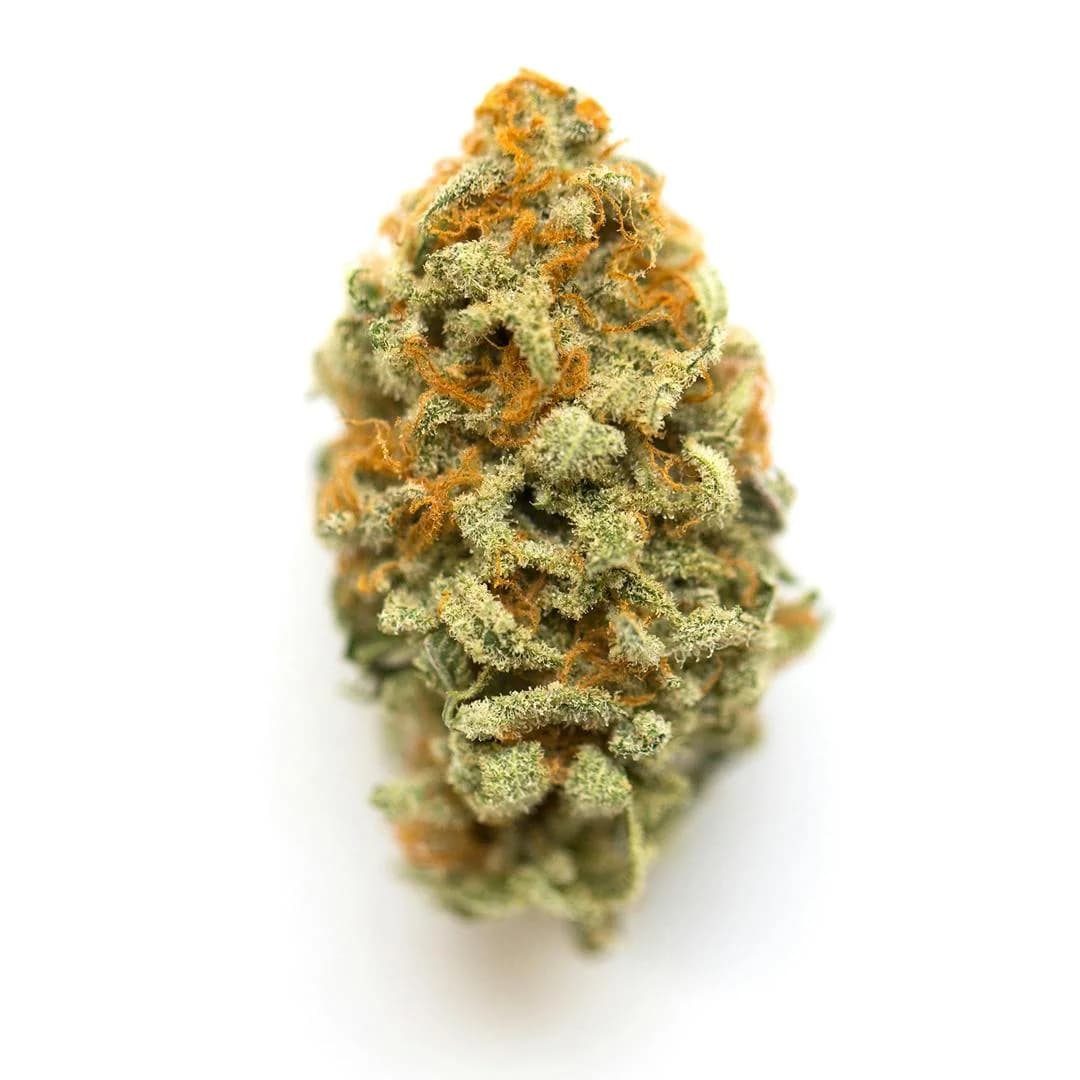
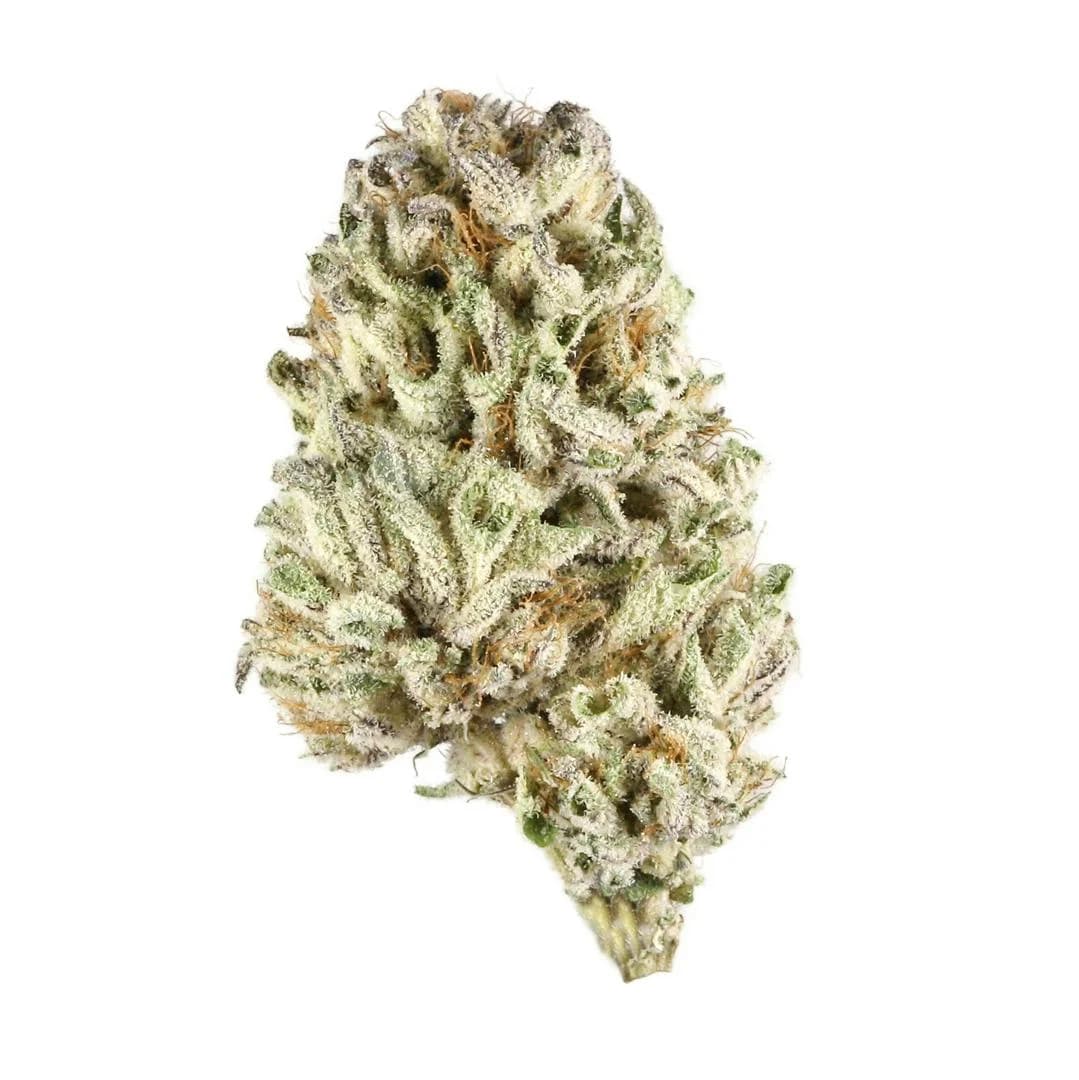
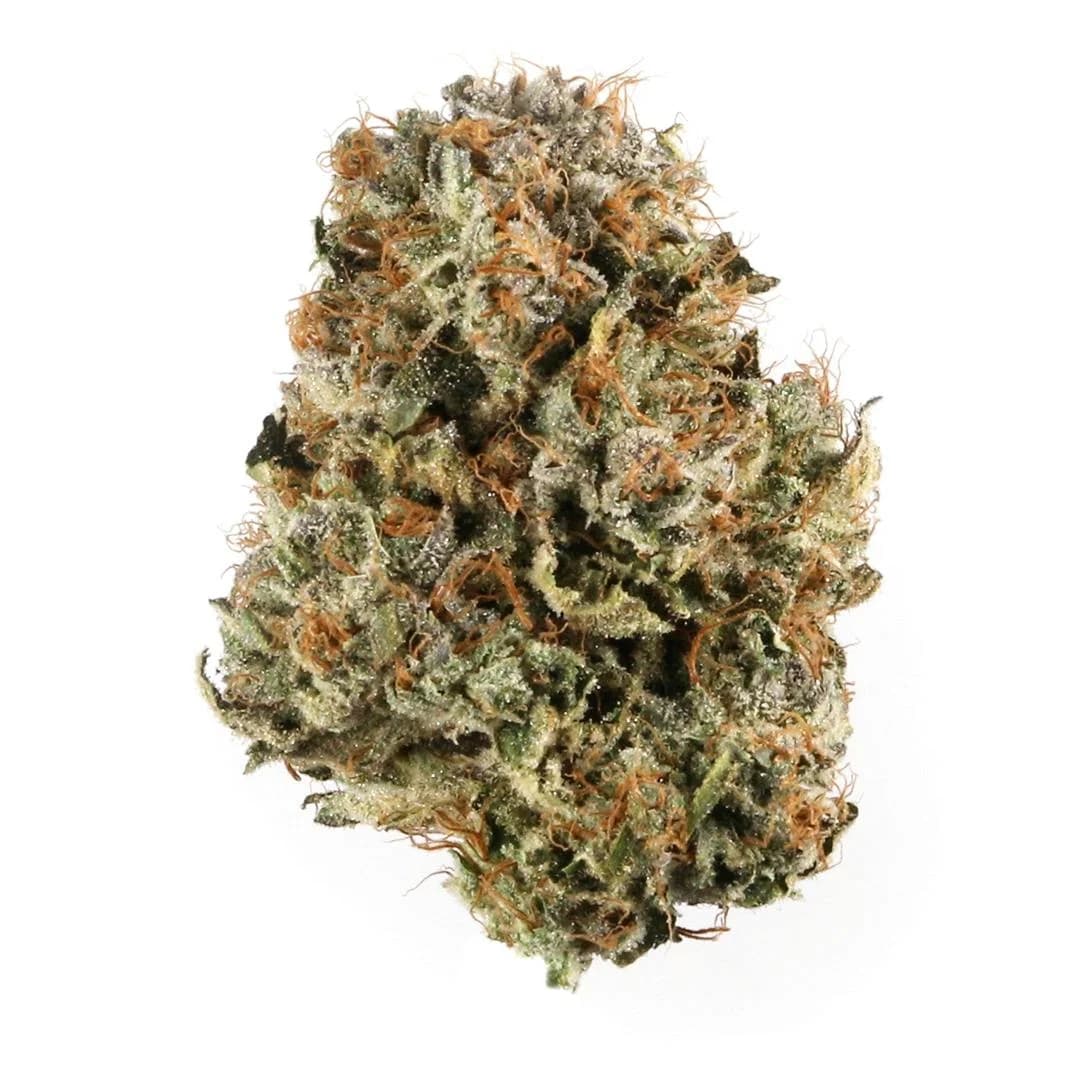
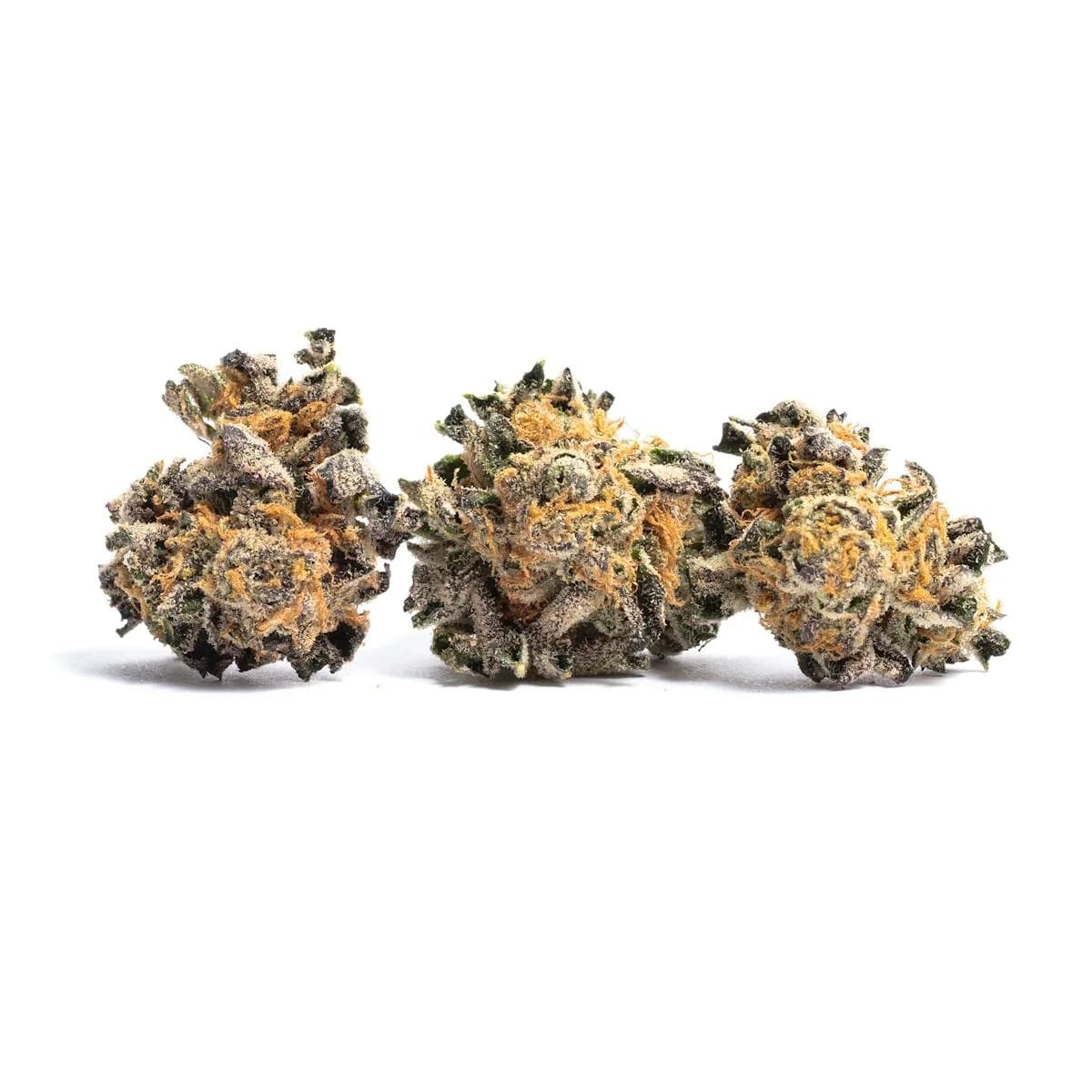
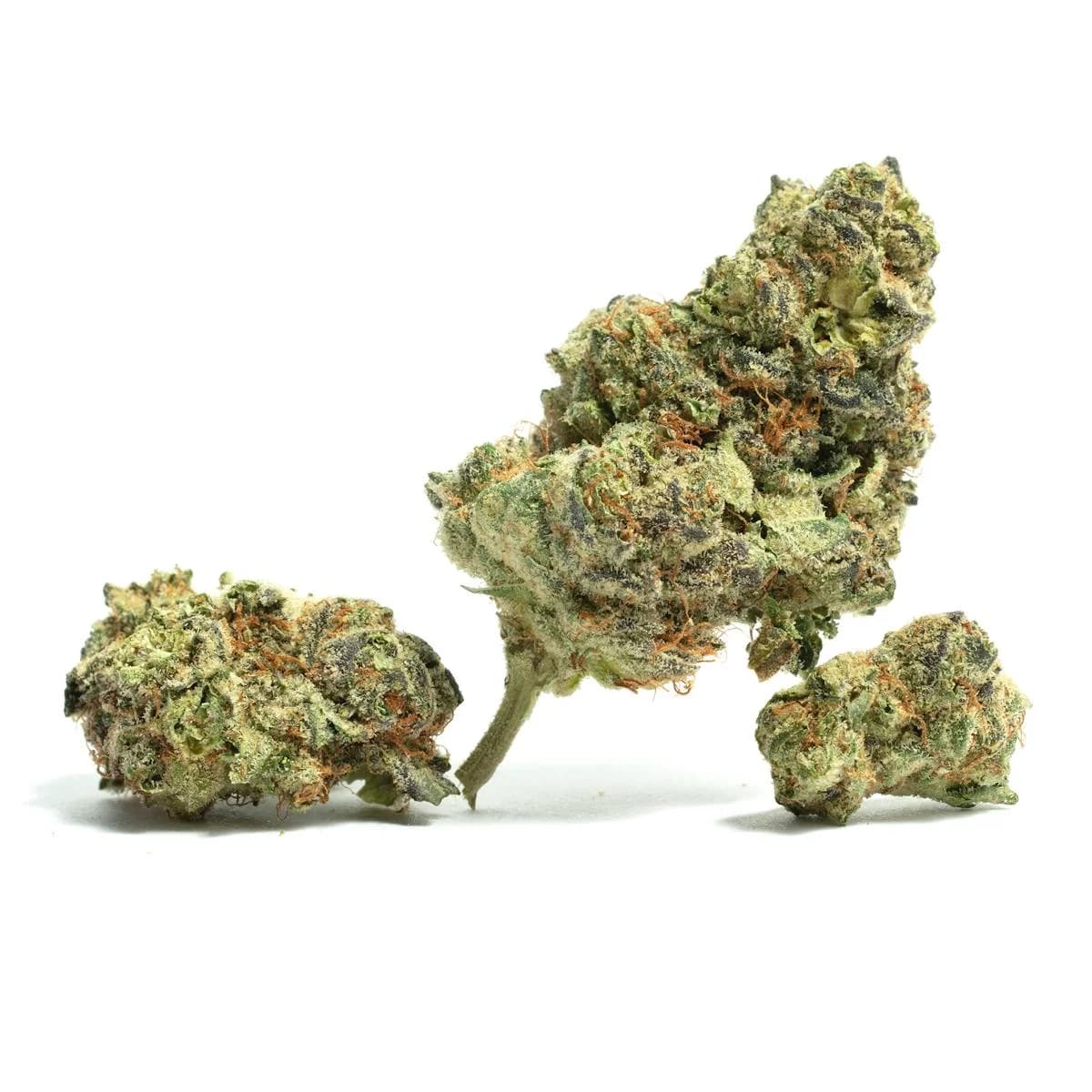
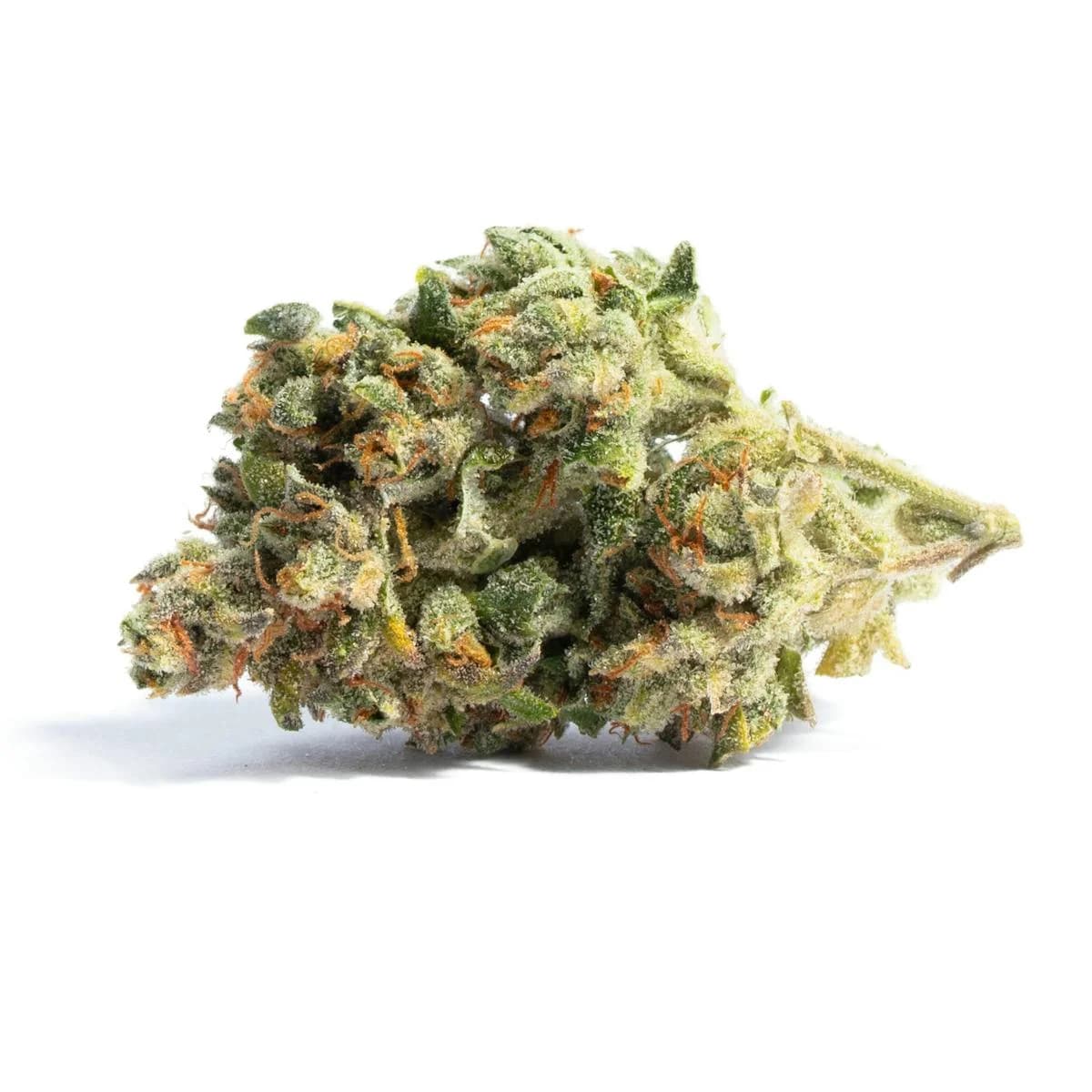
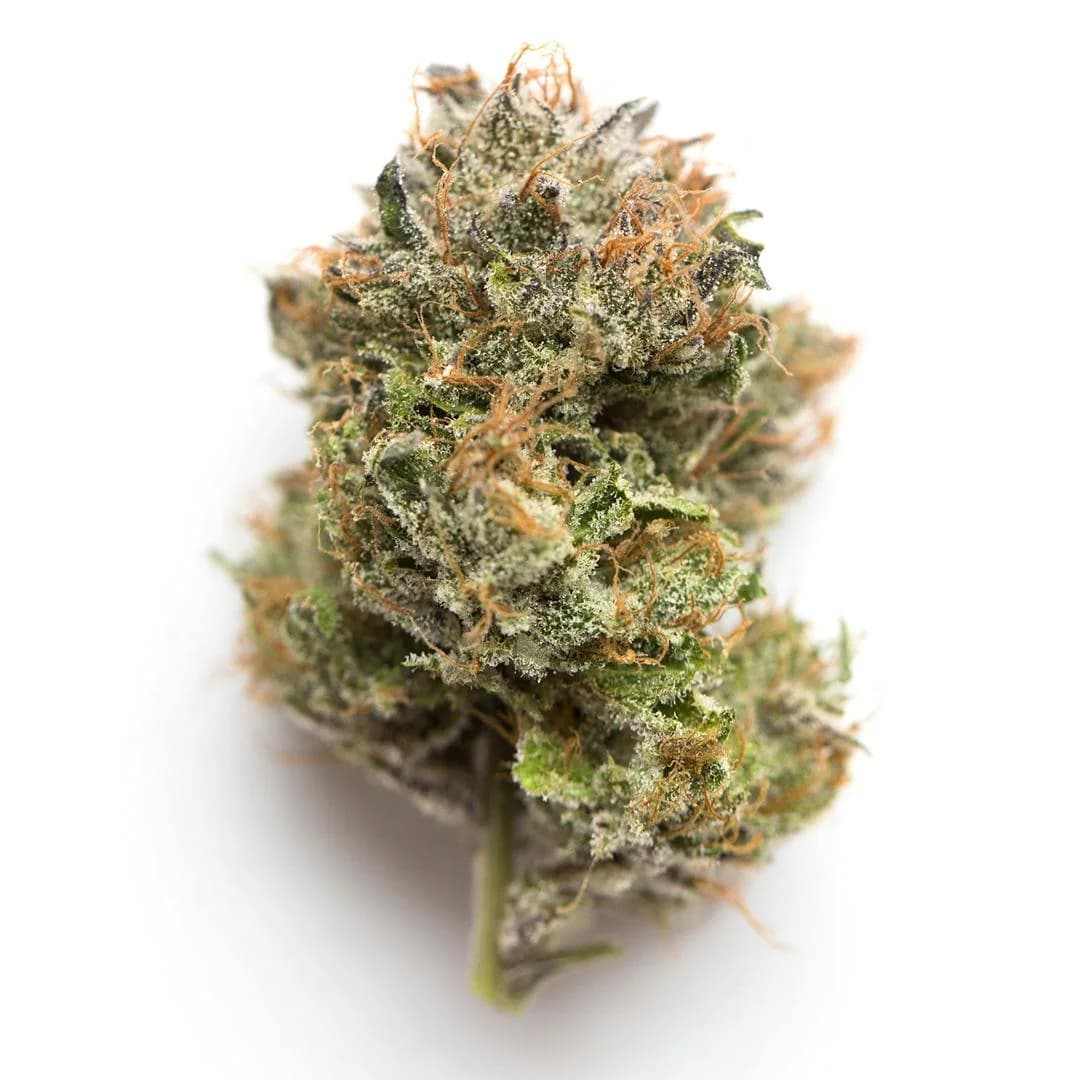
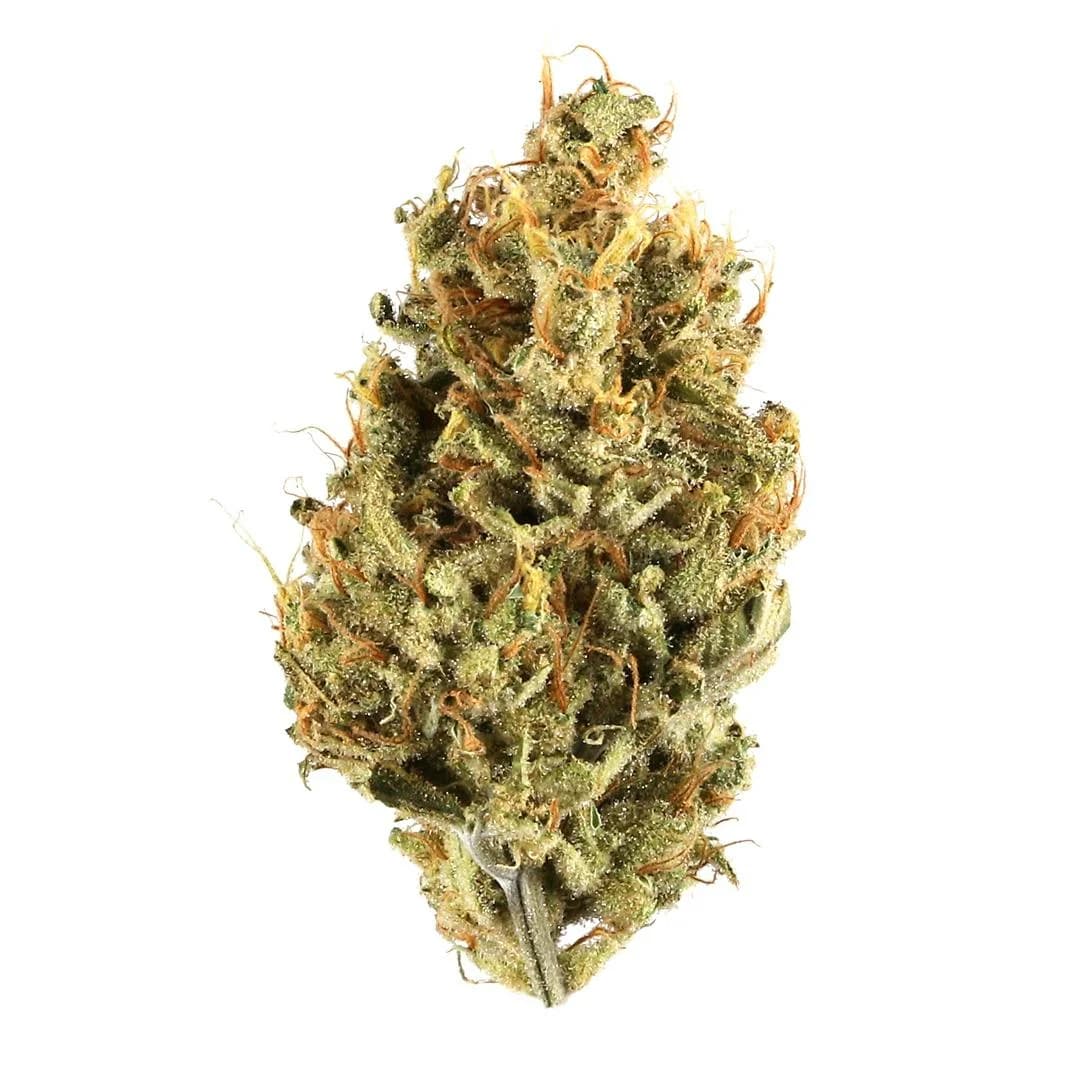
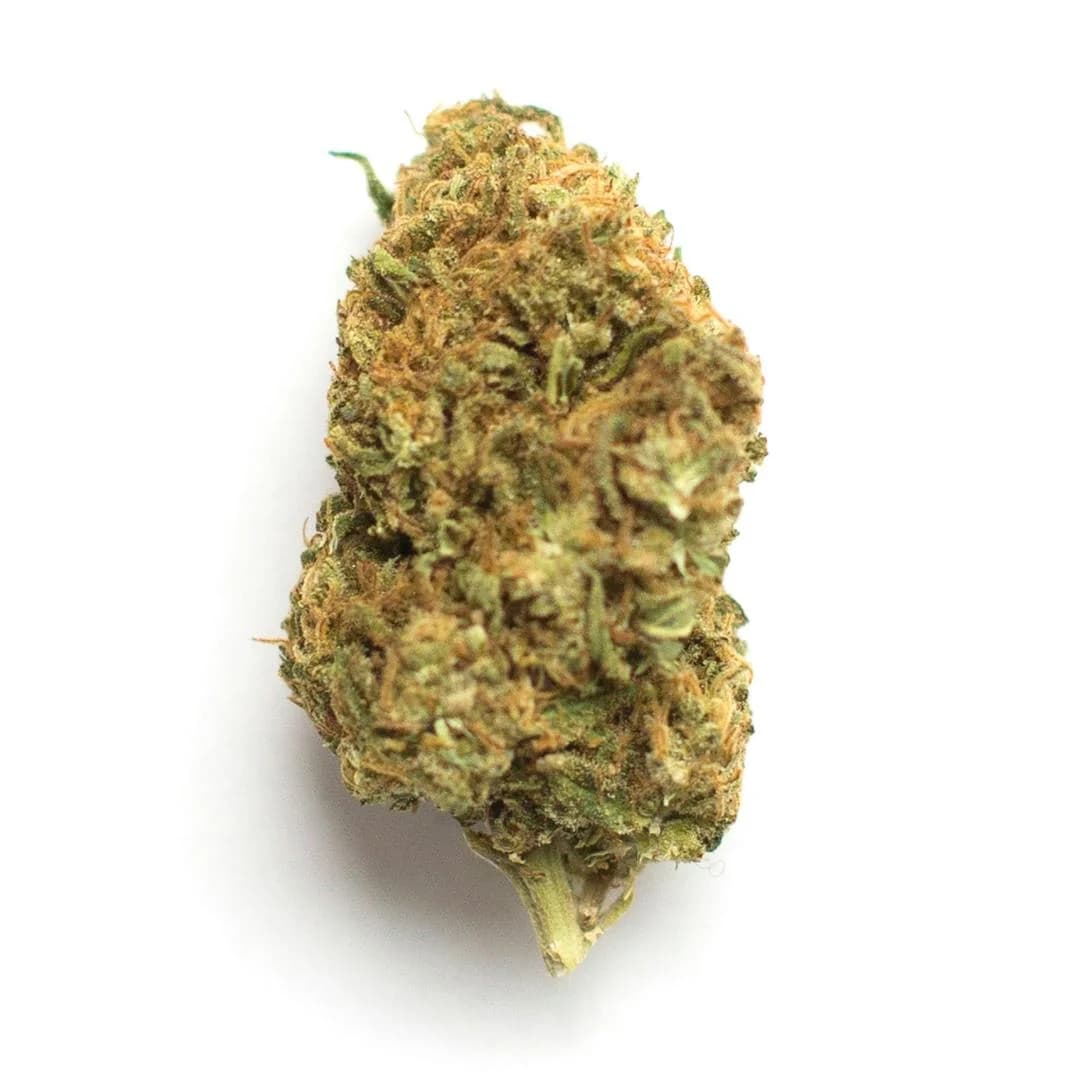
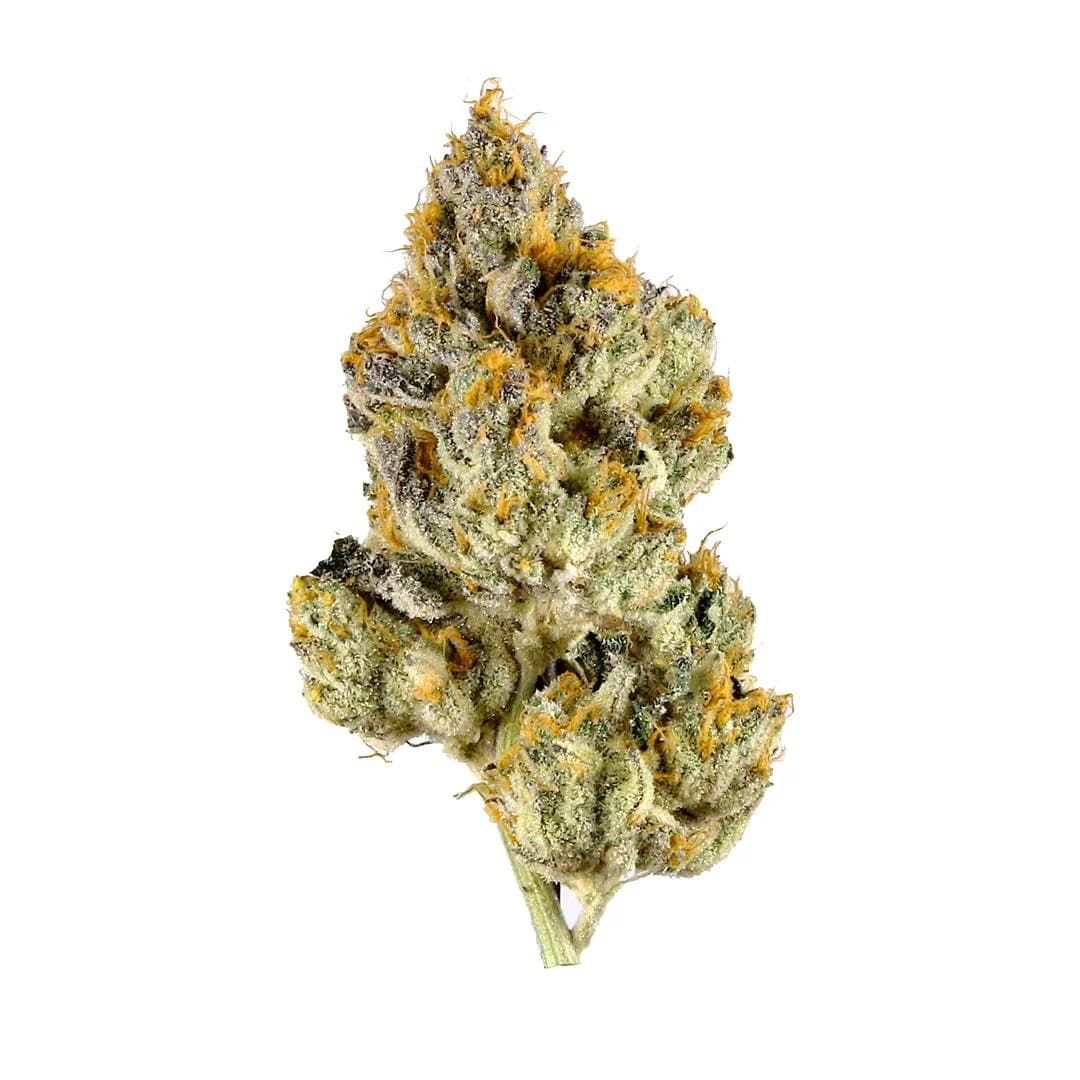
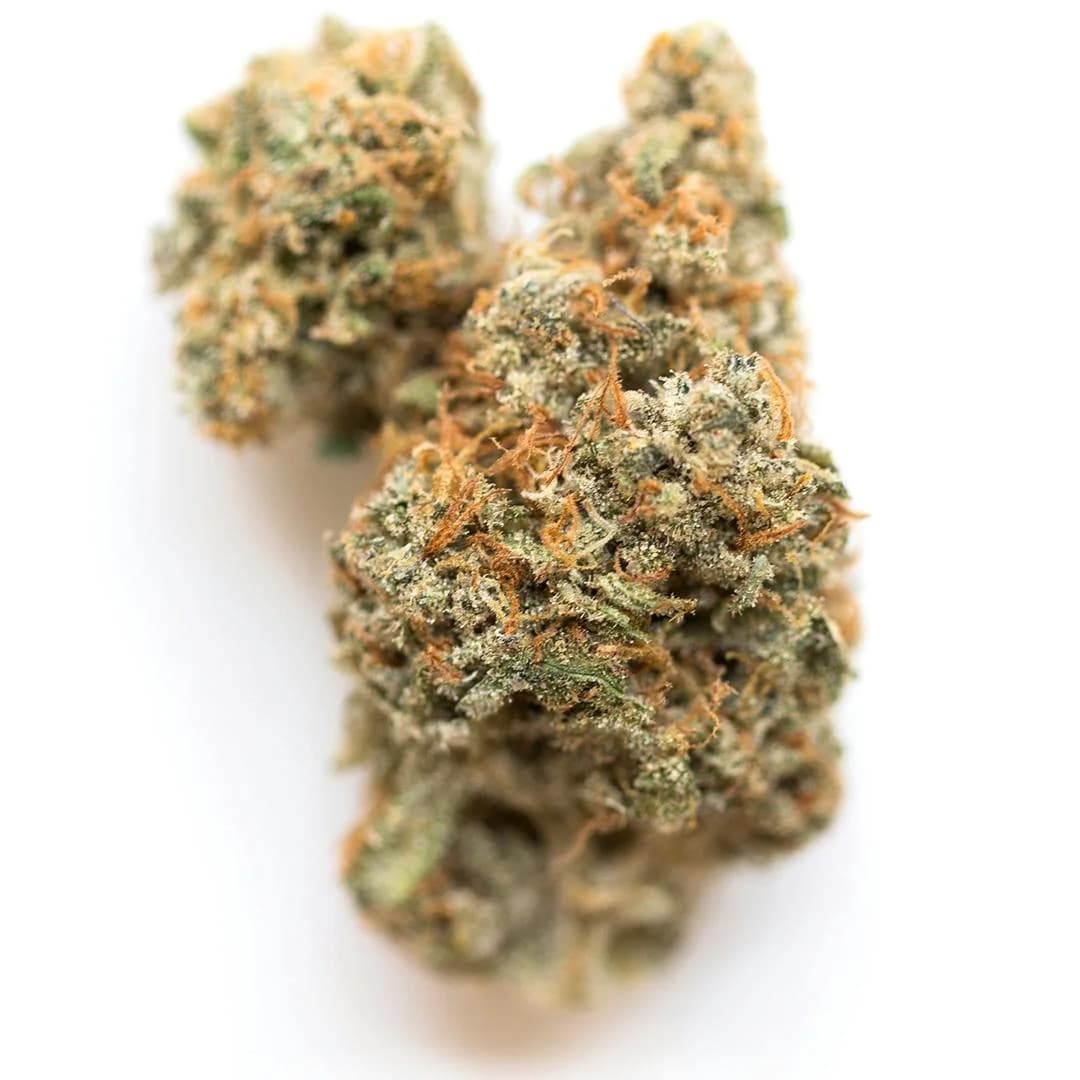
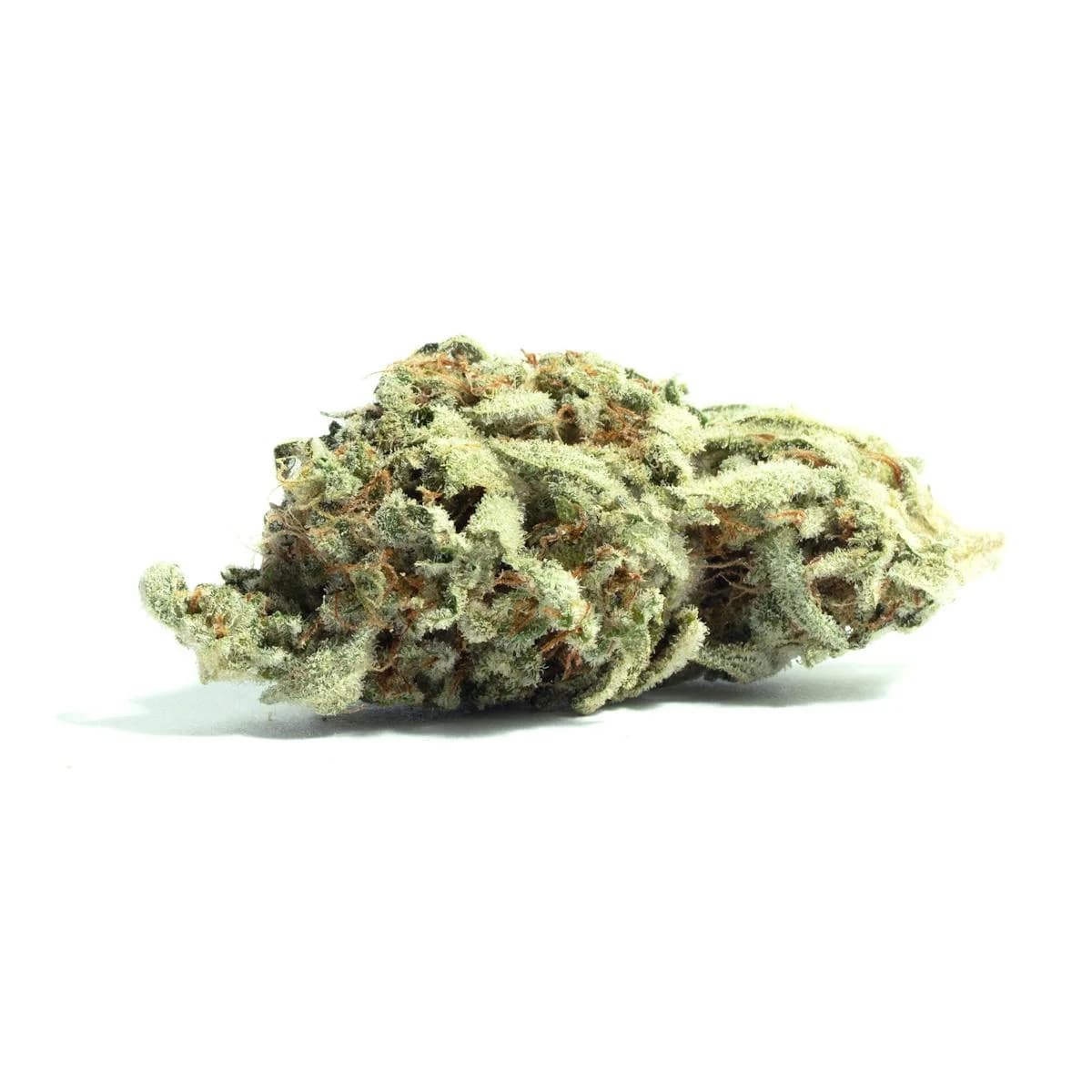
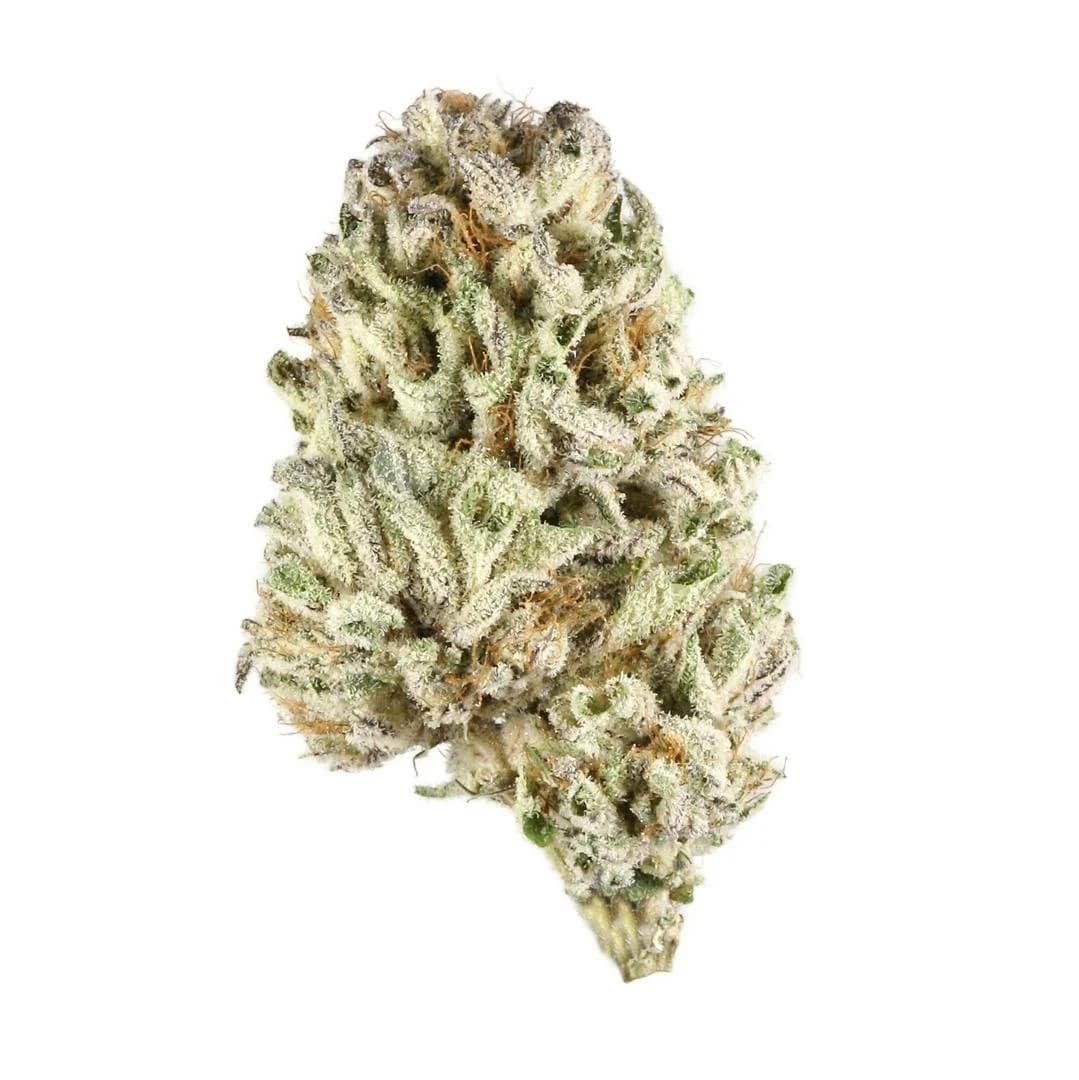
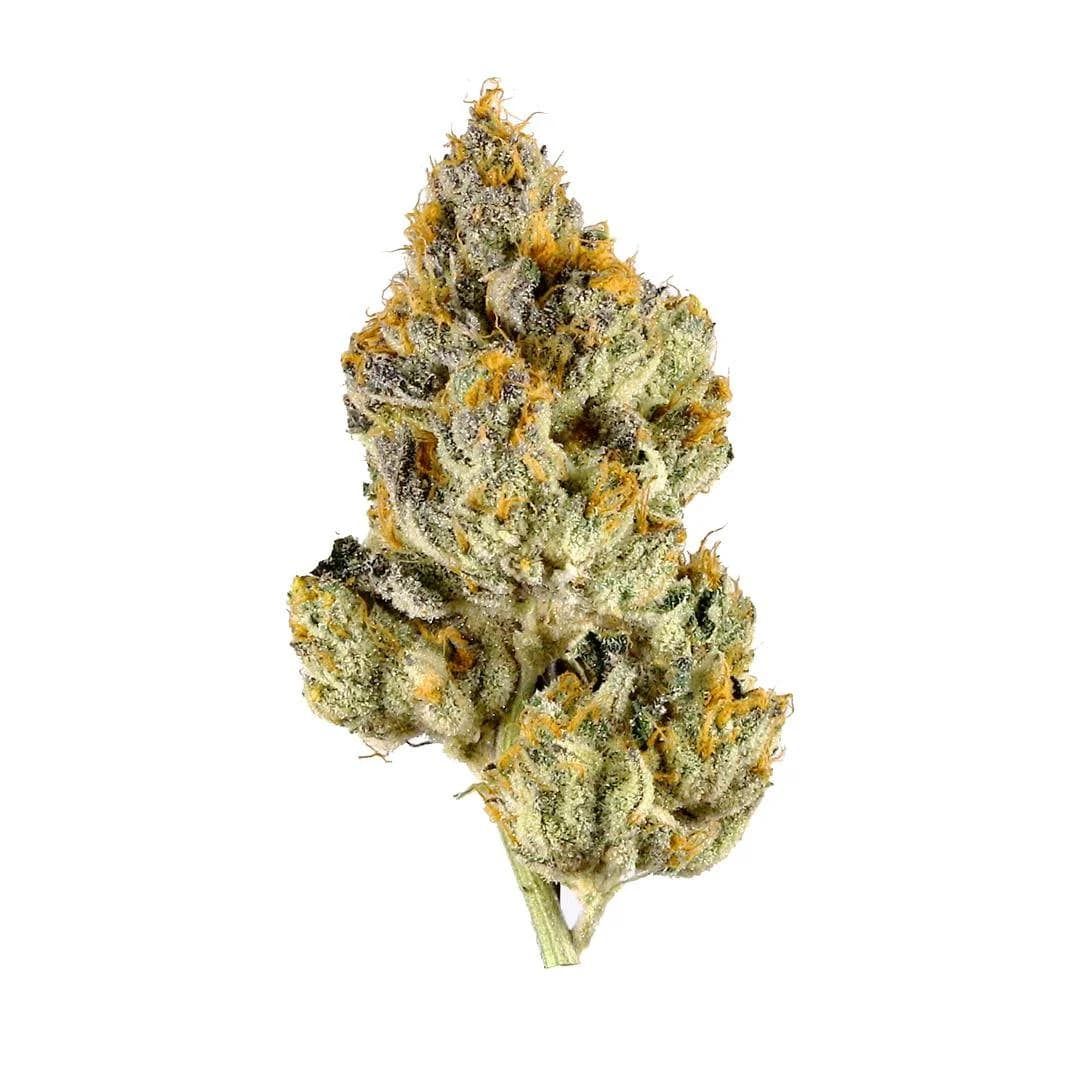
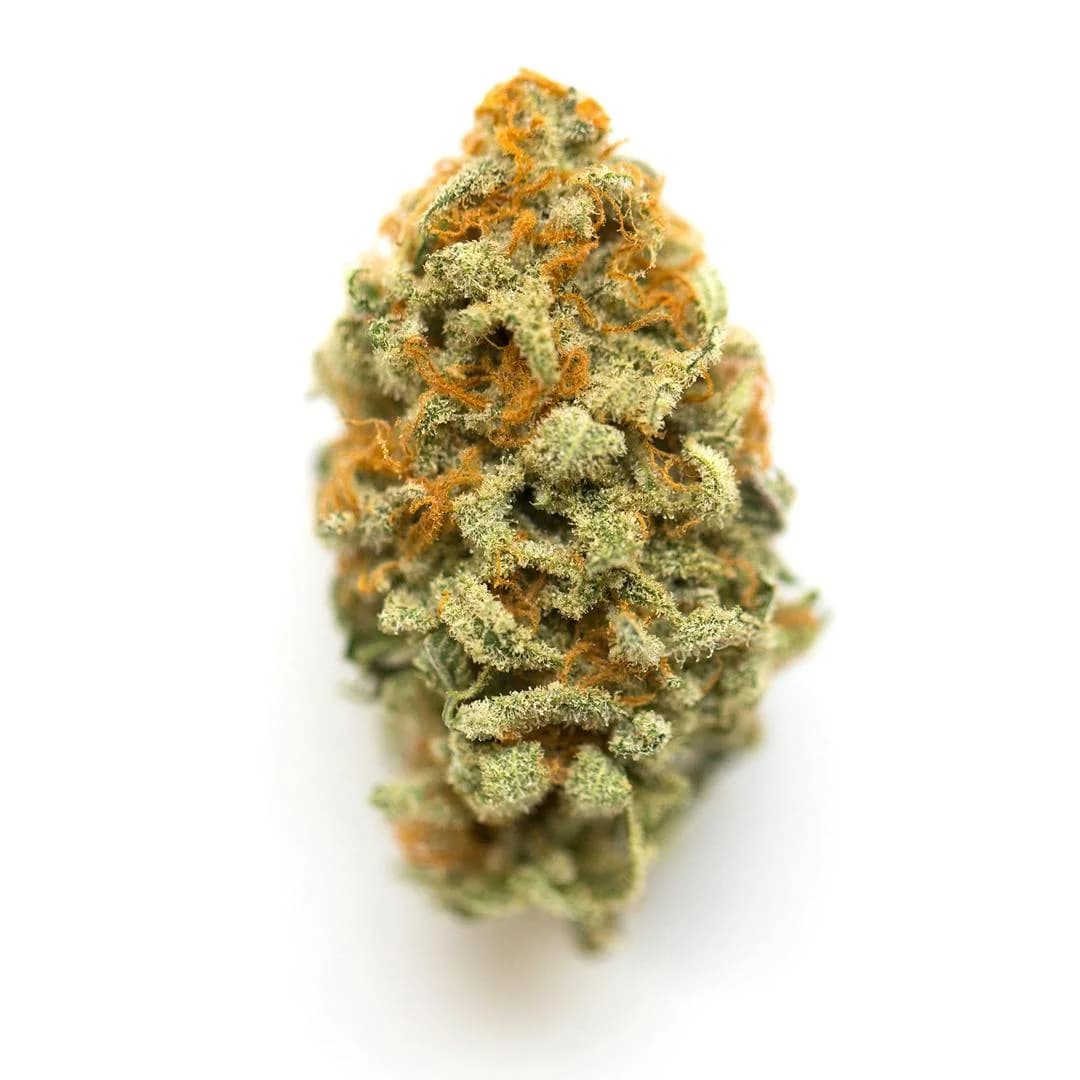
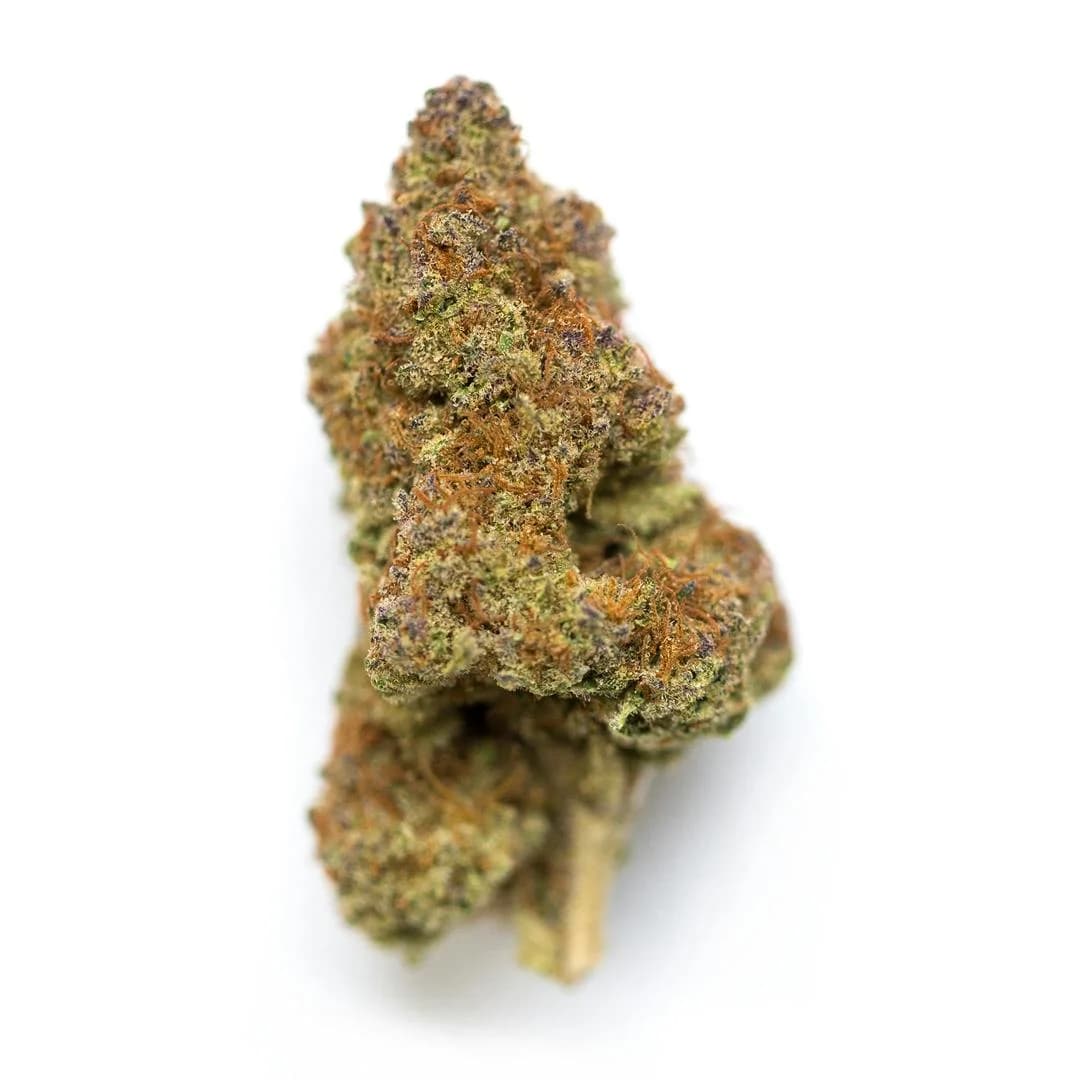
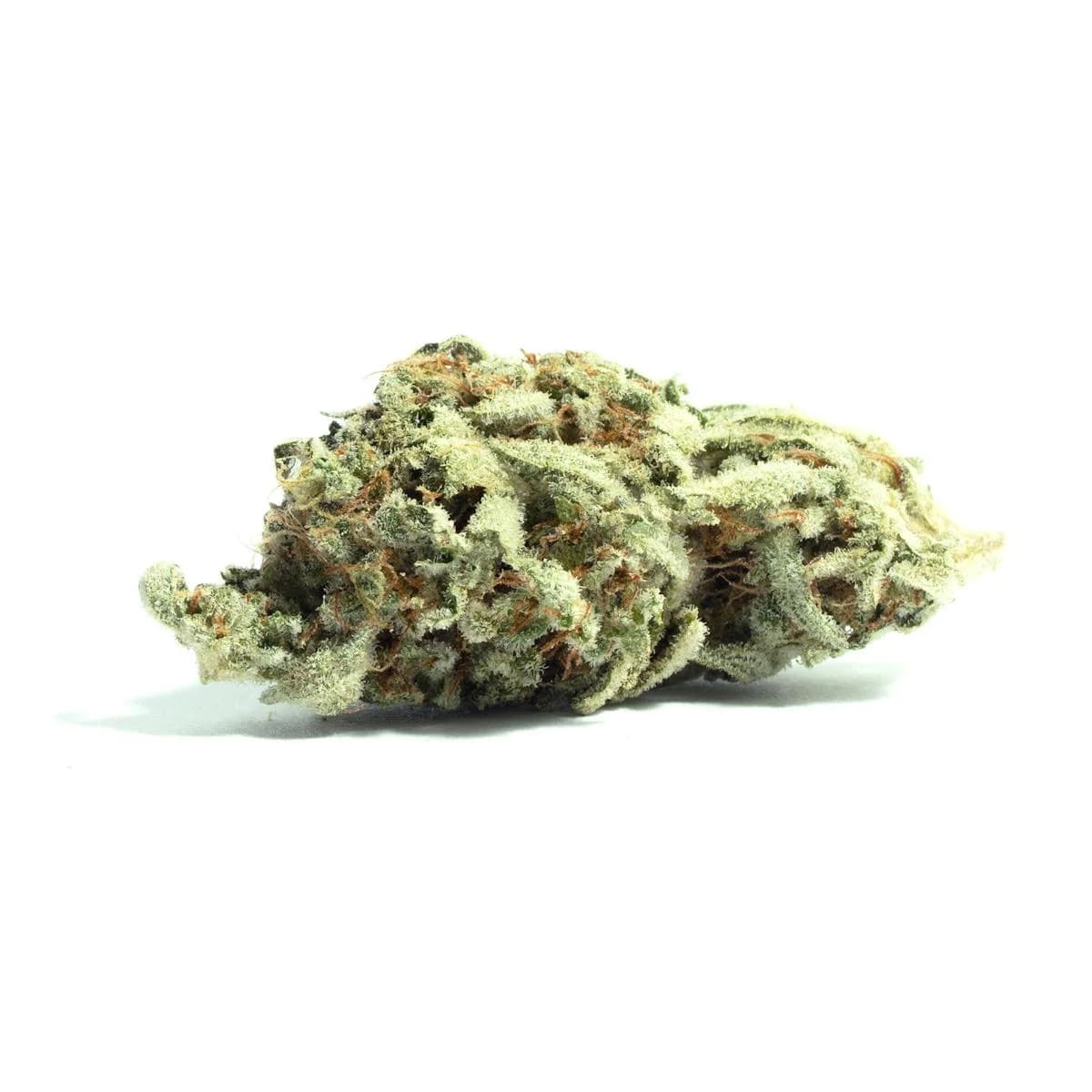
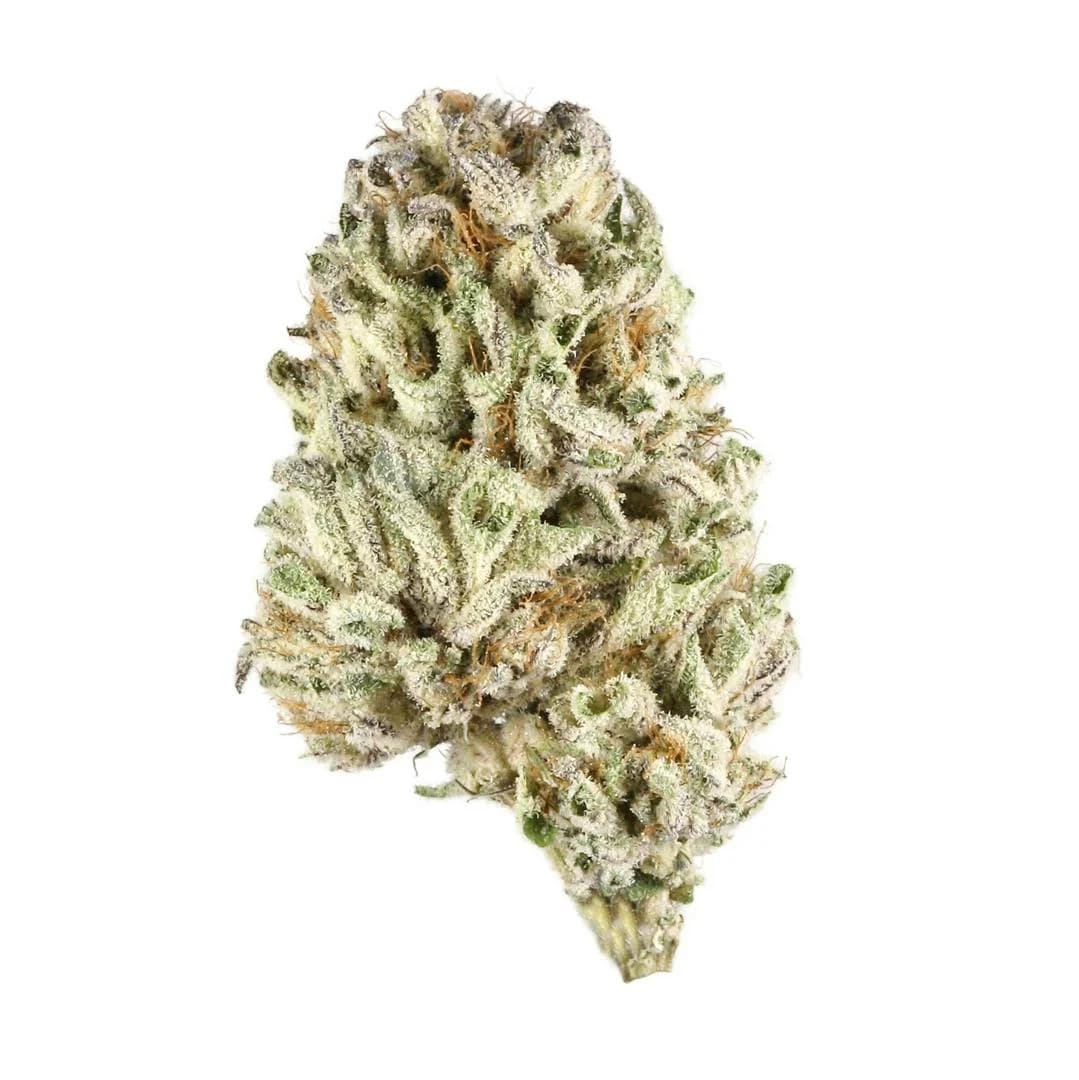
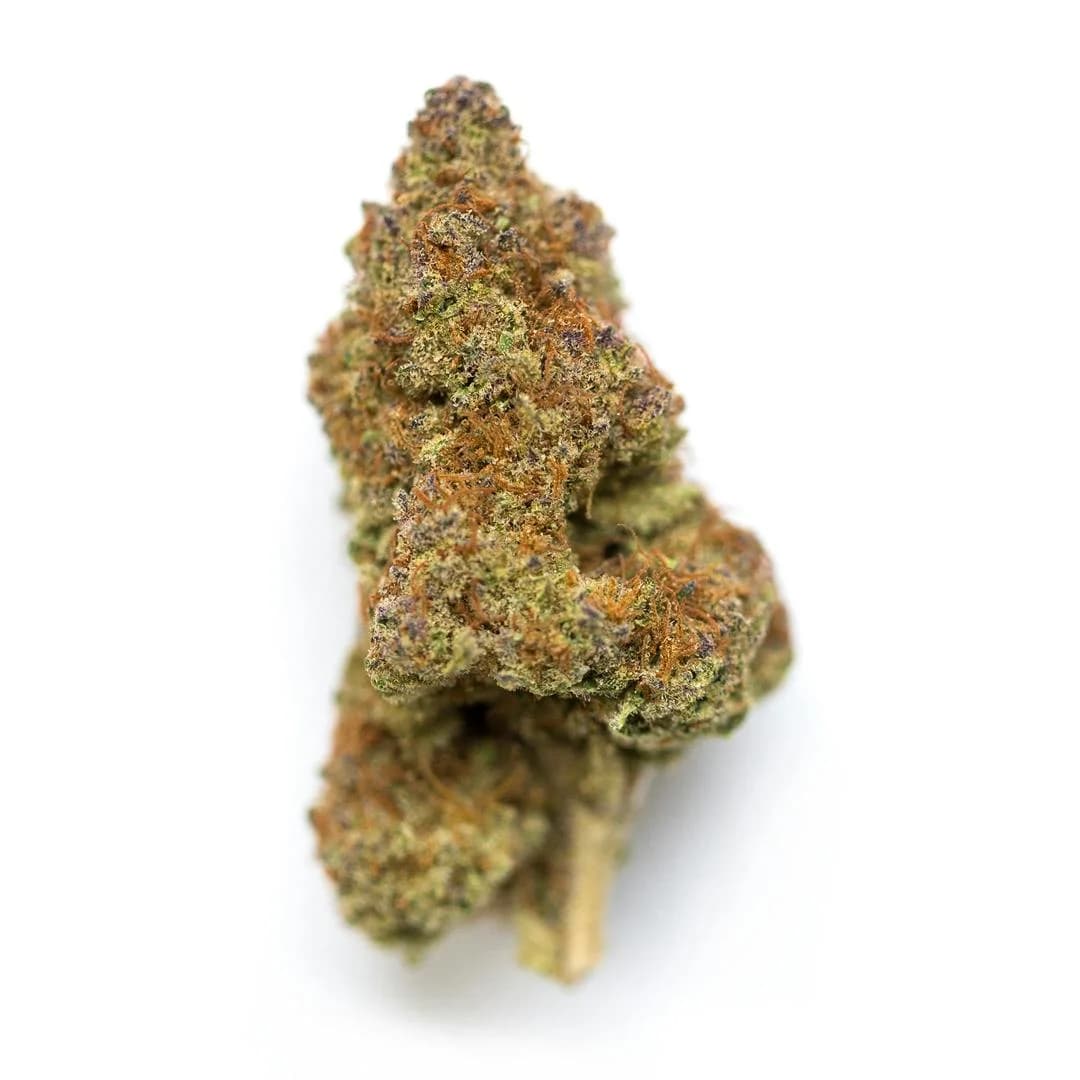
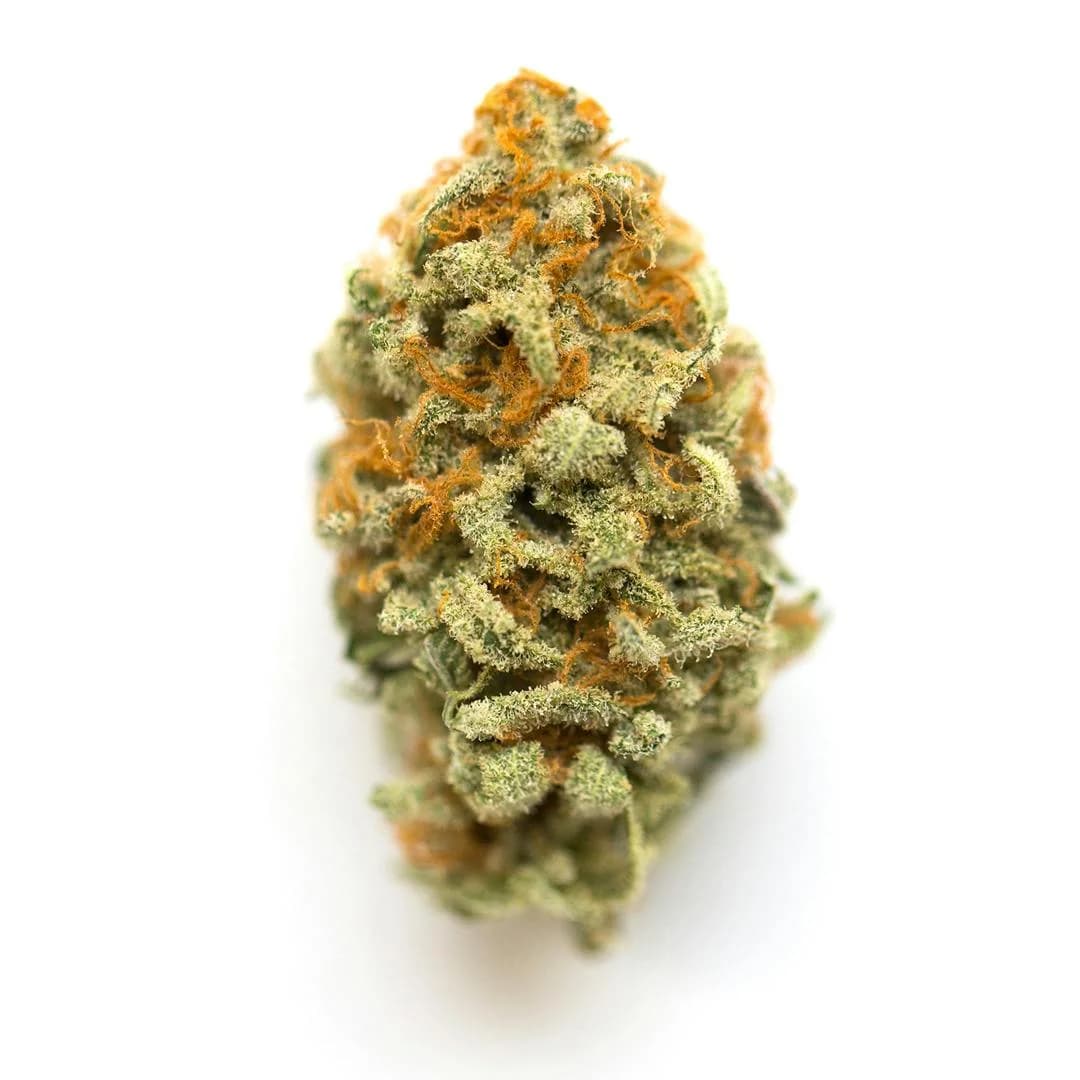
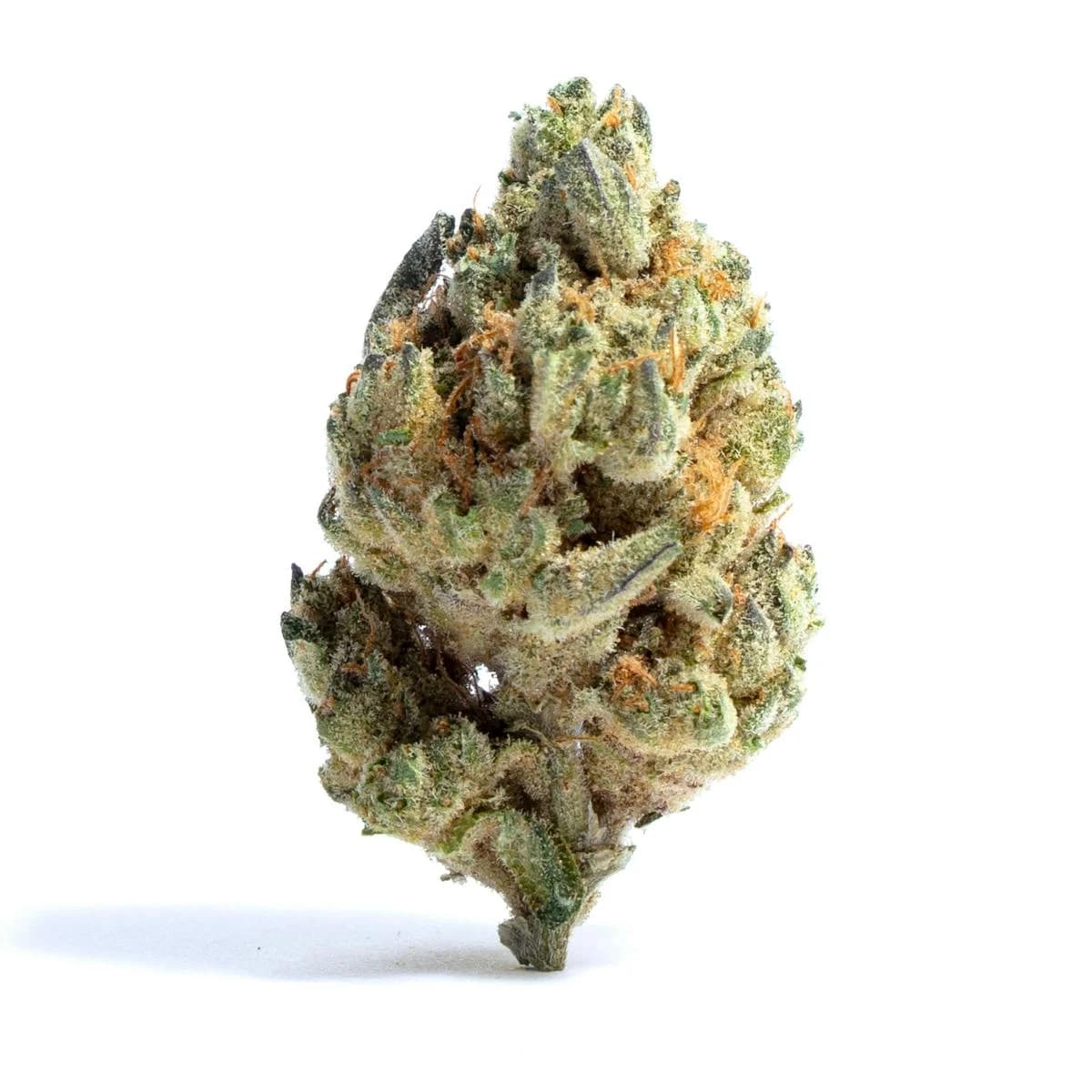
Blue Dream is a California-associated hybrid whose reported family joins Blueberry and Haze. Leafly lists berry and sweet flavor descriptors and a myrcene-led terpene profile. Those two kinds of information serve different purposes: flavor tags describe reader impressions, while the terpene list summarizes the source's chemistry data. Neither identifies a particular sample. This entry retains the reported cross without treating it as genetically authenticated parentage.
OG Kush is a hybrid name central to several later catalog families, including GSC and Headband. Leafly describes a Florida-to-California history but qualifies the proposed early cross rather than documenting a settled pedigree. Its listed aroma descriptors include wood, pine and earth, while its chemistry section names myrcene, limonene and caryophyllene. The uncertain origin story is retained as an attributed account; a shared OG name does not establish identical ancestry or chemistry.
UK Cheese is described by Leafly as a Skunk 1 phenotype associated with the Exodus collective. This page identifies that selection separately from the broader Cheese entry, whose source discusses later family contributions. Shared Cheese names should not erase differences between a clone and later seed lines.
Skunk Haze is associated with Mr. Nice Seeds in Leafly's account and combines Skunk and Haze heritage. The source uses the broad Skunk name, so this page does not automatically narrow it to a particular numbered line. The CBD alias is not itself a chemical measurement.
Sensi Star is listed by Leafly as an indica catalog entry, but the reviewed narrative does not establish a parent cross. This profile retains the name and attributed reference data while leaving its pedigree open. A lack of documented parents is not evidence that it is a landrace.
Sour Diesel, also called Sour D, is a catalog name associated with fuel-like aroma descriptions. Leafly currently labels the entry hybrid and reports Chemdawg and Super Skunk as parents. Its listed reader tags include diesel, chemical and skunk; these describe impressions rather than measured ingredients. The same source also uses sativa language in its review summary, so category wording should be read cautiously rather than used to settle ancestry or predict an individual's response.
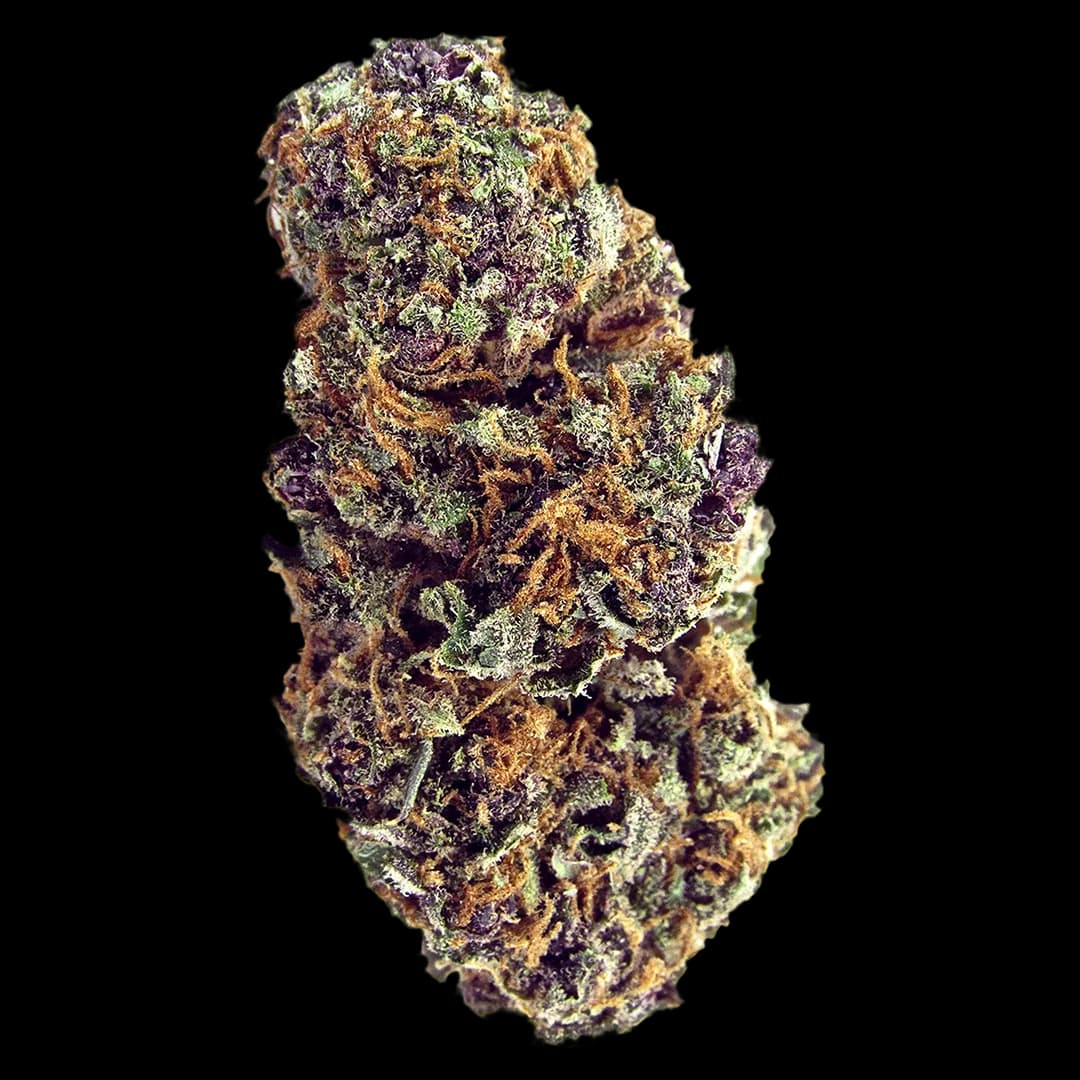
Granddaddy Purple, often shortened to GDP, is associated in Leafly's account with Ken Estes and 2003. Its pedigree is less settled than that familiar name suggests: the source presents both a Mendo Purps/Skunk/Afghan account and a Big Bud × Purple Urkle account. This profile keeps that disagreement visible. Grape, berry and violet are reported flavor descriptors, not evidence that either proposed family tree has been confirmed.
Ghost OG is described by Leafly as a cut of OG Kush. Its family connection is therefore represented as a phenotype selection. Keeping that distinction visible helps readers understand why an OG-family name can have its own page without requiring a separate two-parent pedigree.
Chem Sis, also called Chem's Sister, is described by Leafly as a Chemdawg phenotype. This page records that selection relationship, helping explain its appearance in other reported families. The identity does not establish a new cross or guarantee uniform chemistry across products.
NYC Diesel is listed by Leafly through Mexican and Afghani landrace backgrounds. The geographical terms leave the precise founding material unresolved. This entry remains distinct from Sour Diesel and ECSD, even though the catalog lists overlapping Diesel aliases.
Pineapple Express is a hybrid that Leafly traces to Trainwreck and Hawaiian. Pineapple, tropical and citrus are its displayed reader flavor tags. The source's terpene information needs more care: its summary table lists myrcene, caryophyllene and pinene, while the descriptive paragraph names caryophyllene, limonene and ocimene. This entry preserves the difference rather than combining both into a newly asserted chemical profile. A sample-specific analysis would be needed to establish actual composition.
AK-47 is described by Leafly as a hybrid with Colombian, Mexican, Thai and Afghan ancestry. That four-region summary does not specify the order of crosses or an immediate parent pair. Serious Seeds' own history connects AK-47 with Simon's work before the company's founding in 1995. This adds a breeder account to the catalog context without certifying every later AK-47-labelled sample. Skunk, tobacco and earth remain reported flavor descriptors rather than evidence of pedigree.
Trainwreck is associated by Leafly with Northern California and Mexican, Thai and Afghan ancestry. The source offers more than one story for its name rather than a single documented origin. Its summary classifies it as hybrid, while the narrative uses sativa language; these labels should not settle pedigree. Pine, earthy and woody are displayed reader tags, separate from a terpinolene-led catalog profile. The ancestry remains broader than an authenticated pair of immediate parents.
SFV OG Kush needs an explicit qualification: its current Leafly page names SFV OG and OG Kush, while the previously recorded SFV OG account describes an Afghani-crossed derivative. This page keeps the shared SFV OG connection and flags the other-parent conflict for further review.
The White is described by Leafly as a line of uncertain origin, once called Triangle and associated with Florida. Similar appearance to an OG does not establish OG Kush parentage. This page therefore preserves the historical uncertainty and does not conflate the Triangle name with Triangle Kush.
Romulan is described by Leafly through White Rhino and North American Indica. The latter is a broad regional label rather than an authenticated accession. This page links the named White Rhino profile while retaining that unresolved regional parent, making the uncertainty visible in the family view.
Wedding Cake is listed by Leafly as Triangle Mints #23, with Pink Cookies used as another regional name. Its reported cross connects Triangle Kush and Animal Mints. Vanilla, pepper and butter appear among the reader flavor tags, giving this profile more detail than its dessert-themed name alone. The catalog's cannabinoid values remain source summaries; the naming history and reported parent cross do not establish a fixed composition for everything sold under this name.
Bubba Kush is an indica-classified name with an explicitly uncertain pedigree in Leafly's account. The source describes OG Kush pollinating a plant called Bubba, whose identity was not established; Northern Lights is presented as a possibility rather than a confirmed parent. Coffee, earthy and pungent are reader flavor tags on the profile. Those impressions and the plant's appearance cannot resolve the unknown parent's identity, so the uncertainty remains part of the family record.
Durban Poison takes its regional identity from Durban in South Africa according to Leafly. The catalog classifies it as sativa without supplying a named two-parent cross. Its displayed pine, earthy and sage descriptors are reader impressions, while terpinolene leads the separate terpene list. A geographic origin is useful historical context but does not by itself authenticate every later selection carrying the name or establish a fixed concentration of any cannabinoid.
GSC is the catalog entry also known as Girl Scout Cookies. Leafly attributes it to Jigga and describes an OG Kush subtype crossed with F1 Durban. That intermediate parent name matters: it should not automatically be replaced with Durban Poison. Thin Mint and Platinum GSC are discussed as related variations rather than interchangeable specimens. Mint, sweet and earthy reader tags help describe the catalog profile but do not authenticate its genetics.
Chemdawg is linked by Leafly to the original Chemdog name and a 1991 bag-seed account attributed to breeder Chemdog. Finding seeds in acquired material explains a discovery story, not the identity of both parent plants. The source distinguishes Chem 91, Chem 4 and Chem Sis as variations, which should not be collapsed into interchangeable specimens. Chemical, diesel and pungent are reader descriptors; the names alone do not identify measured ingredients or authenticated genetics.
Haze is a broad sativa-associated family that Leafly places in Santa Cruz in the 1960s. Its account names Colombian, Mexican, Thai and South Indian ancestry without defining a complete sequence of crosses. The profile's spicy or herbal, tobacco and earthy tags describe reader impressions. This family-level history is useful when exploring descendants, but the word Haze in another strain's name is not enough to prove a direct parent relationship or identical chemistry.
Strawberry Cough is a sativa-classified catalog entry whose source describes its origins as uncertain while proposing Haze and Strawberry Fields as a possible cross. The proposed relationship therefore remains an attributed hypothesis rather than settled ancestry. Strawberry, sweet and berry are displayed reader flavor tags. Neither the fruit name nor the word Cough is a test of chemical identity, a measure of safety or proof that another similarly named sample is the same plant.
Northern Lights is listed by Leafly as an indica with reported Afghani and Thai ancestry. Its history section treats the Seattle origin story as a rumor and describes later distribution through the Netherlands. That uncertainty is part of the record, not a missing detail to fill by guesswork. Pine, earth and wood appear in its reader flavor tags. Numbered selections such as Northern Lights #5 require their own provenance rather than automatic equivalence with this broader entry.
Blue Cheese connects the Blueberry and UK Cheese families in Leafly's catalog account. UK Cheese is kept as a named selection rather than merged with every strain that uses the word Cheese, and the source does not establish a genetically authenticated cross. The profile carries reader-reported blue cheese, cheese and pungent notes, alongside catalog labels for caryophyllene, limonene and myrcene. Tags describe reported impressions and the terpene list describes source-recorded labels; neither fixes the identity or chemistry of an individual sample.
Headband is cataloged as a hybrid associated with OG Kush and Sour Diesel, with HB recorded as another name in the source profile. The two parent names describe an attributed catalog relationship and do not prove that every plant carrying the Headband name has the same ancestry. Diesel, earthy and pungent are reader-reported flavor descriptors, while caryophyllene, limonene and myrcene are listed separately as catalog terpene labels. The combination helps explain this record but is not a prediction of effects, potency or composition for a particular harvest.
Super Lemon Haze is associated in the catalog with Green House Seeds and a reported cross between Lemon Skunk and Super Silver Haze. That account places the entry within the wider Haze family while leaving the source's crossing history attributed rather than genetically authenticated. Citrus, lemon and lime are reader-reported flavor descriptors; caryophyllene, myrcene and terpinolene are the terpene names listed in the catalog. These labels document what the source reports and do not establish a fixed chemical profile or guarantee a particular experience for an individual sample.
Grape Ape is associated in the catalog with Apothecary Genetics and Barney's Farm. Its reported background includes Mendocino Purps, Skunk and Afghani, but the source does not provide a complete sequence that would justify converting all three names into immediate parents. Berry, grape and sweet are reader-reported flavor descriptors, while caryophyllene, myrcene and pinene appear as catalog terpene labels. The profile keeps breeder attribution, family context and sensory reports separate; a shared name does not establish identical genetics or chemistry across products.
White Widow is associated in Leafly's account with Dutch breeding in the 1990s and ancestry from Brazil and southern India. These regional descriptions are broader than named, authenticated parent plants. The profile's woody, earthy and floral reader tags sit alongside a myrcene-led catalog terpene listing. They describe the source's record rather than establish a universal sample profile. Historical breeder attribution and the exact ancestral material still need primary documentation.
Alaskan Thunder Fuck is associated with Alaska's Matanuska Valley. Leafly presents an early Californian and Russian story as legend and then describes a reported Afghani contribution, so the profile keeps the historical layers distinct instead of turning the story into a settled pedigree. Menthol, pine and sage are reader-reported flavor descriptors; caryophyllene, limonene and myrcene are separate catalog terpene labels. Geographic association and a named background provide context but do not authenticate every later selection or establish a universal cannabinoid concentration.
Cherry Pie is reported by Leafly as a Granddaddy Purple and F1 Durb cross. The catalog keeps the F1 Durb name exactly as given rather than silently equating it with Durban Poison or another similarly named record. Berry, sweet and tree-fruit are reader-reported flavor descriptors, while caryophyllene, myrcene and pinene are listed as catalog terpene names. A reported cross, a sensory tag and a source chemistry summary each carry different limits; none establishes a fixed profile for every product sold as Cherry Pie.
Blackberry Kush, also recorded as BBK, is described in Leafly's catalog as an Afghani and Blackberry cross. The source associates the name with berry, earthy and sweet reader descriptors, while caryophyllene, limonene and myrcene are listed separately as catalog terpene labels. These reports help explain how the profile is presented but do not authenticate the immediate parent plants or predict an individual's response. The alias is kept as a source-recorded name and is not merged with every product marketed as Blackberry or Kush.
Blueberry, also called Berry Blue, is associated with DJ Short's work beginning in the late 1970s. Leafly describes Thai-related ancestry and notes that material passed between breeders and seed banks over time. This history is a reason to preserve source and selection details rather than assume all Blueberry records describe one identical plant. Blueberry, berry and sweet are reader flavor descriptors; the fruit name alone is not a chemical measurement or proof of parentage.
Harlequin is cataloged as a sativa associated with CBD-rich selections. Leafly links its ancestry to Colombian Gold and Nepali, Thai and Swiss populations; sample chemistry still requires analysis.
Cannatonic is a Resin Seeds cultivar associated with CBD-focused selections. The breeder identifies Reina Madre and NYCD as its cross; this differs from an older lineage still found in some catalogs.
ACDC is described as a CBD-dominant selection from Cannatonic. Its connection is a phenotype selection, so it is shown differently from a cross between two parent cultivars.
Lemon Thai is attributed to Dutch Flowers and a cross involving Thai and Hawaiian material. The source does not establish the exact named Hawaiian parent, so the family view preserves that uncertainty.
Purple Urkle is associated with California and a proposed selection from Mendocino Purps. That origin is presented as a belief in the reference, so the selection link remains explicitly uncertain.
Big Bud's reported background combines Afghani, Northern Lights and Skunk #1. Leafly traces its history from the United States to the Netherlands; the three names are recorded as ancestry without inventing a crossing order.
Skunk #1 is associated with Sacred Seed Co. and selection work involving Afghani, Acapulco Gold and Colombian Gold. Its family record represents that multi-generation background rather than a simple two-parent cross.
Runtz is reported as a cross of The Original Z, also known as Zkittlez, and Gelato. This connects it to both the Z and Cookies-related families; the original profile is kept distinct from other Runtz-named selections.
Hawaiian is a sativa catalog entry with tropical and citrus flavor reports. The reference used here does not identify a named parent cross, so its ancestry remains open rather than inferred from the name.
Sherbert, also called Sunset Sherbet, connects the GSC family with Pink Panties. Leafly credits Mr. Sherbinski with its development; this profile separates that reported cross from sample-specific chemistry.
Maui Wowie is associated with Hawaii and appears under several spellings in the catalog. Leafly names Hawaiian as one reported parent while leaving the second parent unidentified, so the unknown is retained rather than filled with a familiar strain. Citrus, pineapple and tropical are reader-reported flavor descriptors, and caryophyllene, myrcene and pinene are listed as catalog terpene labels. Geographic association, a partial pedigree and sensory reports provide context without proving that every later plant using the Maui Wowie name shares one fixed lineage or chemical profile.
Triangle Kush is associated with Florida, with a name referring to Jacksonville, Miami and Tampa. This catalog records its regional history while leaving the immediate parent identities unresolved.
Animal Mints joins Animal Cookies and SinMint Cookies in Leafly's lineage account. Its mint-related flavor descriptors are reader reports, while the parent links describe the catalog's proposed genetic relationship.
Afghani is a regional cannabis name associated with Afghanistan and appears in many reported family histories. A regional name can cover varied material, so this profile does not imply one uniform genetic or chemical sample.
Super Silver Haze is attributed to Green House Seeds and a background involving Skunk, Northern Lights and Haze. Leafly supplies those ancestry names without defining a complete order of crosses, so the catalog preserves them as reported background rather than inventing immediate parents. Citrus, earthy and skunk are reader-reported flavor descriptors, while caryophyllene, limonene and myrcene are listed as source terpene labels. A family name and a terpene list orient the reader but do not authenticate every later selection carrying the name.
GG4, commonly called Original Glue, is attributed in the catalog to GG Strains LLC and a reported background involving Chem's Sister, Sour Dubb and Chocolate Diesel. The source does not provide a complete crossing sequence, so those names are retained as attributed ancestry rather than presented as a verified family tree. Earthy, pine and pungent are reader-reported flavor descriptors, while caryophyllene, limonene and myrcene are catalog terpene labels. These fields describe the source record and do not establish the chemistry of every sample sold under the GG4 name.
Red Congolese has competing regional and California lineage accounts in Leafly's catalog. This entry preserves the disputed background rather than presenting African, Mexican or Afghani references as one settled pedigree.
Blue Haze is listed by Leafly as a Blueberry and Haze cross. Both families already exist in the catalog, allowing the source-reported parent links to be explored without inventing additional ancestry.
Lemon Tree, also known as Lemon Tree Kush, is cataloged by Leafly as a Lemon Skunk and Sour Diesel cross. The existing parent records are linked while the citrus descriptors remain reader language.
Permanent Marker is a modern hybrid that Leafly connects to Biscotti, a Sherb backcross and Jealousy. This entry keeps that reported family context separate from sample-specific chemistry and reader-reported experience tags.
Black Cherry Punch is represented here from Leafly's hybrid catalog profile, including its reader-reported fruit and berry descriptors. Parentage is intentionally left unresolved in this batch rather than inferred from the name.
Alien Dawg, also written Alien Dog, is described by Leafly as Chemdawg combined with Alien Technology. The connection helps complete the reported families of Alien Cookies and Alien Kush. Alien Technology remains a named external parent until its own identity can be checked.
Chocolate Thai is described by Leafly as a Thai landrace name associated with historical imports. The source also questions whether present-day offerings preserve the original material. Its coffee and tobacco reader tags describe impressions, not evidence of historical authenticity.
Snowman belongs to the Cookies family: Leafly describes it as a type of GSC rather than documenting a two-parent cross. This profile therefore treats that connection as a selection. Its catalog chemistry and reader-reported descriptors remain separate from any particular sample.
Gelato #41 is a separately named Cookies-family entry. Leafly connects it to Sunset Sherbert and Thin Mint Cookies and associates the line with California. The numbered name is useful for identification, but does not guarantee that every product carrying it shares the same chemistry.
G13 carries an unusually elaborate origin story. Leafly itself describes the government-laboratory account as an urban legend, so this profile does not present it as established history. The catalog name and its reported attributes can be documented while its original parentage remains unresolved.
Shiva Skunk connects two established breeding names: Skunk 1 and Northern Lights #5. Leafly attributes the cross to Sensi Seeds. Adding this profile makes those reported family connections readable alongside descendants already in the library, including the history associated with Jack Herer.
Northern Lights #5 has its own Leafly entry and should not be collapsed into the broader Northern Lights label. It appears in the reported histories of Shiva Skunk and Jack Herer. The source genetics panel identifies Afghani, but does not establish a complete authenticated cross.
Cinderella 99, also called C99 or Cindy, is associated with Mr. Soul and Brothers Grimm. Leafly recounts a Jack Herer seed-origin story. This is recorded as ancestry rather than simplified into a direct two-parent cross, preserving the distinction between a founding story and a documented pedigree.
Alien Kush is a California-associated entry that Leafly describes through LVPK and Alien Dawg. Its name is distinct from Alien OG, even though both appear in related catalog families. Tea and woody reader descriptors describe this profile without establishing the identity of a particular plant.
Mazar I Sharif refers to an Afghan regional line in Leafly's account. A regional name can encompass varied material, so this page does not invent a two-parent cross. The source narrative speculates about CBD, whereas its displayed catalog value is rounded to zero; those are not equivalent kinds of evidence.
Starfighter is attributed by Leafly to Alien Genetics and a cross of Alien Tahoe OG with Lemon Alien Dawg. The source distinguishes the original material from later similar phenotypes offered by Exotic Genetix. That distinction is retained rather than treating every similarly named release as identical.
Leafly describes Strawberry Diesel as a cross of NYC Diesel and Strawberry Cough. It provides a missing family connection for profiles such as Bruce Banner. Strawberry and diesel flavor tags are reader impressions; neither the name nor those tags verifies a sample's chemical composition.
Alien Cookies is attributed by Leafly to Jaws Gear Genetics, combining GSC and Aliendawg. Its place in the library helps explain the reported background of MAC. Similar Cookies names are not merged automatically, and the listed reference values do not authenticate individual products.
Leafly connects Blueberry OG to a DJ Short Blueberry phenotype and OG Kush. Its narrative emphasizes CBD, while the displayed catalog summary reports a rounded zero. This profile preserves that mismatch instead of converting a descriptive claim into a laboratory result.
Blackberry has a separate identity from Blackberry Kush in the source catalog. Leafly lists Black Domina and Raspberry Cough as its parents. Keeping these names distinct helps readers follow the family links without assuming that similar berry names identify the same plant.
Strawberry Fields exposes a pedigree conflict: its Leafly page calls Strawberry Cough a parent, while the Strawberry Cough page proposes Strawberry Fields in its own background. This entry flags the contradiction instead of drawing a circular family tree. The other parent is described only as an undisclosed indica.
Bubble Gum has a recognizable name but incompletely documented parentage. Leafly links its history to Indiana material while explicitly describing the cross as unclear. The page keeps that uncertain ancestry separate from the catalog's reader descriptors and avoids inventing a second parent.
Sour Apple, also listed as Sour Apple Diesel, is described by Leafly as a Sour Diesel and Cinderella 99 cross. This connection fills part of Apple Fritter's reported family background. Apple and pear reader tags identify a sensory theme rather than measured ingredients or guaranteed experiences.
Burmese Kush is associated with T.H. Seeds in Leafly's account, which specifically names OG Kush in its background. The page does not identify a complete second-parent history. The geographical implication of its name is therefore not used to invent a regional parent.
Blue Power is an example of distinct lines sharing one name. Leafly describes a Sin City Seeds family involving Sour Double, Master Kush, The White and Blue Moonshine, then separately describes a Vision Seeds version. The family links here identify the former account, not a universal Blue Power pedigree.
Motorbreath, sometimes written Motor Breath, is described by Leafly through Chemdog and SFV OG Kush. The latter name is kept distinct from SFV OG, which has its own profile. Its fuel-related descriptors are attributed reader impressions rather than proof of a particular terpene concentration.
Mendo Breath links OGKB and Mendo Montage in Leafly's account. Both names are retained as distinct profiles so readers can follow the Cookies and Mendocino connections separately. Its vanilla-related descriptors are catalog impressions; they do not identify or validate a specific batch.
Clementine is described by Leafly as a Tangie and Lemon Skunk cross. This provides a useful connection to the citrus-associated family behind Mimosa. Orange and lemon tags summarize reader reports, while the listed terpenes are a separately attributed catalog summary.
Purple Thai, also called Oregon Purple Thai, is described by Leafly through Highland Oaxacan Gold and Chocolate Thai. This profile preserves both named connections and helps contextualize Blueberry's reported ancestry. Regional and historical names still require provenance evidence before they can authenticate present-day material.
ECSD is listed separately by Leafly as East Coast Sour Diesel. The reviewed narrative describes its identity and sensory character without establishing a complete parent cross. This page keeps that named line distinct from the broader Sour Diesel profile and leaves unsupported parentage unresolved.
Cannalope Haze is described by Leafly as Original Haze combined with a Mexican landrace. Original Haze links to the existing Haze profile; the unspecified Mexican material remains an external ancestry label. The regional reference does not justify choosing a particular Mexican cultivar as its parent.
California Orange has several long-used aliases, including Cali-O and Californian Orange. Leafly describes an older line with uncertain origins rather than a settled parent cross. Its citrus-associated name and reader tags help distinguish the catalog entry, but do not establish a verified family history.
Afghan Kush is associated by Leafly with the Hindu Kush region near the Afghanistan-Pakistan border. The account also mentions later seed distribution by White Label. Geographic origin and a later supplier are different facts; neither is converted here into a specific two-parent cross.
Green Crack is listed by Leafly with names including Green Crush and Mango Crack. Its proposed background pairs Skunk #1 with an unidentified indica, leaving part of the pedigree unresolved. Citrus, mango and earthy are reader flavor descriptors on the source page. The dramatic name is a naming convention, not an ingredient statement, and the unknown parent should stay unknown rather than be replaced with a familiar strain to complete the tree.
OG #18, also known as Private Reserve, is described by Leafly as an OG Kush phenotype. It is therefore connected to OG Kush as a selection rather than presented as a newly documented two-parent cross. The selected name does not fix the chemistry of every sample sold under it.
Jack's Cleaner is associated with Subcool's The Dank in Leafly's account. The source names Jack Herer and The Cleaner as the direct cross, then describes a more distant background for The Cleaner. This page keeps those levels separate instead of turning all ancestral names into direct parents.
Cheese has roots in a British Skunk 1 selection. Leafly also describes later Afghani contributions, so these links represent family history rather than one universal cross.
White Fire OG is listed by Leafly as a Fire OG and The White cross and is also known by several WiFi names. Those aliases map to one catalog entry without implying that every similarly named product is genetically identical.
Banana Kush is reported as a Ghost OG and Skunk Haze cross. Its name is associated with a banana-like aroma, while the source tags describe a broader fruit profile.
Lemon Kush has competing pedigrees: Master Kush with Lemon Joy, or the Alien Genetics version of Lemon G with Afghan Kush. These are alternatives, not a four-parent cross.
Lemon OG is described as a cross of a Las Vegas Lemon Skunk selection and OG #18. The Lemon Skunk link identifies the family; the particular Las Vegas selection is not a separate catalog record.
LA Confidential also appears under Confidential and Confidential OG. Leafly lists Afghani in its genetics section without establishing a complete two-parent pedigree.
Chocolope, also called D-Line, is reported to combine Chocolate Thai and Cannalope Haze. Its catalog identity connects chocolate-associated Thai genetics with the Haze family.
Tangie is reported as a California Orange and Skunk 1 cross. Despite the similar names and citrus associations, Tangie and Tangerine Dream are separate catalog entries.
Tangerine Dream is associated with Barney’s Farm. Its background lists G13, Afghani and Neville’s A5 Haze; the source does not specify each intermediate breeding step.
Jack the Ripper, or JTR, is reported as Jack’s Cleaner crossed with the Space Dude male selection of Space Queen. The catalog connects it with Subcool’s The Dank.
Amnesia Haze is associated with the Amsterdam cannabis scene. Leafly traces its background to South Asian and Jamaican landraces without documenting a complete sequence of crosses.
Animal Face is described by Leafly as a Face Off OG and Animal Mints cross associated with Seed Junky genetics. The catalog value and reported attributes remain reference data rather than sample-level measurements.
Strawberry Banana, or Strawnana, is attributed to DNA Genetics working with Serious Seeds. Its reported parents are Crockett’s Banana Kush and the Strawberry selection of Bubble Gum.
Forbidden Fruit connects Cherry Pie with Tangie. The source describes purple coloration and a fruit-associated aroma, characteristics that can vary between individual samples.
Master Kush is attributed to the Dutch White Label Seed Company. Leafly describes two regional landrace parents from the Hindu Kush area but does not identify their individual accessions.
Kosher Kush began as a Los Angeles clone-only line and is associated with DNA Genetics. Leafly relates it to OG Kush without documenting a complete two-parent cross.
Skywalker OG has conflicting pedigree information within Leafly: the genetics panel lists OG Kush and Mazar x Blueberry, while the description names Mazar and Blueberry OG. Neither account is treated as settled.
Skywalker is kept separate from Skywalker OG. The linked Leafly genetics panel names Blueberry OG and Mazar I Sharif; those specific identities are preserved in the pedigree.
SFV OG takes its name from California’s San Fernando Valley and is associated with Cali Connection. It belongs to the OG Kush family and differs from the later Afghani-crossed SFV OG Kush.
Tahoe OG is described as a phenotype of OG Kush rather than a separately documented two-parent cross. Tahoe OG Kush is another name for the same catalog profile.
Alien OG connects Tahoe OG with Alien Kush. Leafly describes its availability first as a Bay Area clone and later in seed form through Cali Connection.
Bruce Banner is attributed to Dark Horse Genetics and a cross of OG Kush with Strawberry Diesel. Numbered selections such as Bruce Banner #3 are not automatically treated as identical samples.
GMO Cookies also appears as Garlic Cookies. Leafly attributes this GSC and Chemdawg cross to Mamiko Seeds, with garlic and fuel associations in its description.
Biscotti has two reported pedigrees: Gelato 25 with Sour Florida OG, or Motorbreath with Gelato 41. The four links describe competing accounts, not a single four-way cross.
Slurricane is reported as a Dosidos and Purple Punch cross. This places it at a connection between the Cookies-related Dosidos family and the Purple Punch lineage.
Mimosa is reported as Clementine crossed with Purple Punch and is associated with Symbiotic Genetics. Purple Mimosa is an alternate name recorded on the source page.
Jealousy is attributed to Seed Junky Genetics. Its reported parents are Sherbert Bx1 and Gelato 41; the backcross and numbered selection are preserved as distinct parent identities.
Papaya is listed by Leafly as a Nirvana Seeds line involving Citral #13 and Ice #2. Both parent names remain source-attributed external identities until those records receive their own catalog entries.
London Pound Cake, also called Pound Cake, is associated with Cookies. Leafly identifies Sherbert as one parent but leaves the other indica parent unnamed.
Thai denotes a landrace cannabis population associated with Thailand rather than one documented modern cross. Thai Sticks is a historical name connected with its presentation.
Pink Panties is reported as Burmese Kush crossed with a Florida Kush backcross. The backcross designation is preserved because it is more specific than the broad Florida Kush name.
Animal Cookies, also called Animal Crackers, is reported as GSC crossed with Fire OG. These two parent links connect it to both the Cookies and OG families.
Lemon Skunk is attributed to DNA Genetics and two selected Skunk phenotypes. The individual selections are not named, so this record does not invent separate parent identities.
Acapulco Gold is associated with the area around Acapulco in Mexico. The regional origin is documented separately from a modern, named two-parent pedigree.
Colombian Gold is associated with Colombia’s Santa Marta mountains. Leafly describes this regional landrace as a contributor to the later Skunk 1 family.
Face Off OG is associated with Archive Seeds and a California OG Kush selection from the late 1990s. This is represented as selection history rather than an invented two-parent cross.
Larry OG is associated with Orange County, California. Leafly reports OG Kush and SFV OG as its parents and records several Larry aliases for the same profile.
Grapefruit is reported as Cinderella 99 crossed with an unnamed sativa landrace. Leafly mentions both Nectar Seeds and Positronic Seeds, so no single breeder attribution is assigned here.
Gelato #33 is a numbered selection from the Gelato family. Its family background is Sherbert with Thin Mint GSC; the selection link keeps it distinct from the general Gelato record.
Chocolate Diesel is reported as Sour Diesel crossed with Chocolate Thai. Its catalog identity connects the Diesel family with chocolate-associated Thai genetics.
Black Domina is described by Leafly using four family contributors: Northern Lights, Ortega, Hash Plant and Afghani. Those connections are shown as ancestry rather than implying a single four-parent mating. The source does not establish every intermediate generation.
Raspberry Cough is attributed by Leafly to Nirvana Seeds and a pairing of Cambodian landrace material with ICE. The Cambodian reference remains regional, while ICE remains a named external parent. The berry name and reader flavor tags do not identify a particular ancestral accession.
OGKB expands to OG Kush Breath, but Leafly describes its family connection as a believed descent from GSC. The name alone is not used to add OG Kush as a direct parent. An ancestry link preserves the tentative scope of the source account.
Lavender, also called Lavender Kush, is attributed by Leafly to Soma Seeds and a background involving Super Skunk, Big Skunk Korean and Afghani Hawaiian. The three named contributors are shown as ancestry because the reviewed account does not establish each intermediate cross.
Stardawg is described by Leafly through Chemdog 4 and Tres Dawg genetics. Because the catalog already has a broader Chemdawg identity, that side is recorded as ancestry rather than collapsed into an exact parent selection.
Critical Mass is listed by Leafly as an Afghani and Skunk #1 cross. The profile keeps that reported family connection alongside source-linked catalog parameters without converting reference values into laboratory ranges.
Charlotte's Web is represented from Leafly's CBD-focused catalog profile and its Stanley Brothers association. The checked source does not establish a complete public parent pair, so lineage remains unresolved here.
Ghost Train Haze is described by Leafly as a Rare Dankness line involving Ghost OG and Neville's Wreck. The family links are source-reported and are kept separate from reader experience descriptors.
Godfather OG is cataloged by Leafly with XXX OG and Alpha OG parentage and several alternate names. This entry keeps those labels together while retaining the parent records as external until independently cataloged.
Purple Haze is associated by Leafly with Purple Thai and Haze ancestry using qualified historical language. The catalog therefore records ancestry rather than presenting a genetically authenticated immediate cross.
Green Goblin has more than one identity account in Leafly's catalog, including a Green Crack association and a Northern Lights/Skunk explanation. This profile leaves that disagreement visible rather than choosing a single pedigree.
Blue Diesel is listed by Leafly as a Blueberry and NYC Diesel cross and appears under several alternate names. Those aliases are searchable while the parent relationship remains source-attributed.
Panama Red is a historically named sativa entry that Leafly associates with Panama and Colombia. These geographic ancestry labels are kept as regional context rather than converted into authenticated named parent strains.
Malawi is presented by Leafly as a sativa landrace associated with the Salima region of Malawi. A regional landrace identity is recorded without inventing a two-parent cross or treating every modern sample as identical.
Gastro Pop is listed by Leafly as an Apples and Bananas and Grape Gas cross associated with Compound Genetics. The source-reported family connection is retained without converting catalog percentages into lab measurements.
LA Kush Cake is listed by Leafly as a Wedding Cake and Kush Mints cross and appears under several regional or selection names. Those aliases remain attached to one catalog identity without erasing selection uncertainty.
Mango Kush is represented from Leafly's hybrid catalog entry with mango, tropical and sweet reader descriptors. Parentage is left unresolved here because the checked source excerpt did not establish a complete attributed cross.
Mango, also listed as Mango OG, is described by Leafly through KC 33 and Afghani genetics. The Afghani parent links to the existing catalog while KC 33 remains an external source identity.
Banana OG is described by Leafly as involving OG Kush and a Banana parent identity. OG Kush links to the existing catalog; the Banana parent remains external rather than being inferred from similarly named strains.
Platinum Cookies is a GSC-family entry that Leafly connects to OG Kush, Durban Poison and an additional unknown strain. The catalog keeps known ancestry links while leaving the unresolved component explicitly unknown.
Cookies and Cream is described by Leafly as Starfighter crossed with an undisclosed GSC phenotype. Starfighter can be linked directly, while GSC remains ancestry because the exact phenotype is not identified.