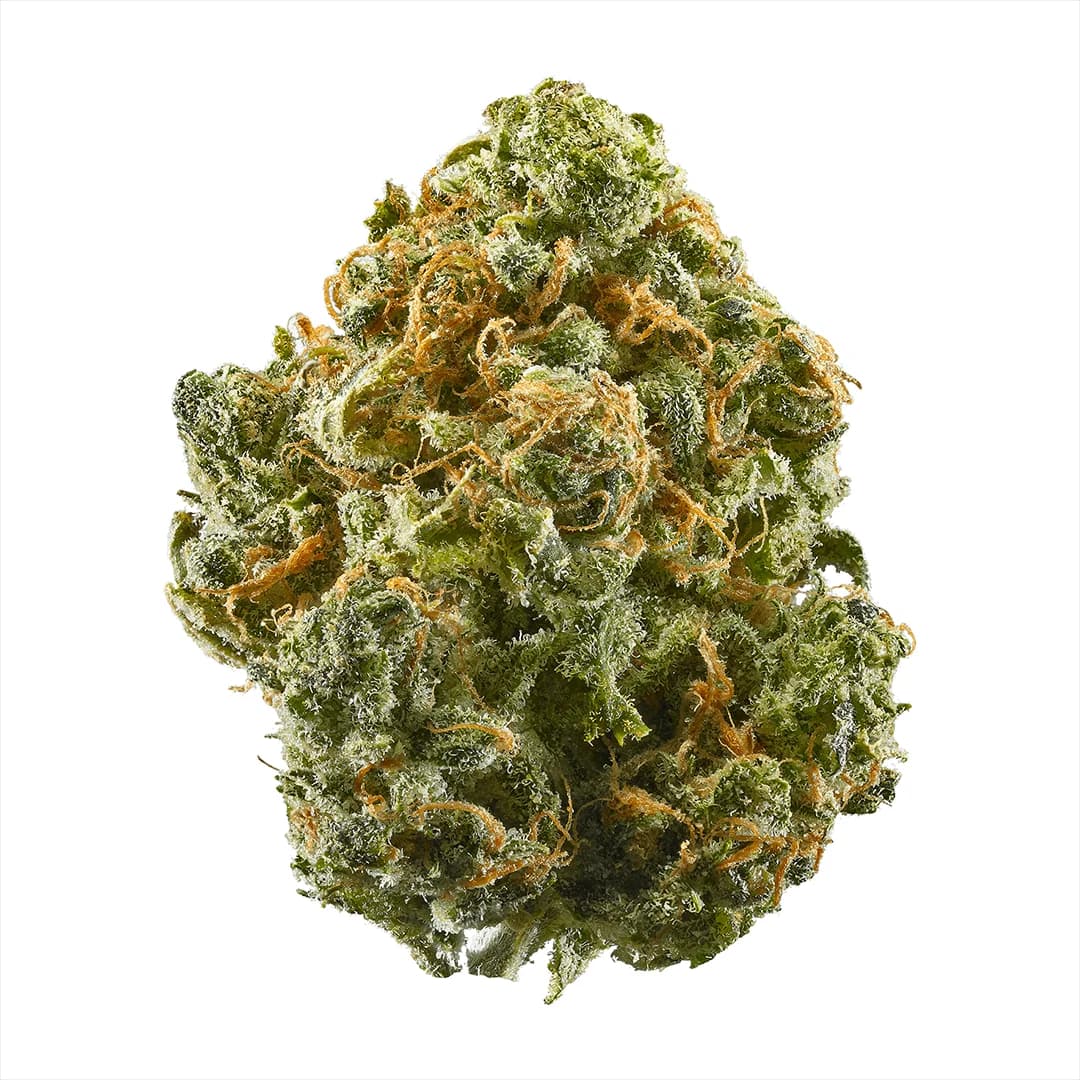
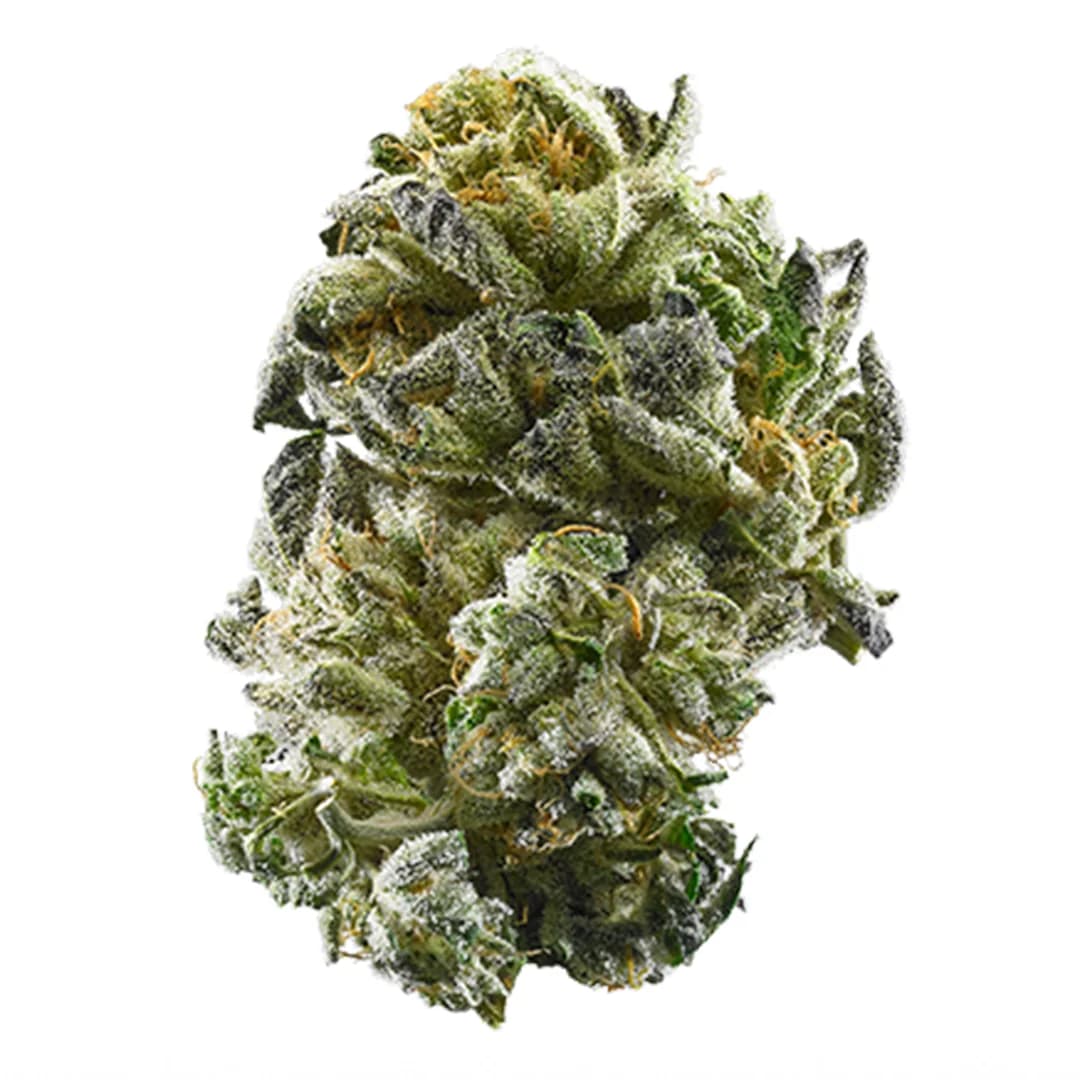
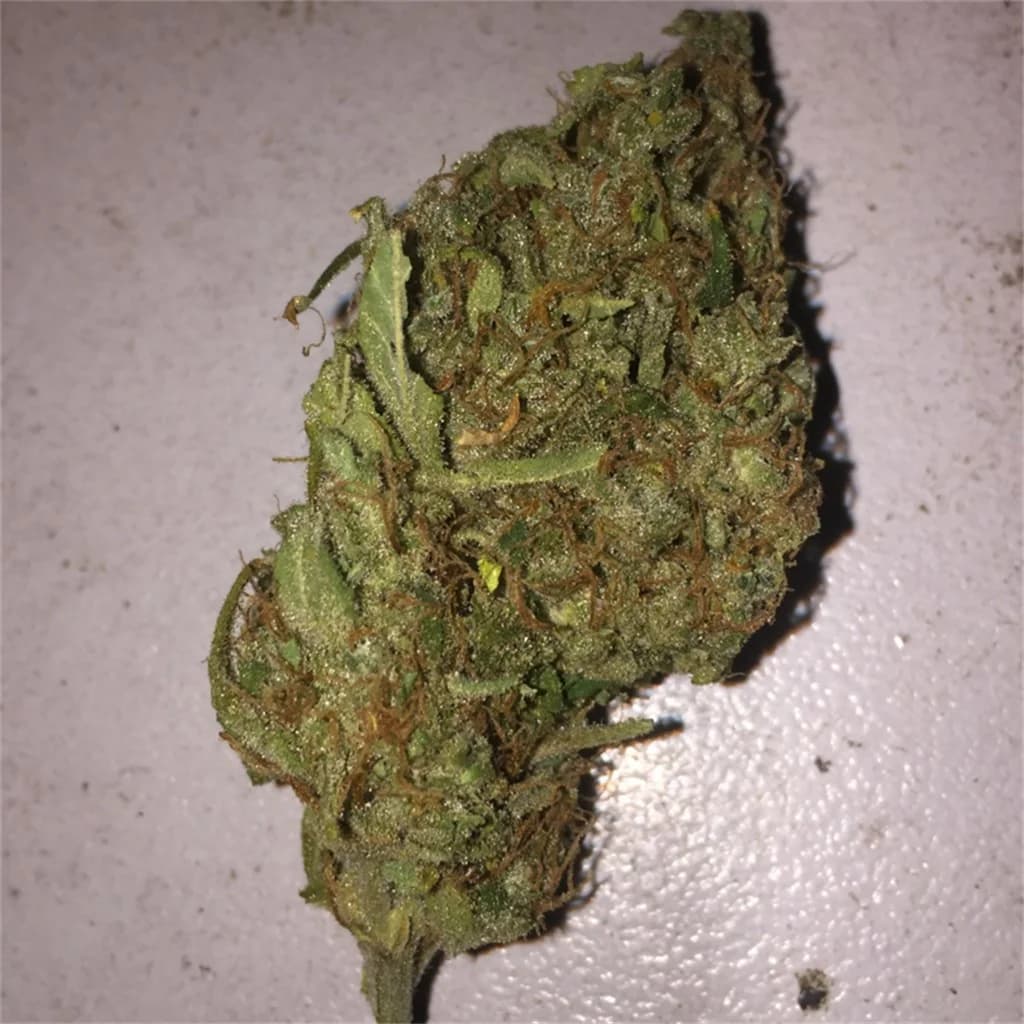
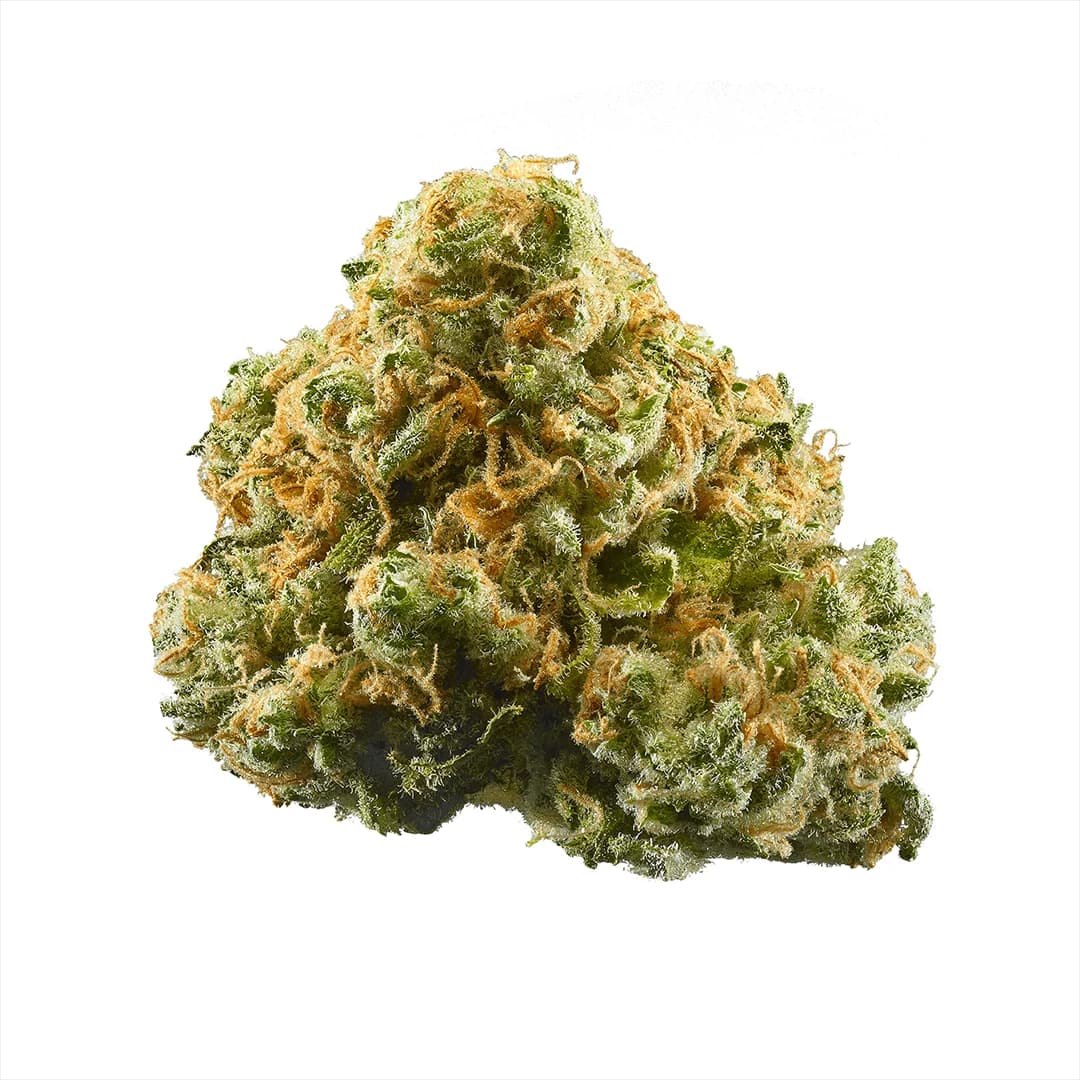
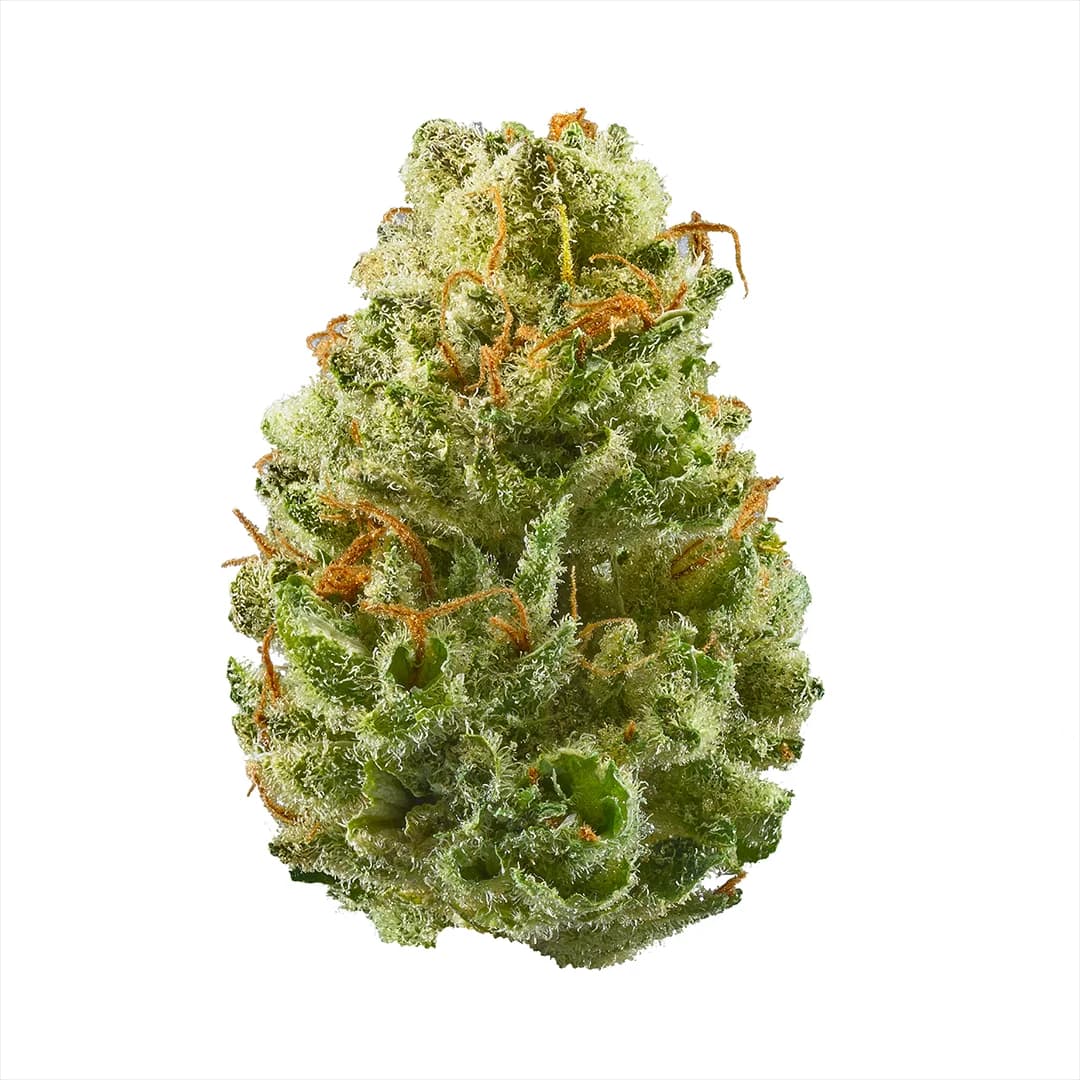
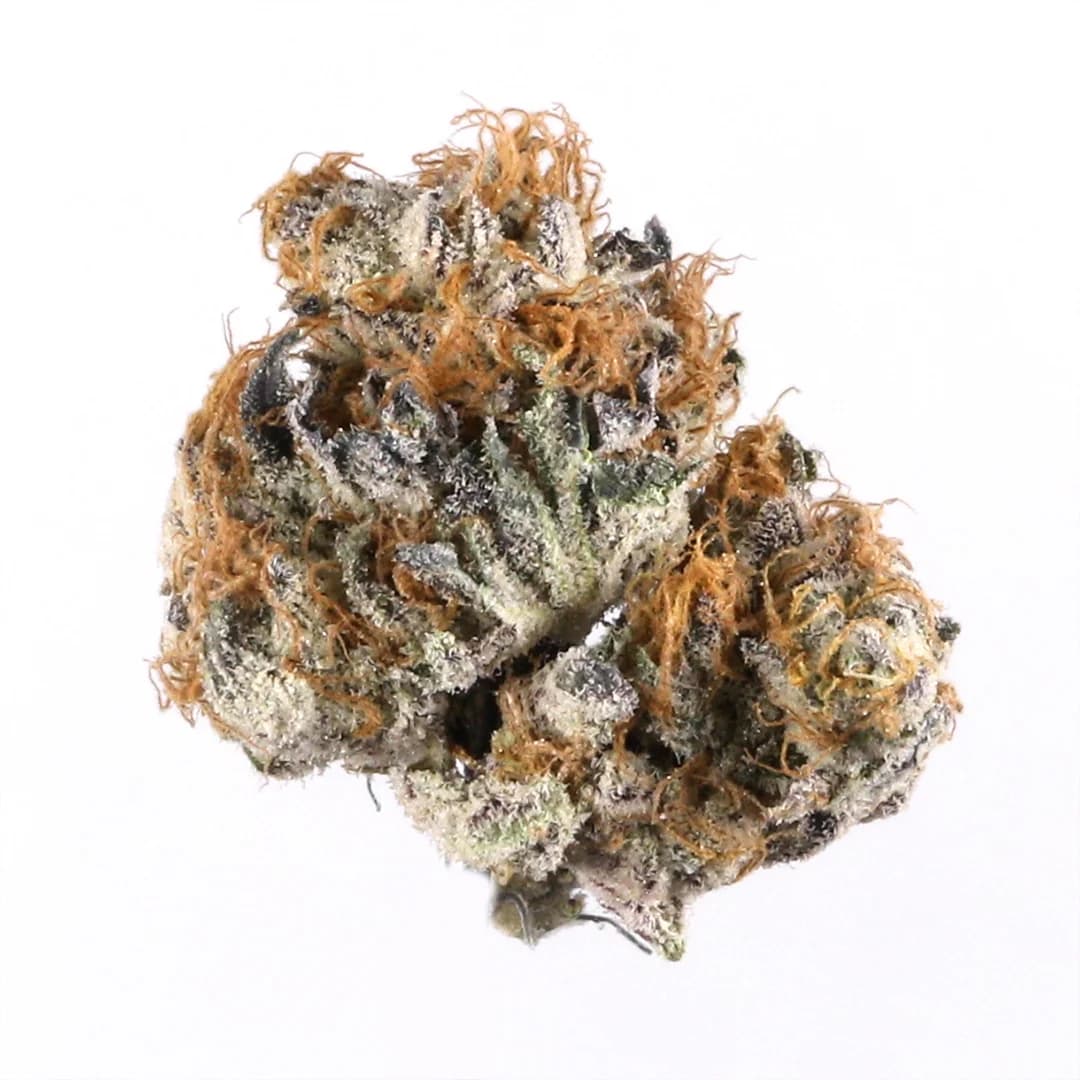
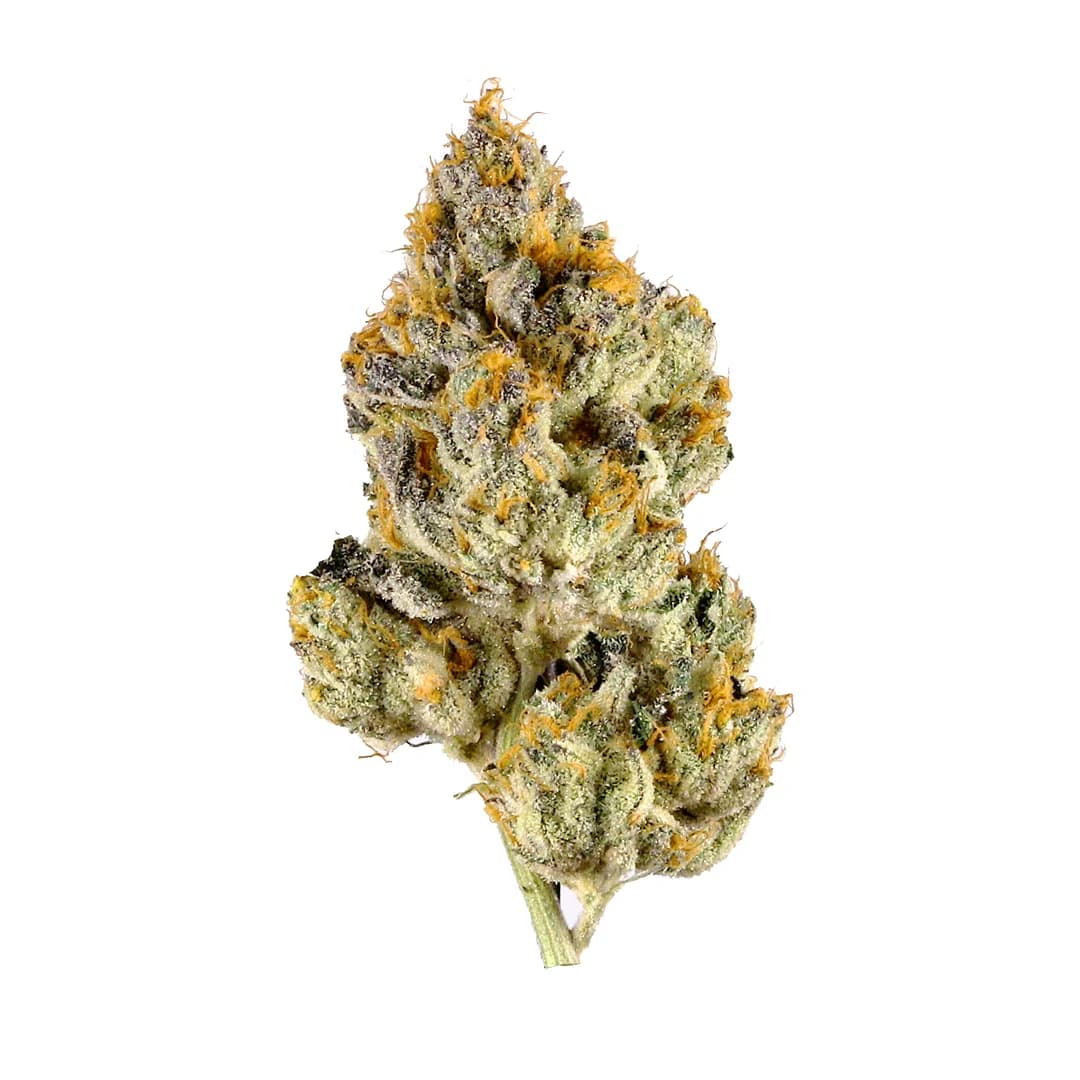
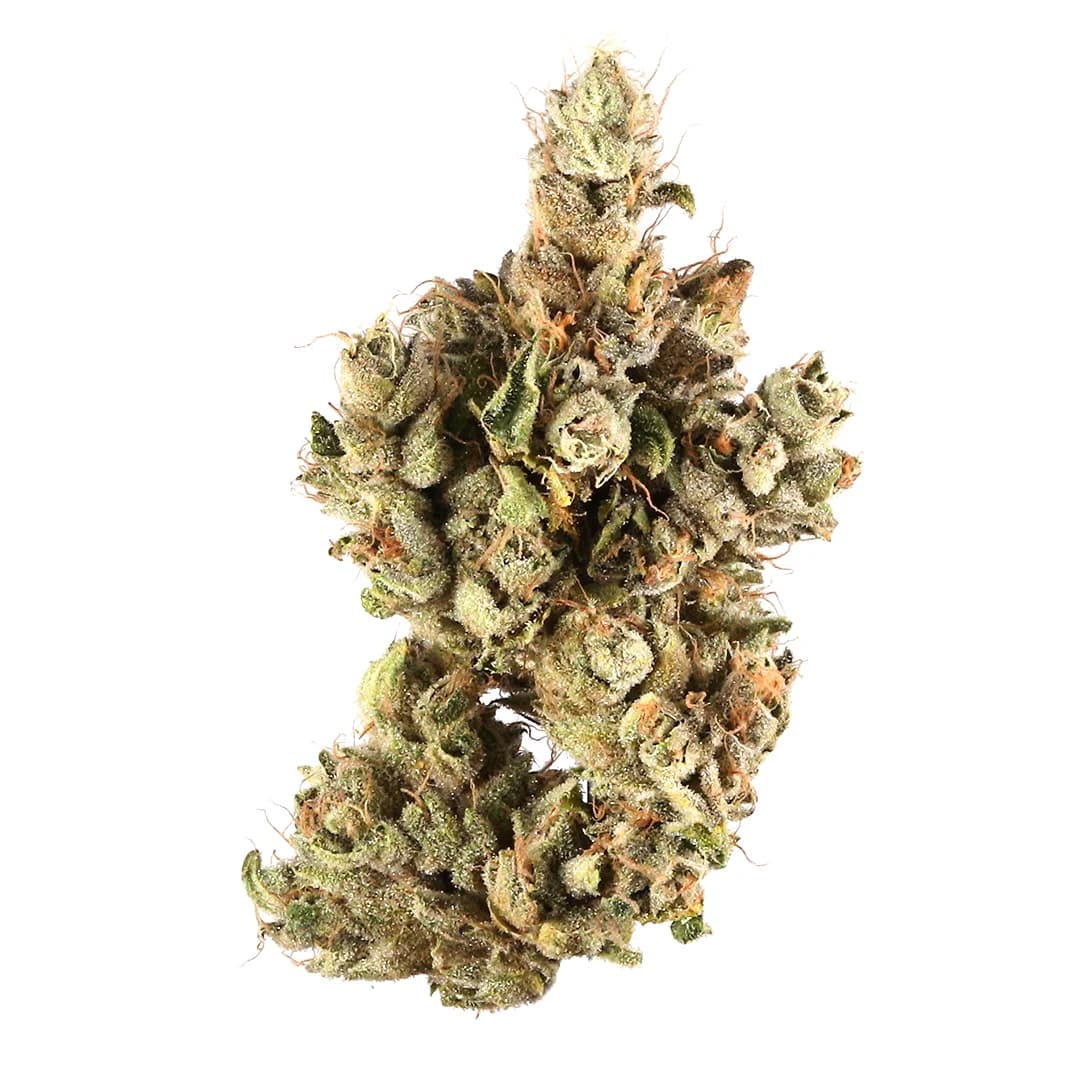
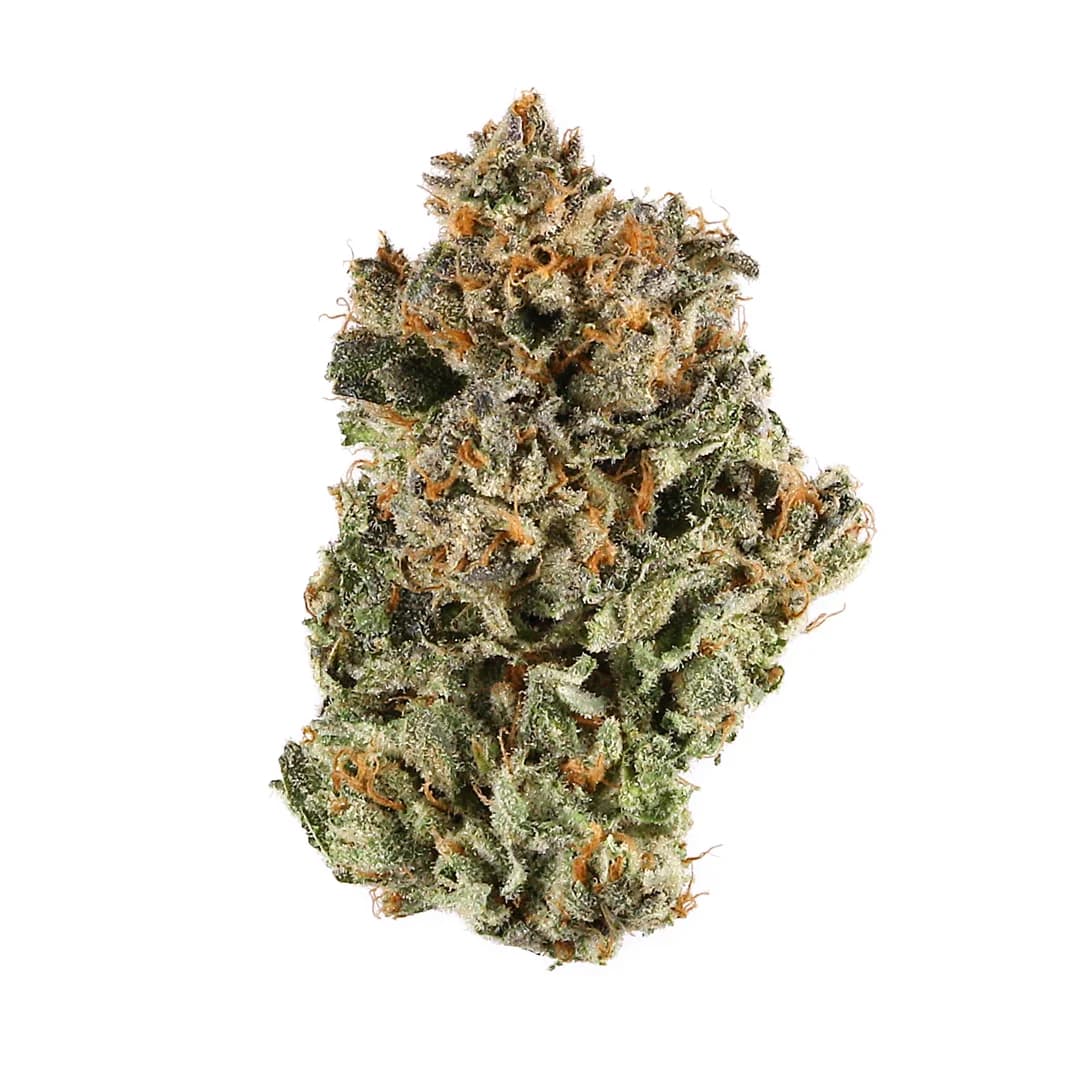
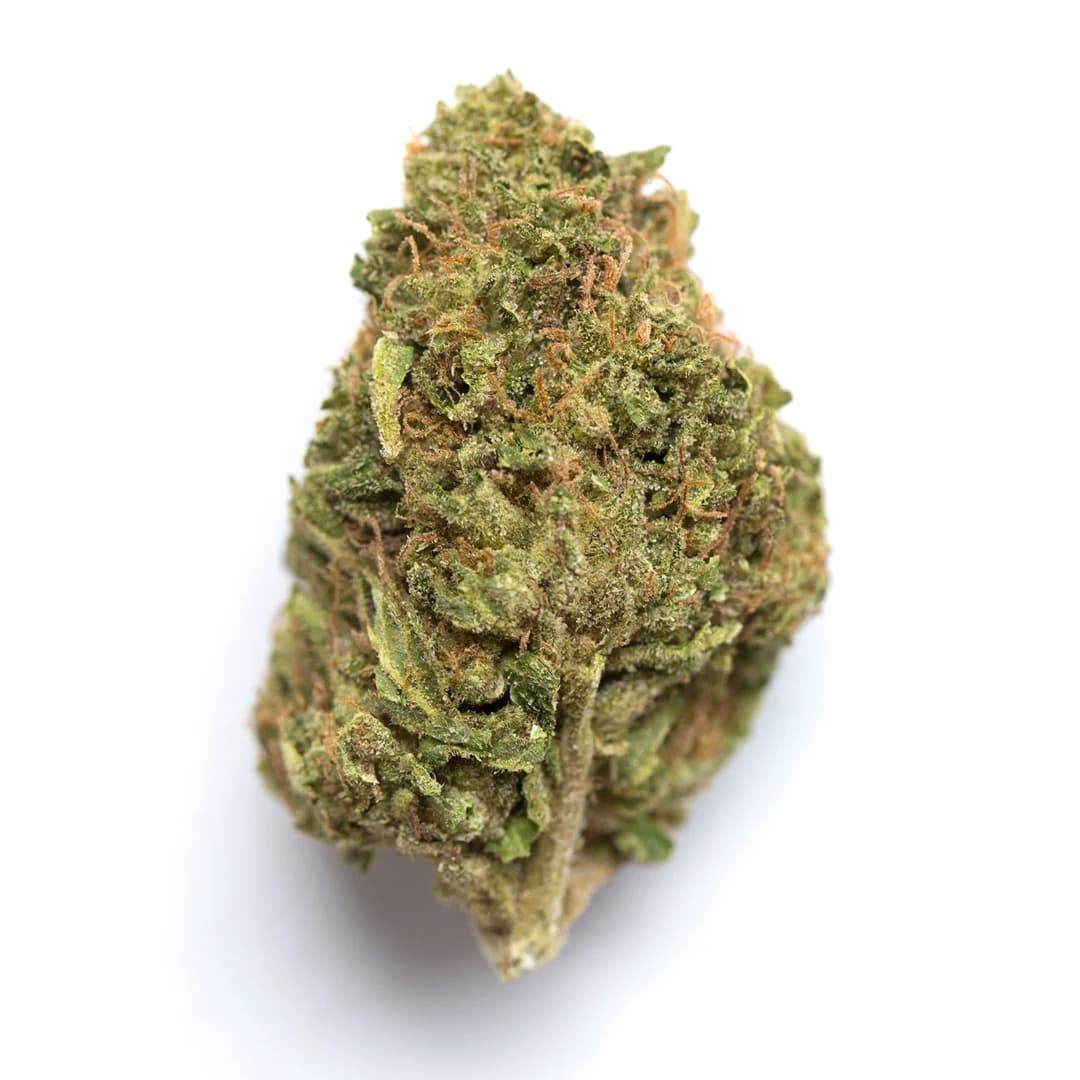
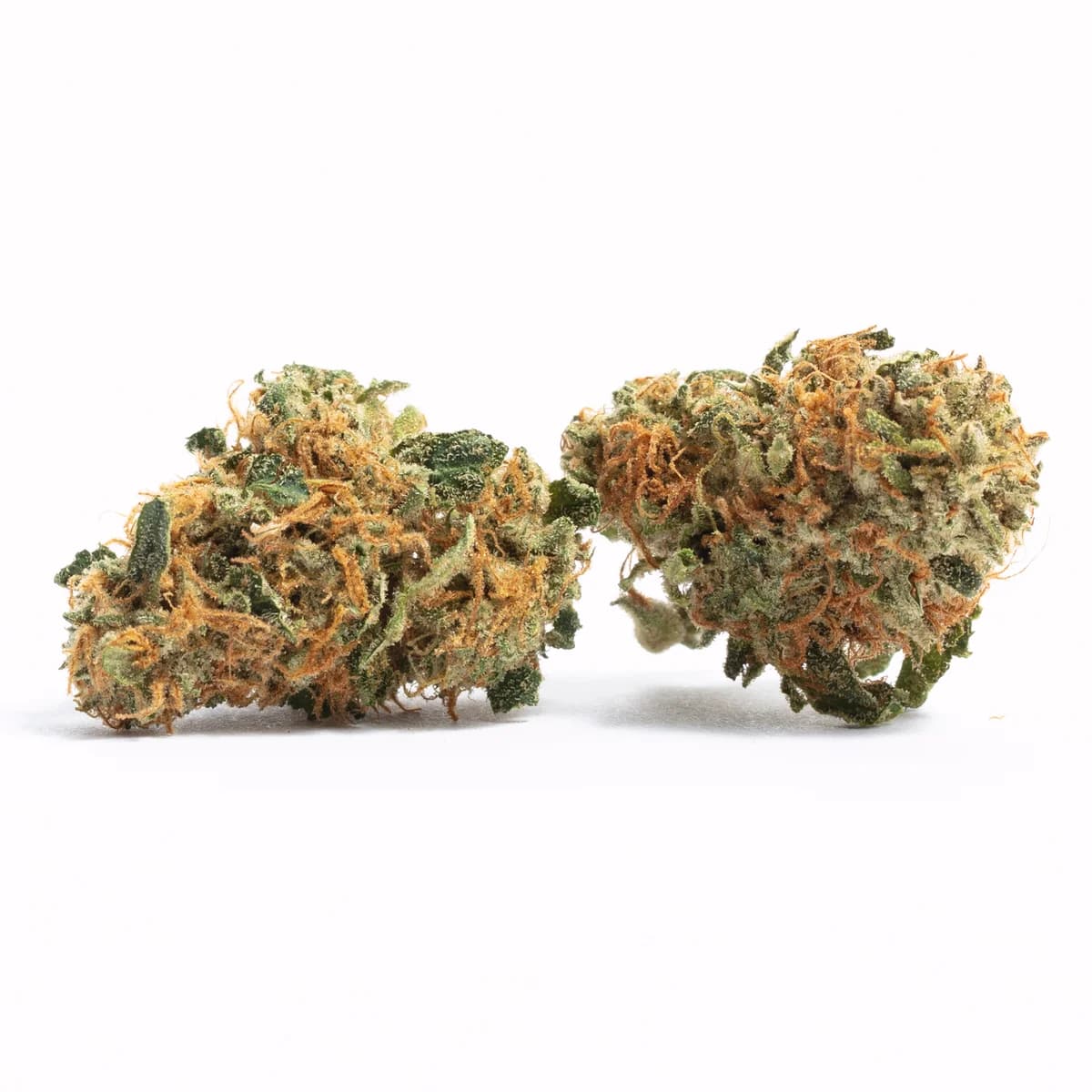
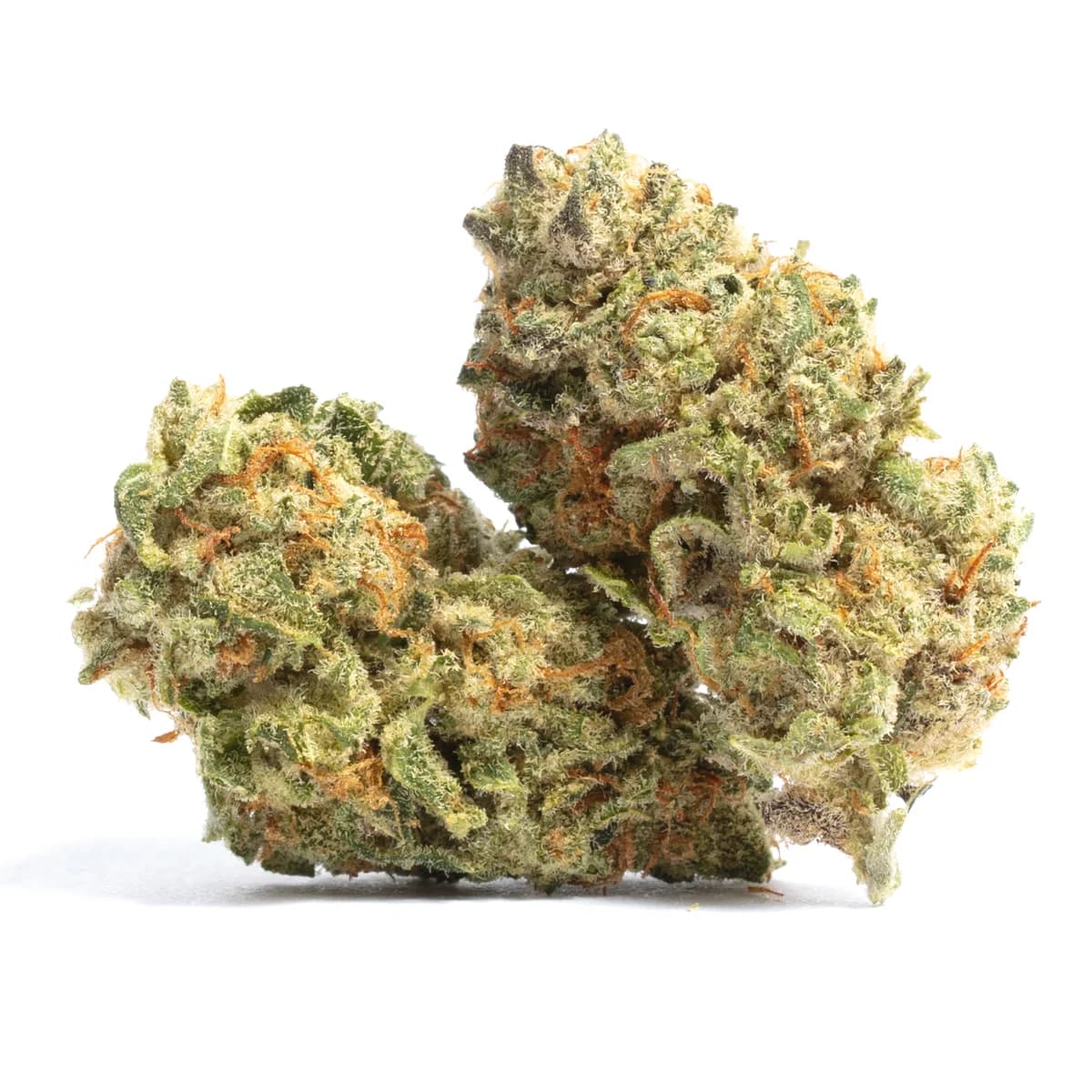
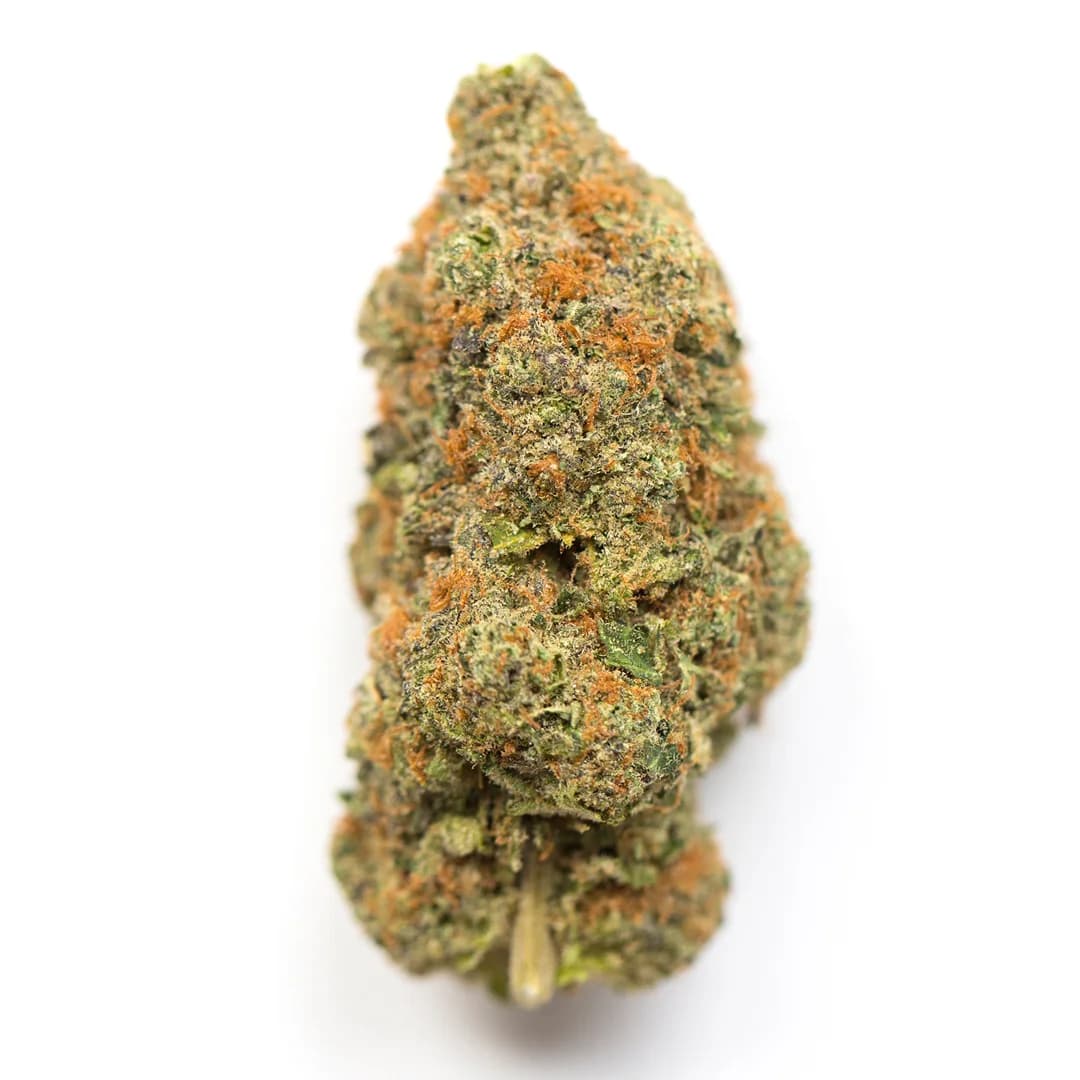
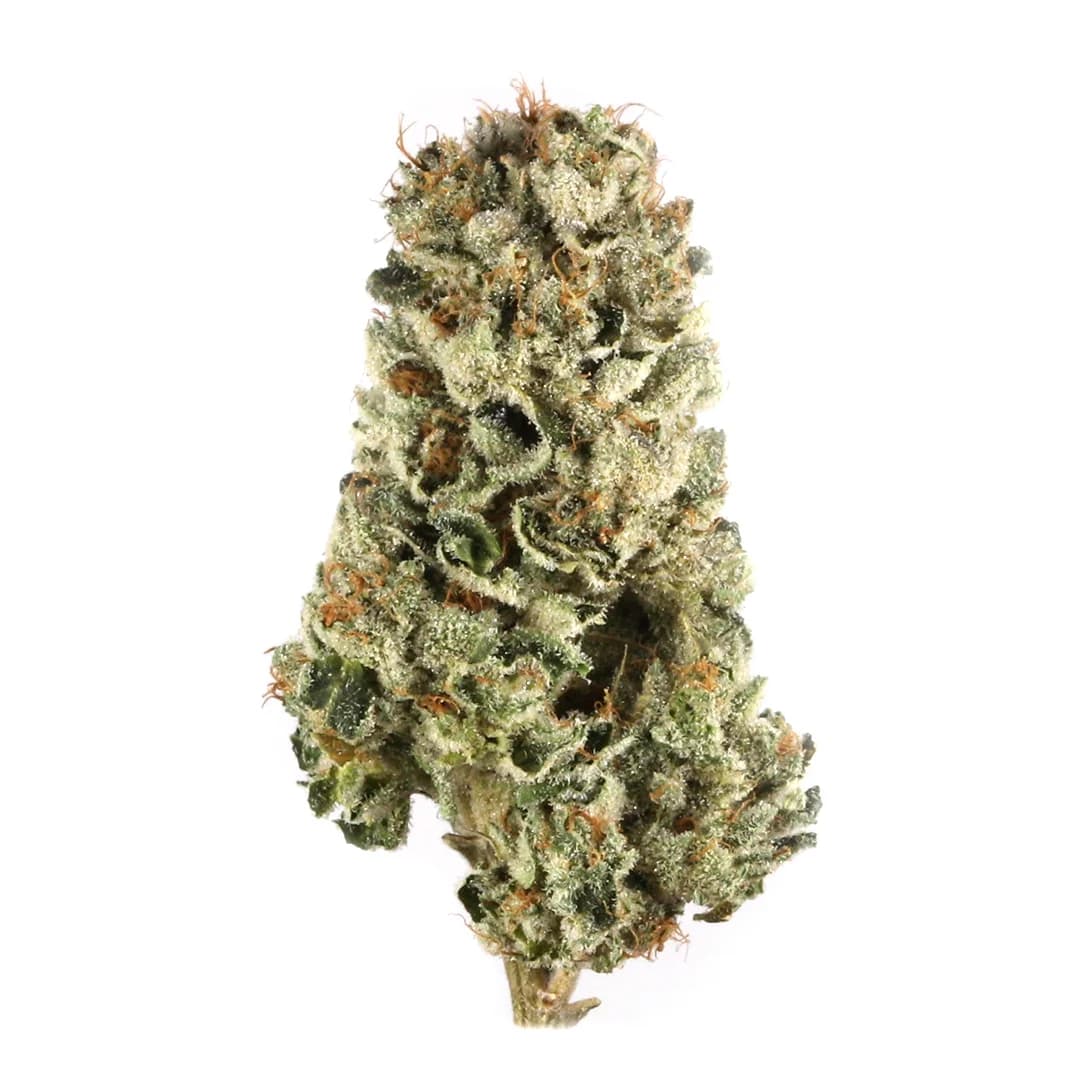
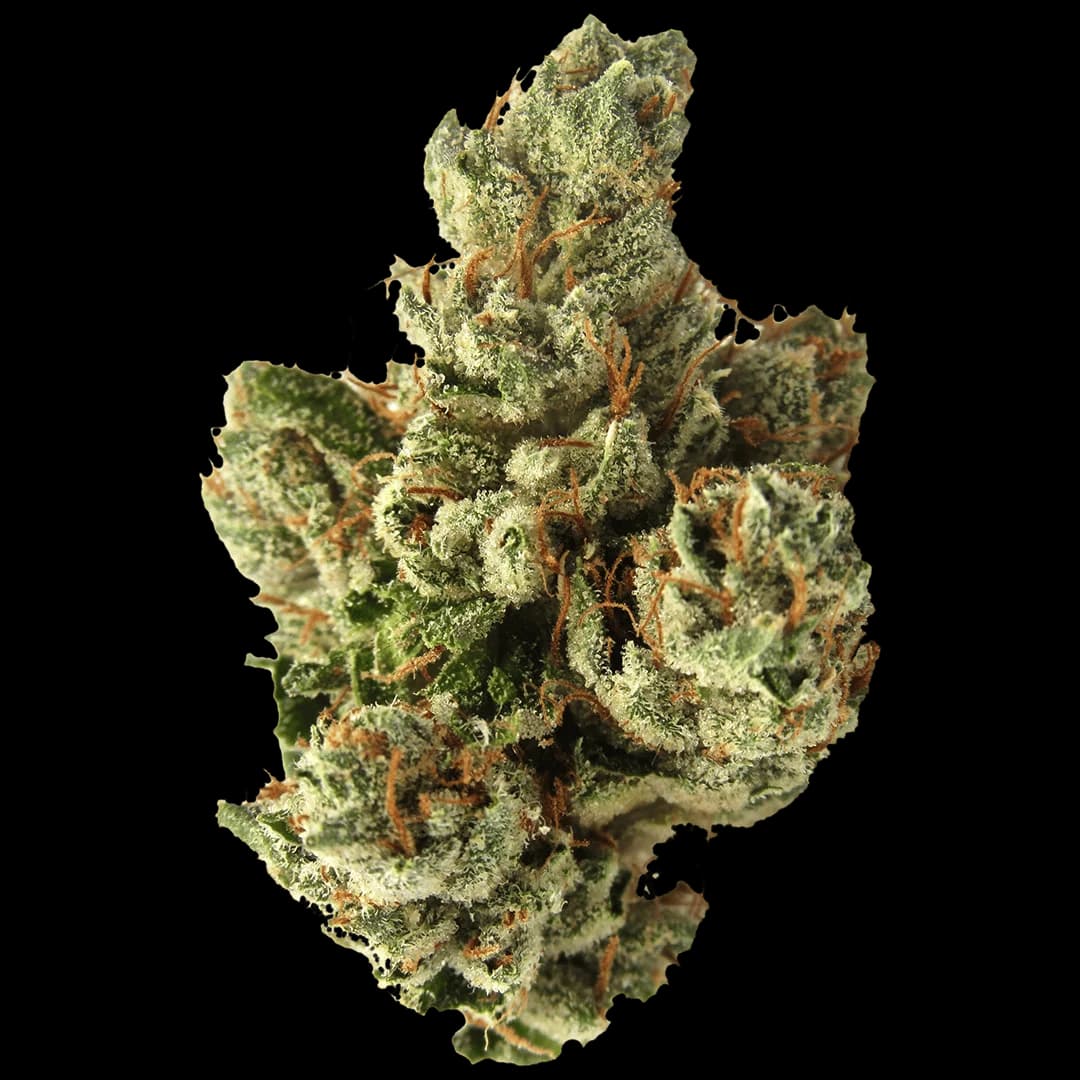
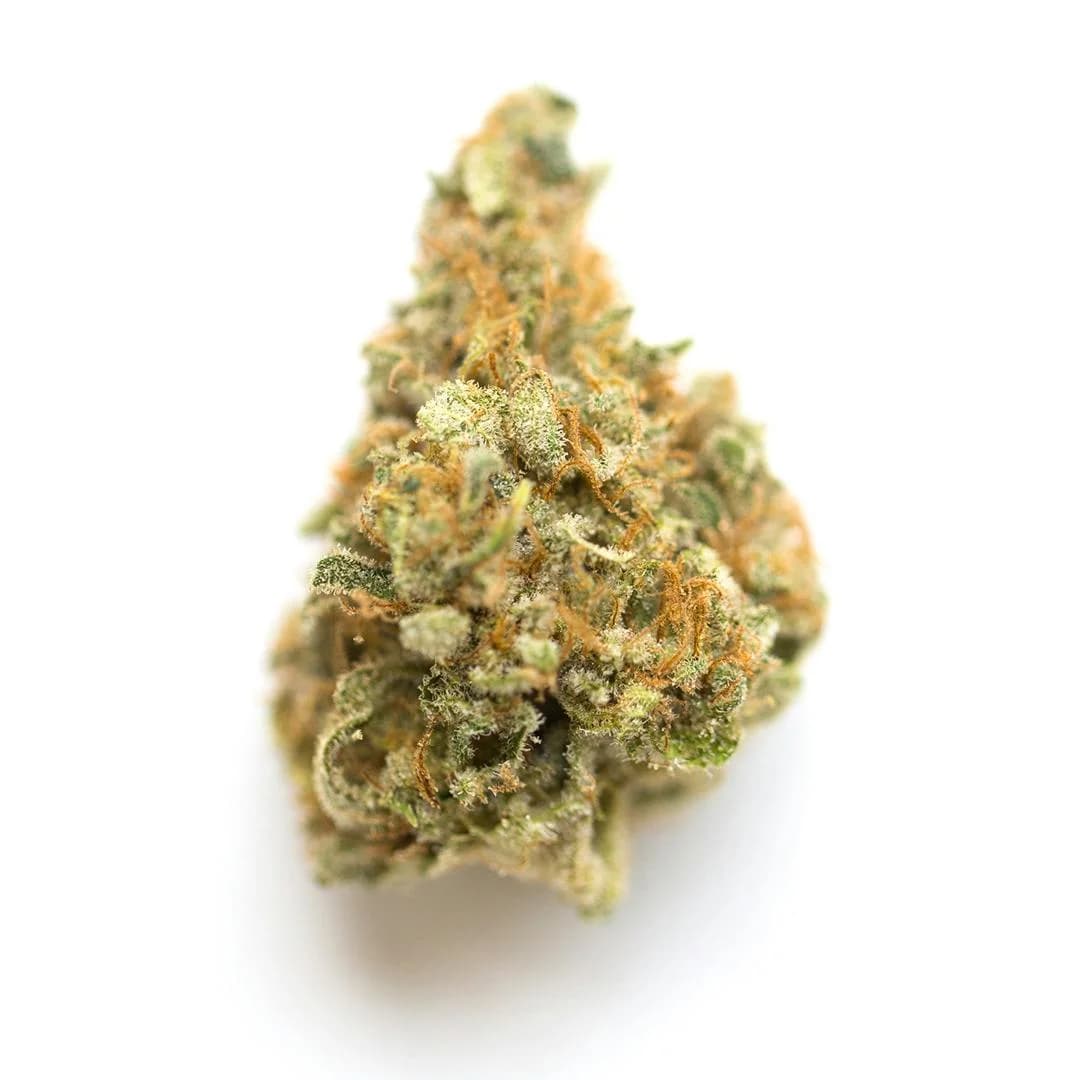
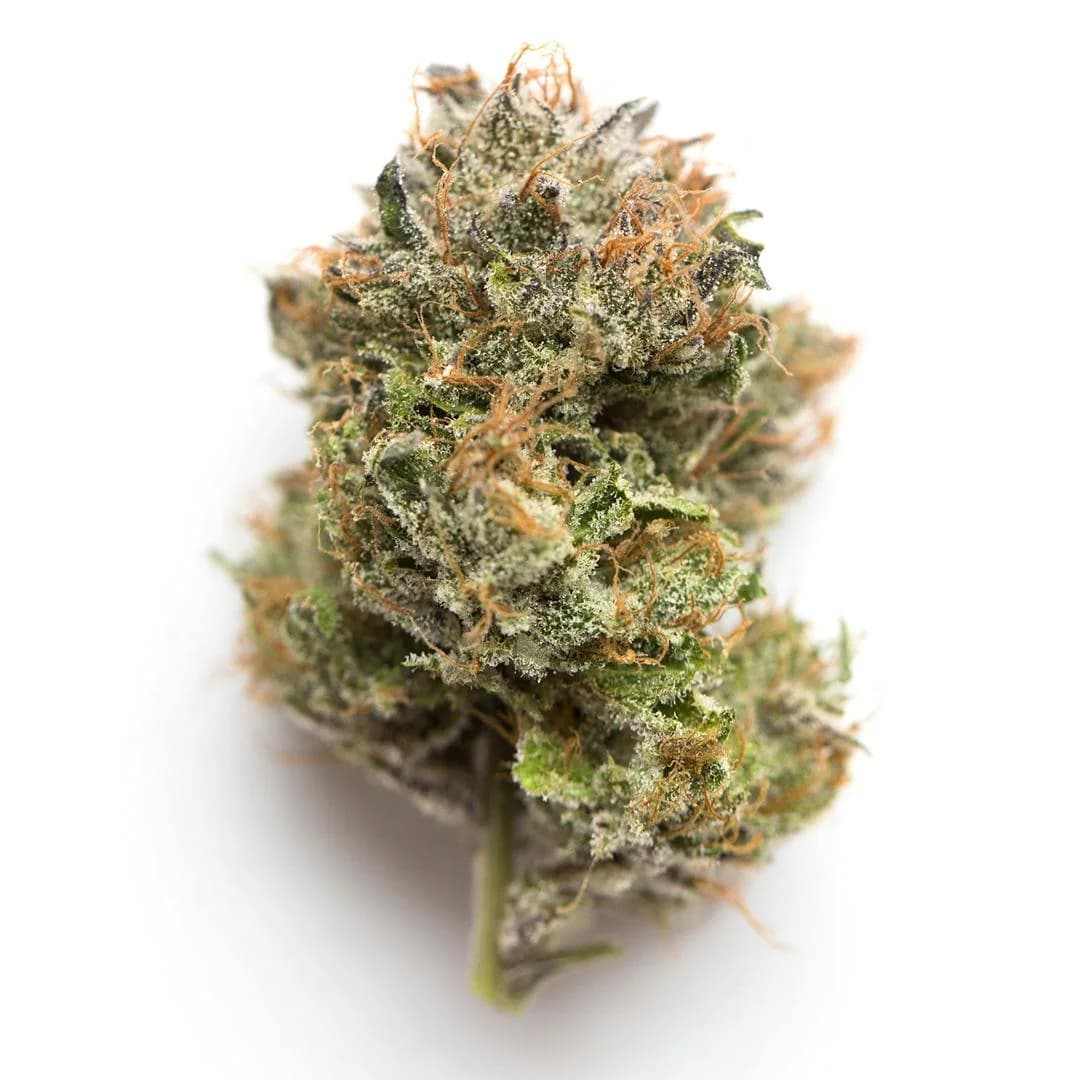
Blue Dream is a California-associated hybrid whose reported family joins Blueberry and Haze. Leafly lists berry and sweet flavor descriptors and a myrcene-led terpene profile. Those two kinds of information serve different purposes: flavor tags describe reader impressions, while the terpene list summarizes the source's chemistry data. Neither identifies a particular sample. This entry retains the reported cross without treating it as genetically authenticated parentage.
GSC is the catalog entry also known as Girl Scout Cookies. Leafly attributes it to Jigga and describes an OG Kush subtype crossed with F1 Durban. That intermediate parent name matters: it should not automatically be replaced with Durban Poison. Thin Mint and Platinum GSC are discussed as related variations rather than interchangeable specimens. Mint, sweet and earthy reader tags help describe the catalog profile but do not authenticate its genetics.
AK-47 is described by Leafly as a hybrid with Colombian, Mexican, Thai and Afghan ancestry. That four-region summary does not specify the order of crosses or an immediate parent pair. Serious Seeds' own history connects AK-47 with Simon's work before the company's founding in 1995. This adds a breeder account to the catalog context without certifying every later AK-47-labelled sample. Skunk, tobacco and earth remain reported flavor descriptors rather than evidence of pedigree.
Pineapple Express is a hybrid that Leafly traces to Trainwreck and Hawaiian. Pineapple, tropical and citrus are its displayed reader flavor tags. The source's terpene information needs more care: its summary table lists myrcene, caryophyllene and pinene, while the descriptive paragraph names caryophyllene, limonene and ocimene. This entry preserves the difference rather than combining both into a newly asserted chemical profile. A sample-specific analysis would be needed to establish actual composition.
Strawberry Cough is a sativa-classified catalog entry whose source describes its origins as uncertain while proposing Haze and Strawberry Fields as a possible cross. The proposed relationship therefore remains an attributed hypothesis rather than settled ancestry. Strawberry, sweet and berry are displayed reader flavor tags. Neither the fruit name nor the word Cough is a test of chemical identity, a measure of safety or proof that another similarly named sample is the same plant.
Blueberry, also called Berry Blue, is associated with DJ Short's work beginning in the late 1970s. Leafly describes Thai-related ancestry and notes that material passed between breeders and seed banks over time. This history is a reason to preserve source and selection details rather than assume all Blueberry records describe one identical plant. Blueberry, berry and sweet are reader flavor descriptors; the fruit name alone is not a chemical measurement or proof of parentage.
Skunk #1 is associated with Sacred Seed Co. and selection work involving Afghani, Acapulco Gold and Colombian Gold. Its family record represents that multi-generation background rather than a simple two-parent cross.
Hawaiian is a sativa catalog entry with tropical and citrus flavor reports. The reference used here does not identify a named parent cross, so its ancestry remains open rather than inferred from the name.
Sherbert, also called Sunset Sherbet, connects the GSC family with Pink Panties. Leafly credits Mr. Sherbinski with its development; this profile separates that reported cross from sample-specific chemistry.
Lemon Kush has competing pedigrees: Master Kush with Lemon Joy, or the Alien Genetics version of Lemon G with Afghan Kush. These are alternatives, not a four-parent cross.
Maui Wowie is associated with Hawaii and appears under several spellings. Leafly names Hawaiian as one parent and leaves the second parent unidentified.
Tangerine Dream is associated with Barney’s Farm. Its background lists G13, Afghani and Neville’s A5 Haze; the source does not specify each intermediate breeding step.
Strawberry Banana, or Strawnana, is attributed to DNA Genetics working with Serious Seeds. Its reported parents are Crockett’s Banana Kush and the Strawberry selection of Bubble Gum.
SFV OG takes its name from California’s San Fernando Valley and is associated with Cali Connection. It belongs to the OG Kush family and differs from the later Afghani-crossed SFV OG Kush.
MAC expands to Miracle Alien Cookies. Leafly lists Alien Cookies, Starfighter and Columbian in its background; the broad Columbian name is not equated with Colombian Gold.
Lemon Skunk is attributed to DNA Genetics and two selected Skunk phenotypes. The individual selections are not named, so this record does not invent separate parent identities.
Larry OG is associated with Orange County, California. Leafly reports OG Kush and SFV OG as its parents and records several Larry aliases for the same profile.
Gelato #33 is a numbered selection from the Gelato family. Its family background is Sherbert with Thin Mint GSC; the selection link keeps it distinct from the general Gelato record.