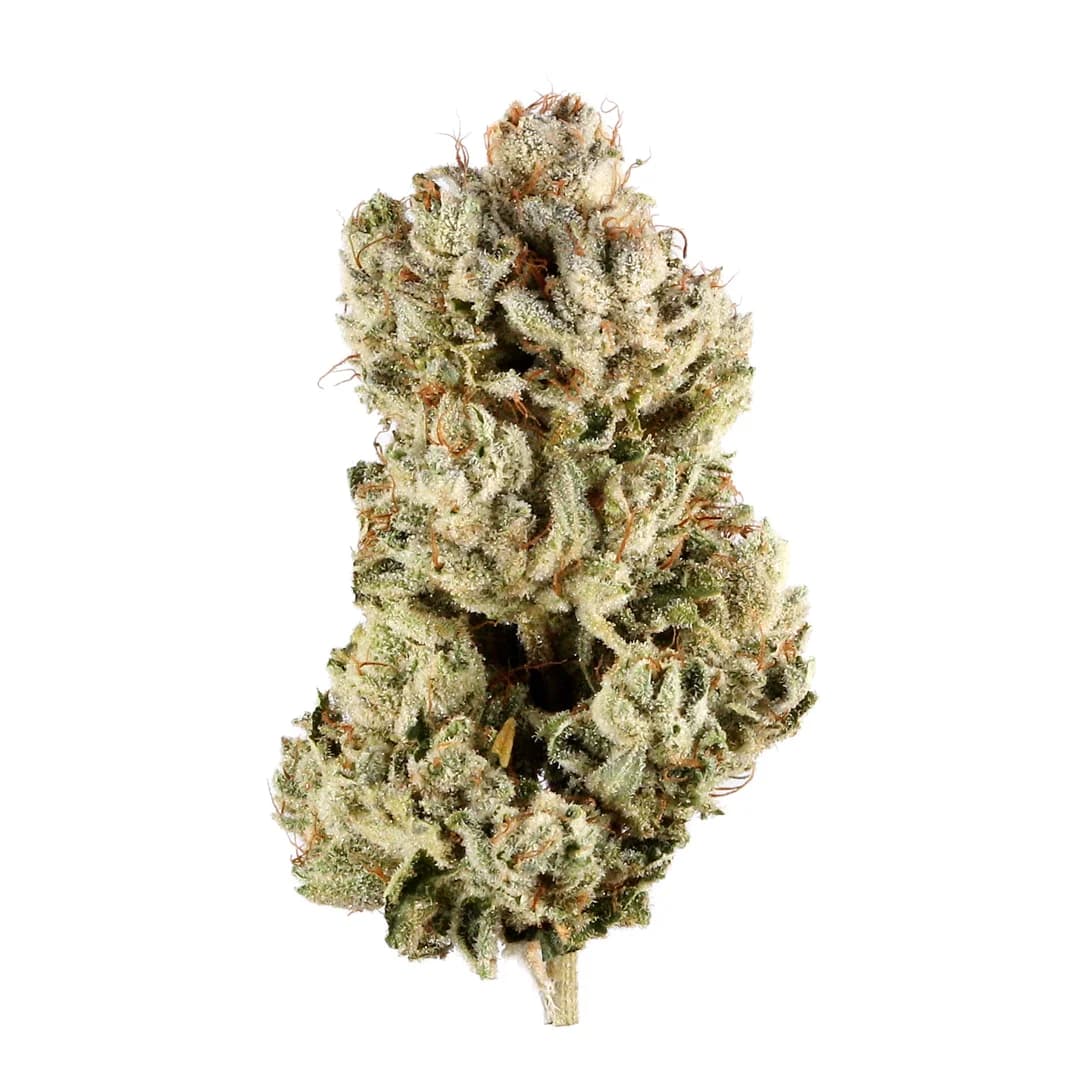
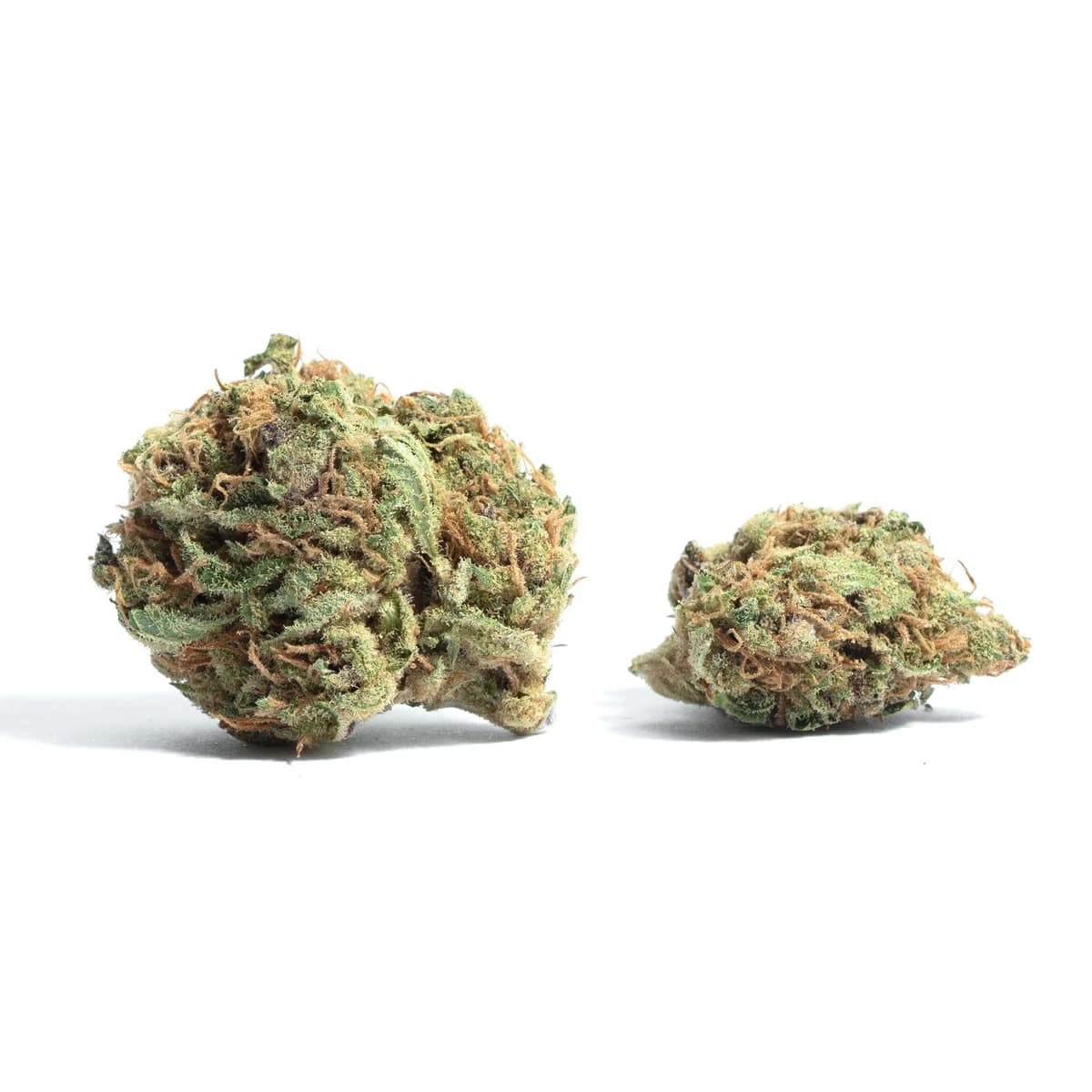
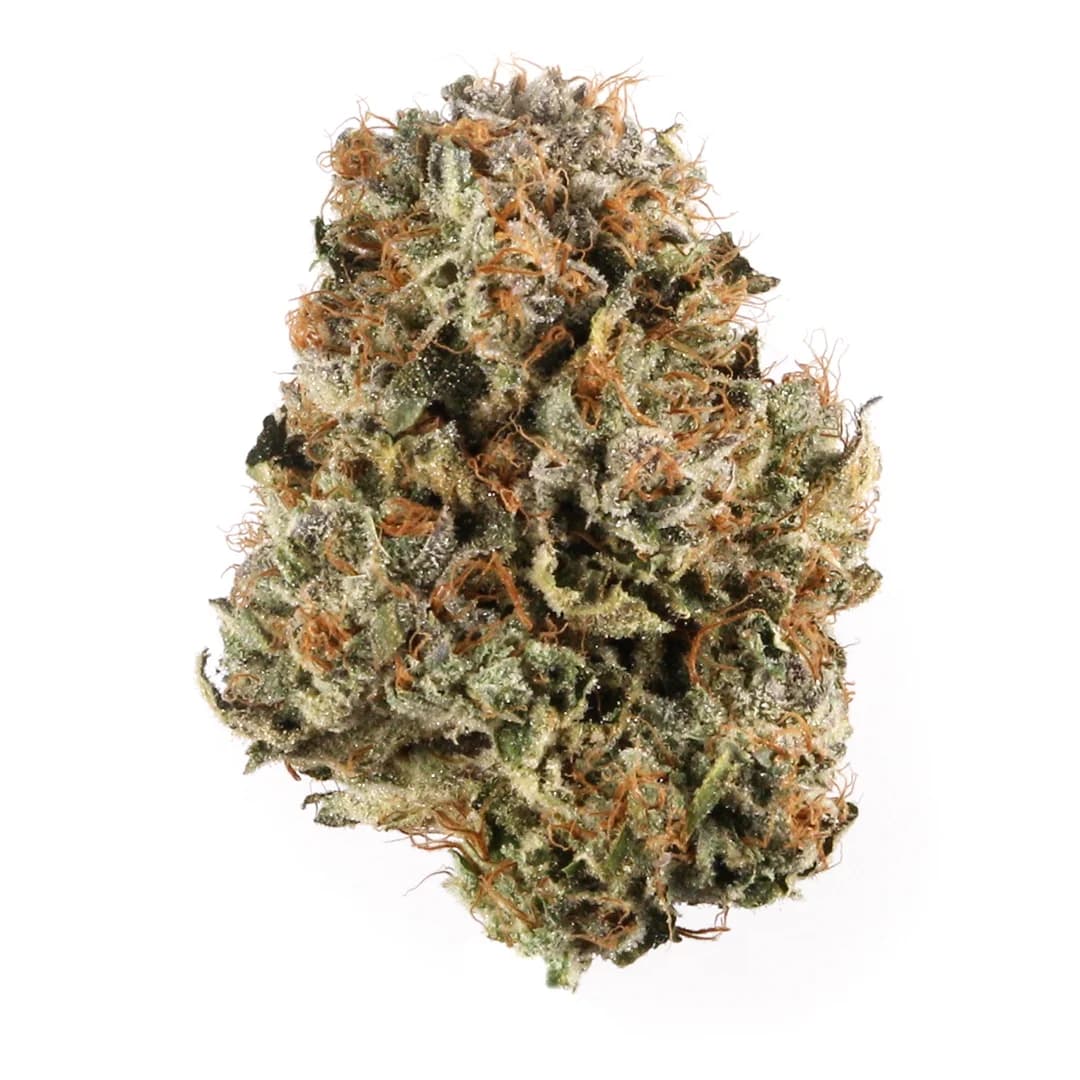
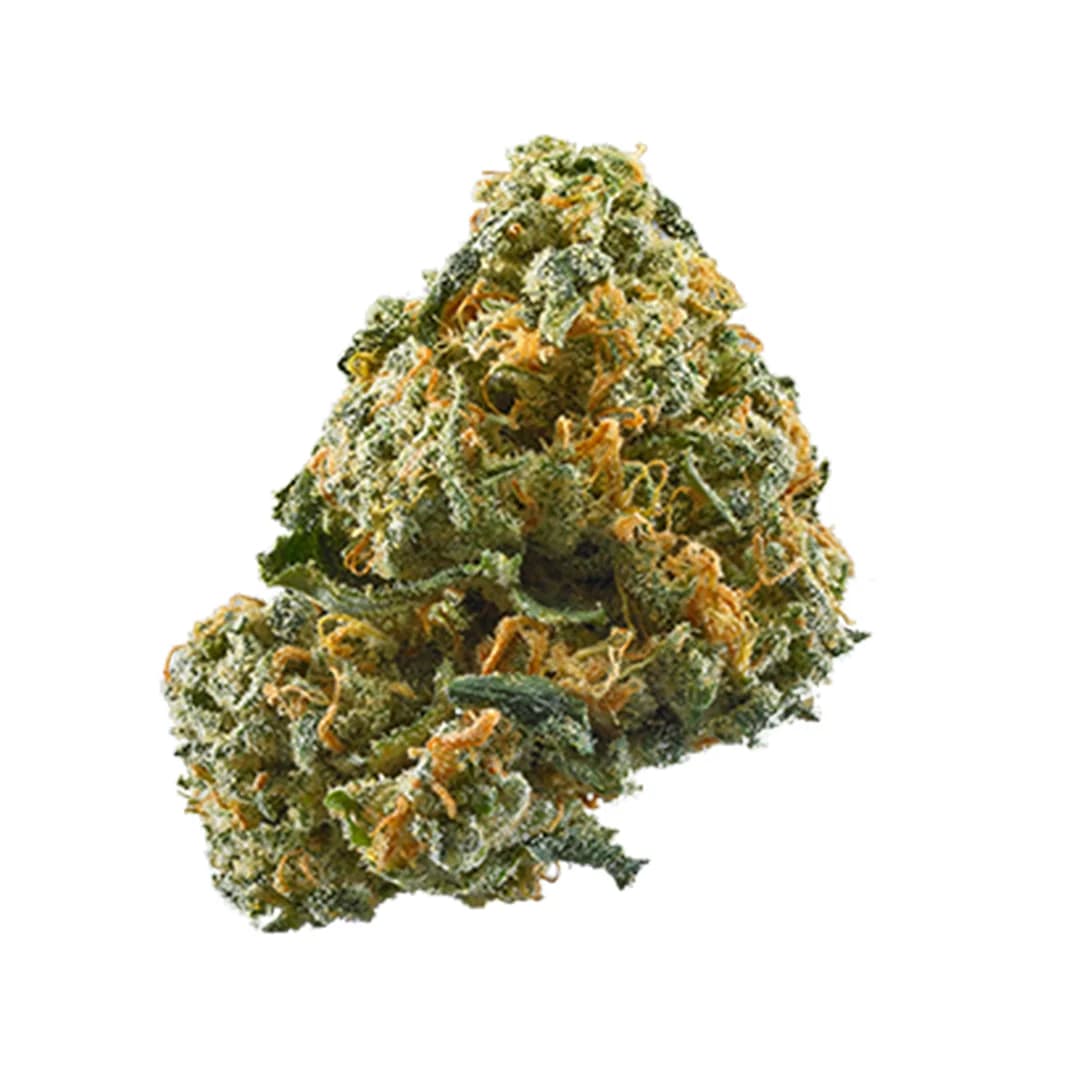
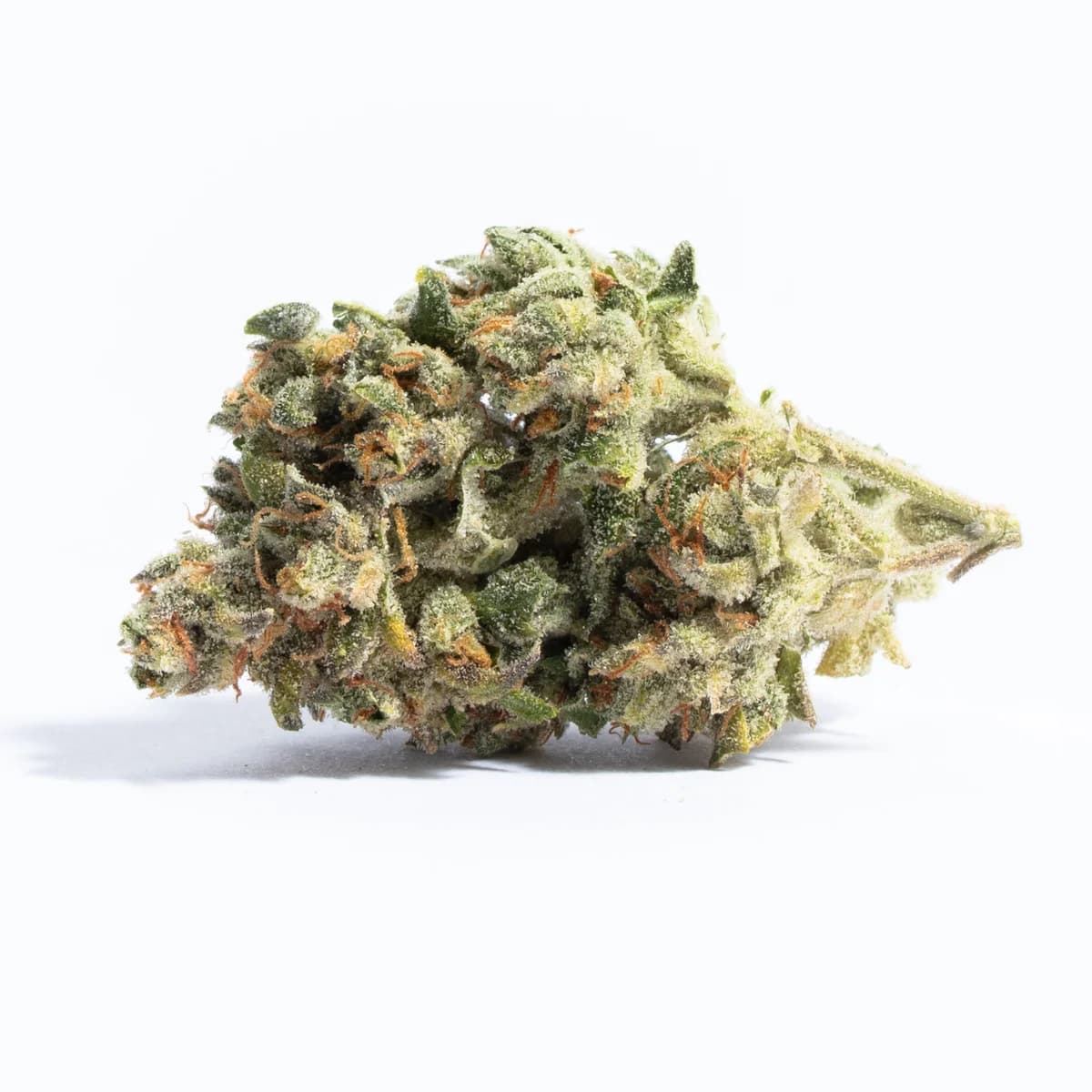
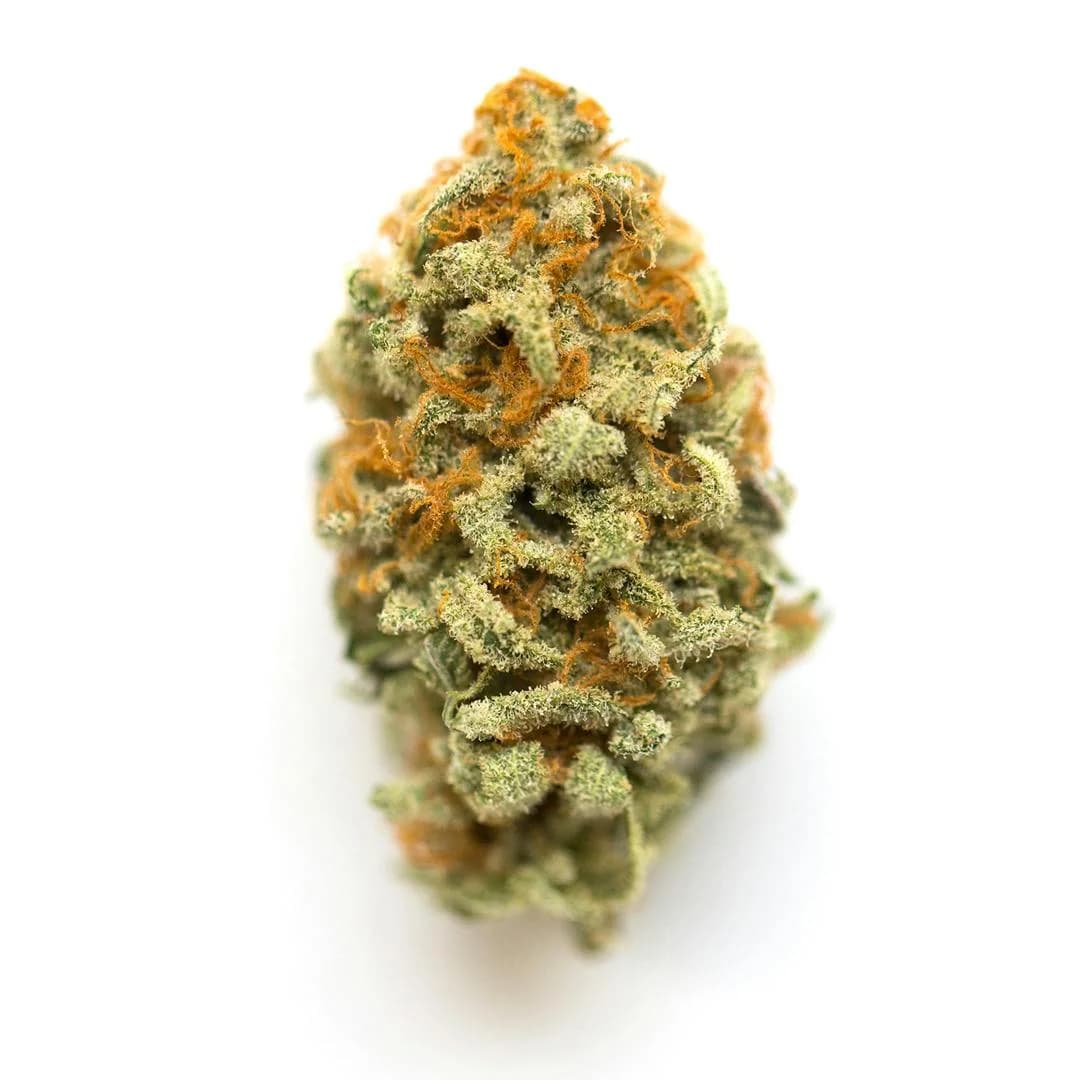
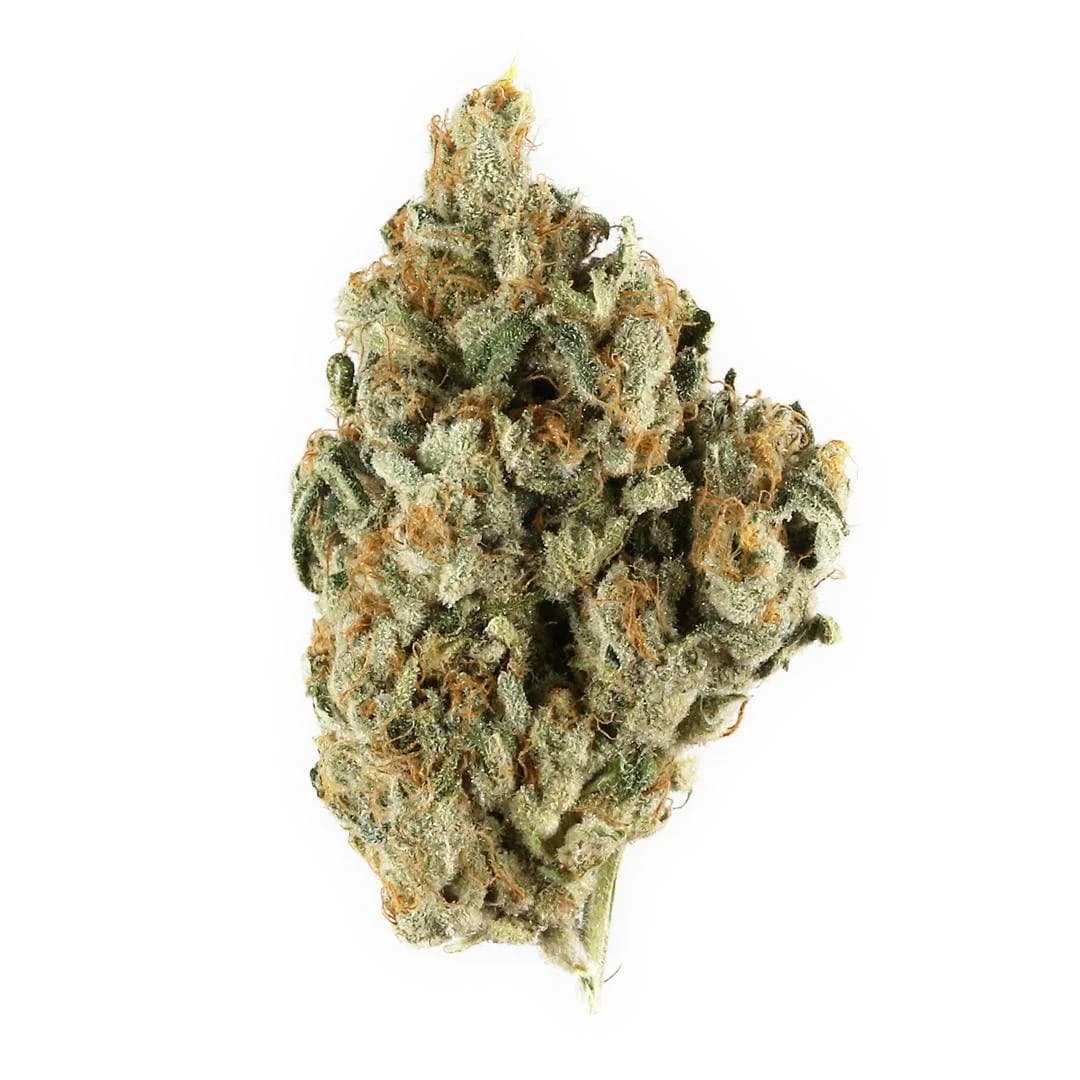
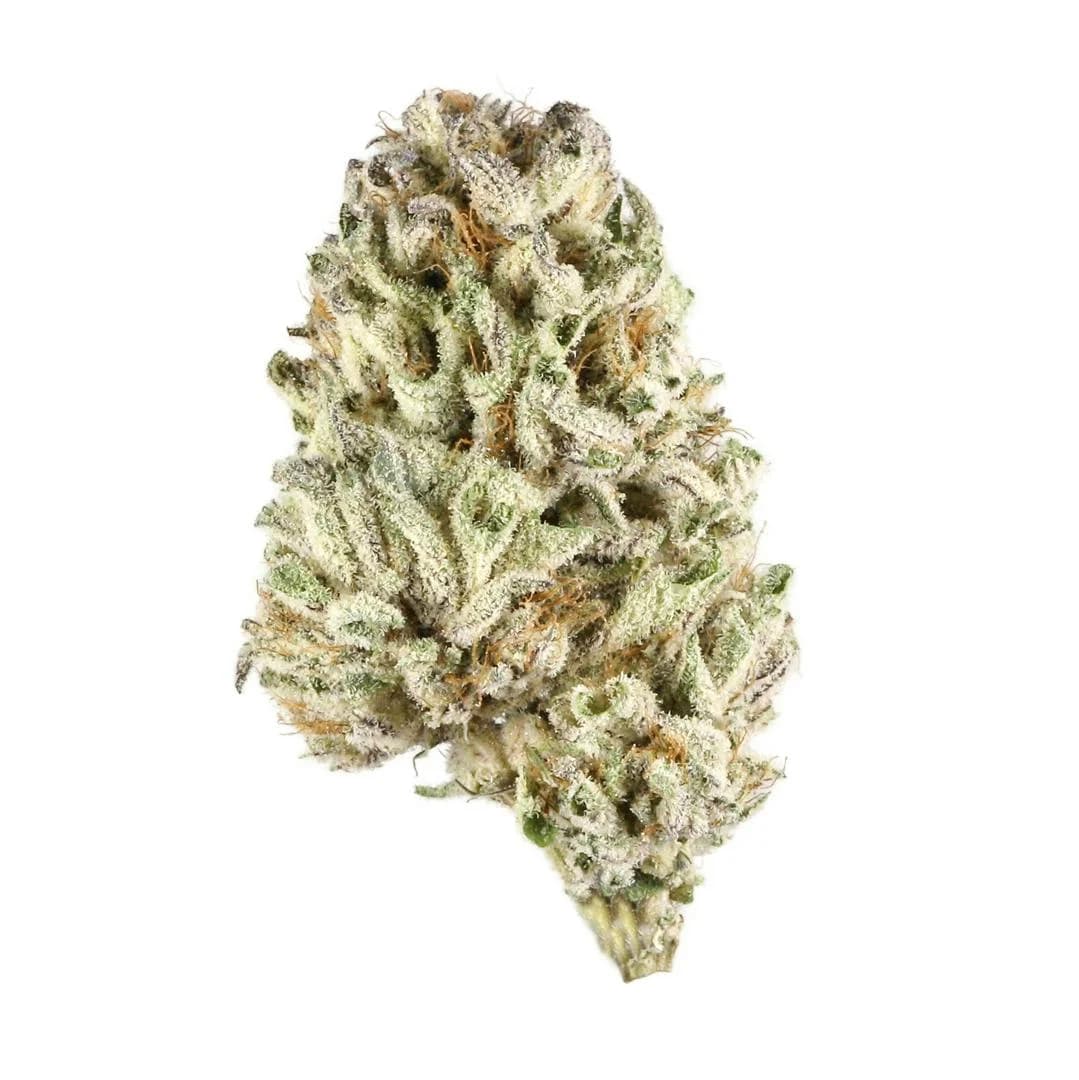
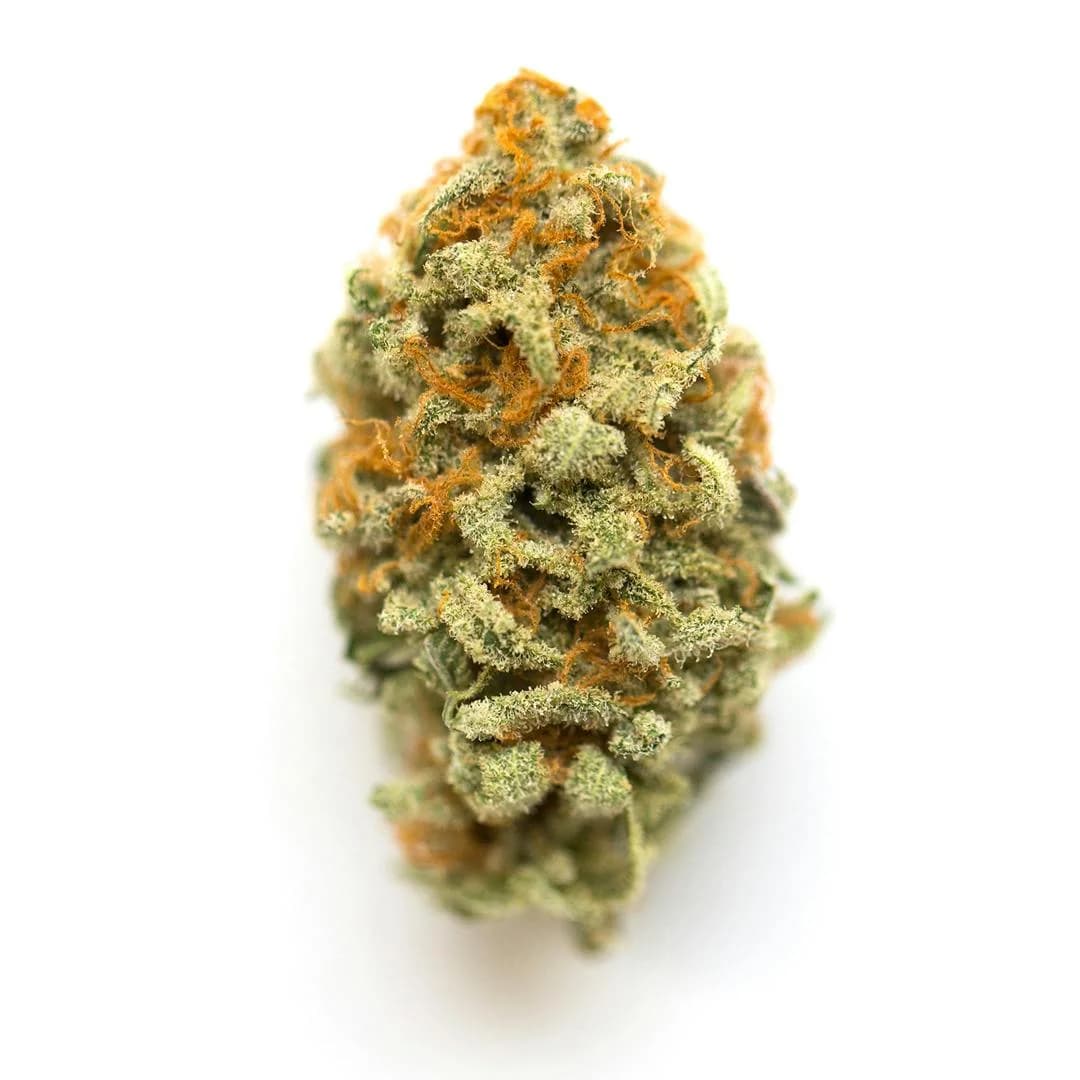
Bubba Kush is an indica-classified name with an explicitly uncertain pedigree in Leafly's account. The source describes OG Kush pollinating a plant called Bubba, whose identity was not established; Northern Lights is presented as a possibility rather than a confirmed parent. Coffee, earthy and pungent are reader flavor tags on the profile. Those impressions and the plant's appearance cannot resolve the unknown parent's identity, so the uncertainty remains part of the family record.
Chemdawg is linked by Leafly to the original Chemdog name and a 1991 bag-seed account attributed to breeder Chemdog. Finding seeds in acquired material explains a discovery story, not the identity of both parent plants. The source distinguishes Chem 91, Chem 4 and Chem Sis as variations, which should not be collapsed into interchangeable specimens. Chemical, diesel and pungent are reader descriptors; the names alone do not identify measured ingredients or authenticated genetics.
Super Skunk is presented by Leafly as a indica catalog entry. The source account says: Super Skunk is reported as a cross between Skunk #1 and Afghani. Those links connect it to two widely referenced families; the skunk and earthy flavor tags below describe reader observations rather than laboratory measurements. This context is retained as an attributed account, not as genetic authentication of every sample carrying the name. Reader-reported flavor descriptors include Earthy, Pungent, Skunk. The catalog lists Caryophyllene, Humulene, Limonene as terpene labels. Those fields describe different evidence layers and do not establish a fixed chemical profile, medical effect or response for an individual sample.
Skunk 1 is presented by Leafly as a hybrid catalog entry. The source account says: Skunk #1 is associated with Sacred Seed Co. and selection work involving Afghani, Acapulco Gold and Colombian Gold. Its family record represents that multi-generation background rather than a simple two-parent cross. This context is retained as an attributed account, not as genetic authentication of every sample carrying the name. Reader-reported flavor descriptors include Earthy, Pungent, Skunk. The catalog lists Limonene, Myrcene, Pinene as terpene labels. Those fields describe different evidence layers and do not establish a fixed chemical profile, medical effect or response for an individual sample.
GG4, commonly called Original Glue, is attributed in the catalog to GG Strains LLC and a reported background involving Chem's Sister, Sour Dubb and Chocolate Diesel. The source does not provide a complete crossing sequence, so those names are retained as attributed ancestry rather than presented as a verified family tree. Earthy, pine and pungent are reader-reported flavor descriptors, while caryophyllene, limonene and myrcene are catalog terpene labels. These fields describe the source record and do not establish the chemistry of every sample sold under the GG4 name.
White Rhino is presented by Leafly as a indica catalog entry. The source account says: White Rhino is described as a White Widow cross with North American Indica. The regional name does not identify a single verified parent accession. This is a source-reported identity, not a genetically authenticated pedigree. This context is retained as an attributed account, not as genetic authentication of every sample carrying the name. Reader-reported flavor descriptors include Earthy, Pungent, Woody. The catalog lists Myrcene, Pinene, Terpinolene as terpene labels. Those fields describe different evidence layers and do not establish a fixed chemical profile, medical effect or response for an individual sample.
Blue Cheese connects the Blueberry and UK Cheese families in Leafly's catalog account. UK Cheese is kept as a named selection rather than merged with every strain that uses the word Cheese, and the source does not establish a genetically authenticated cross. The profile carries reader-reported blue cheese, cheese and pungent notes, alongside catalog labels for caryophyllene, limonene and myrcene. Tags describe reported impressions and the terpene list describes source-recorded labels; neither fixes the identity or chemistry of an individual sample.
Cheese is rooted in a British Skunk 1 selection in Leafly's account, which also describes later Afghani contributions. Those statements describe a family history rather than one universal cross or a single authenticated plant. Cheese, pungent and skunk are reader-reported flavor descriptors, while caryophyllene, myrcene and pinene are listed as catalog terpene labels. The broad name is kept distinct from specific records such as UK Cheese and Blue Cheese. Shared wording alone does not prove identical lineage, chemical composition or effects across products.
Death Star is cataloged as a Sensi Star and Sour Diesel cross, with Deathstar recorded as an alternate spelling for the same profile. Diesel, pungent and skunk are reader-reported flavor descriptors, while caryophyllene, limonene and myrcene are listed separately as catalog terpene labels. The reported cross and alias help identify the source record but do not authenticate every product carrying the name or predict an individual's response. Numeric chemistry remains a source reference rather than a laboratory result for a particular sample.
Headband is cataloged as a hybrid associated with OG Kush and Sour Diesel, with HB recorded as another name in the source profile. The two parent names describe an attributed catalog relationship and do not prove that every plant carrying the Headband name has the same ancestry. Diesel, earthy and pungent are reader-reported flavor descriptors, while caryophyllene, limonene and myrcene are listed separately as catalog terpene labels. The combination helps explain this record but is not a prediction of effects, potency or composition for a particular harvest.
Master Kush is attributed to the Dutch White Label Seed Company. Leafly describes two regional landrace parents from the Hindu Kush area but does not identify the individual accessions or a complete crossing sequence, so the catalog keeps that uncertainty visible. Earthy, floral and pungent are reader-reported flavor descriptors, while caryophyllene, limonene and myrcene are listed as source terpene labels. The regional account provides context for the name, but it does not authenticate every later selection or establish a universal chemical profile for products sold as Master Kush.
Kosher Kush is presented by Leafly as a indica catalog entry. The source account says: Kosher Kush began as a Los Angeles clone-only line and is associated with DNA Genetics. Leafly relates it to OG Kush without documenting a complete two-parent cross. This is a source-reported identity, not a genetically authenticated pedigree. This context is retained as an attributed account, not as genetic authentication of every sample carrying the name. Reader-reported flavor descriptors include Earthy, Pungent, Woody. The catalog lists Caryophyllene, Limonene, Myrcene as terpene labels. Those fields describe different evidence layers and do not establish a fixed chemical profile, medical effect or response for an individual sample.
Skywalker OG has conflicting pedigree statements within the Leafly profile. Its genetics panel lists OG Kush and Mazar x Blueberry, while the description names Mazar and Blueberry OG. The catalog preserves both accounts instead of choosing one without evidence. Earthy, pungent and spicy or herbal are reader-reported flavor descriptors, with caryophyllene, limonene and myrcene listed separately as catalog terpene labels. The conflicting names are an important part of the evidence record; neither version should be treated as a verified universal pedigree for every Skywalker OG sample.
GMO Cookies is presented by Leafly as a hybrid catalog entry. The source account says: GMO Cookies also appears as Garlic Cookies. Leafly attributes this GSC and Chemdawg cross to Mamiko Seeds, with garlic and fuel associations in its description. This is a source-reported identity, not a genetically authenticated pedigree. This context is retained as an attributed account, not as genetic authentication of every sample carrying the name. Reader-reported flavor descriptors include Chemical, Pepper, Pungent. The catalog lists Caryophyllene, Limonene, Myrcene as terpene labels. Those fields describe different evidence layers and do not establish a fixed chemical profile, medical effect or response for an individual sample.
ECSD is presented by Leafly as a sativa catalog entry. The source account says: The reviewed source narrative does not establish the direct cross. ECSD is not silently merged with other Diesel names. This context is retained as an attributed account, not as genetic authentication of every sample carrying the name. Reader-reported flavor descriptors include Chemical, Diesel, Pungent. The catalog lists Caryophyllene, Limonene, Myrcene as terpene labels. Those fields describe different evidence layers and do not establish a fixed chemical profile, medical effect or response for an individual sample.
OG #18 is presented by Leafly as a hybrid catalog entry. The source account says: The source explicitly identifies an OG Kush phenotype. No second parent is invented. This context is retained as an attributed account, not as genetic authentication of every sample carrying the name. Reader-reported flavor descriptors include Diesel, Earthy, Pungent. The catalog lists Limonene, Linalool, Myrcene as terpene labels. Those fields describe different evidence layers and do not establish a fixed chemical profile, medical effect or response for an individual sample.
UK Cheese is presented by Leafly as a hybrid catalog entry. The source account says: The source identifies a Skunk 1 phenotype and the Exodus association. The entry is distinct from later Cheese crosses. This context is retained as an attributed account, not as genetic authentication of every sample carrying the name. Reader-reported flavor descriptors include Cheese, Pungent, Skunk. The catalog lists Myrcene, Ocimene, Terpinolene as terpene labels. Those fields describe different evidence layers and do not establish a fixed chemical profile, medical effect or response for an individual sample.
Chem Sis is presented by Leafly as a sativa catalog entry. The source account says: The source identifies a Chemdawg phenotype. The selection history is attributed, not genetically authenticated. This context is retained as an attributed account, not as genetic authentication of every sample carrying the name. Reader-reported flavor descriptors include Chemical, Diesel, Pungent. The catalog lists Caryophyllene, Limonene, Myrcene as terpene labels. Those fields describe different evidence layers and do not establish a fixed chemical profile, medical effect or response for an individual sample.
White Fire OG is presented by Leafly as a hybrid catalog entry. The source account says: The cited catalog page does not establish a complete, authenticated immediate-parent cross for this entry. This context is retained as an attributed account, not as genetic authentication of every sample carrying the name. Reader-reported flavor descriptors include Earthy, Pungent, Woody. The catalog lists Caryophyllene, Limonene, Myrcene as terpene labels. Those fields describe different evidence layers and do not establish a fixed chemical profile, medical effect or response for an individual sample.
Godfather OG is presented by Leafly as a indica catalog entry. The source account says: The cited catalog page does not establish a complete, authenticated immediate-parent cross for this entry. This context is retained as an attributed account, not as genetic authentication of every sample carrying the name. Reader-reported flavor descriptors include Earthy, Pine, Pungent. The catalog lists Caryophyllene, Limonene, Myrcene as terpene labels. Those fields describe different evidence layers and do not establish a fixed chemical profile, medical effect or response for an individual sample.
Platinum Cookies is presented by Leafly as a hybrid catalog entry. The source account says: Leafly describes OG Kush and Durban Poison ancestry plus a third unknown strain. The missing identity is not filled with a familiar catalog name. This context is retained as an attributed account, not as genetic authentication of every sample carrying the name. Reader-reported flavor descriptors include Floral, Pungent, Sweet. The catalog lists Caryophyllene, Limonene, Myrcene as terpene labels. Those fields describe different evidence layers and do not establish a fixed chemical profile, medical effect or response for an individual sample.