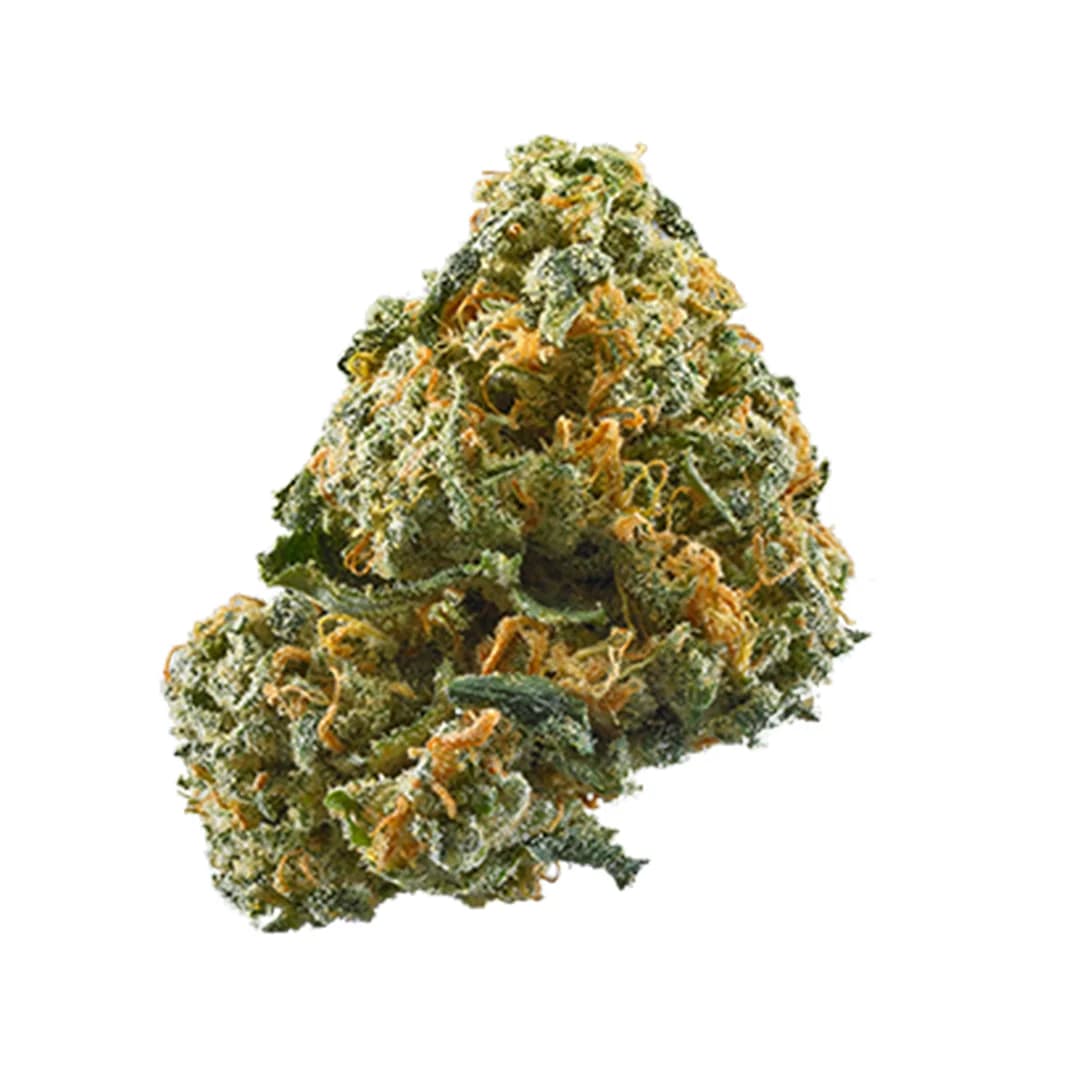
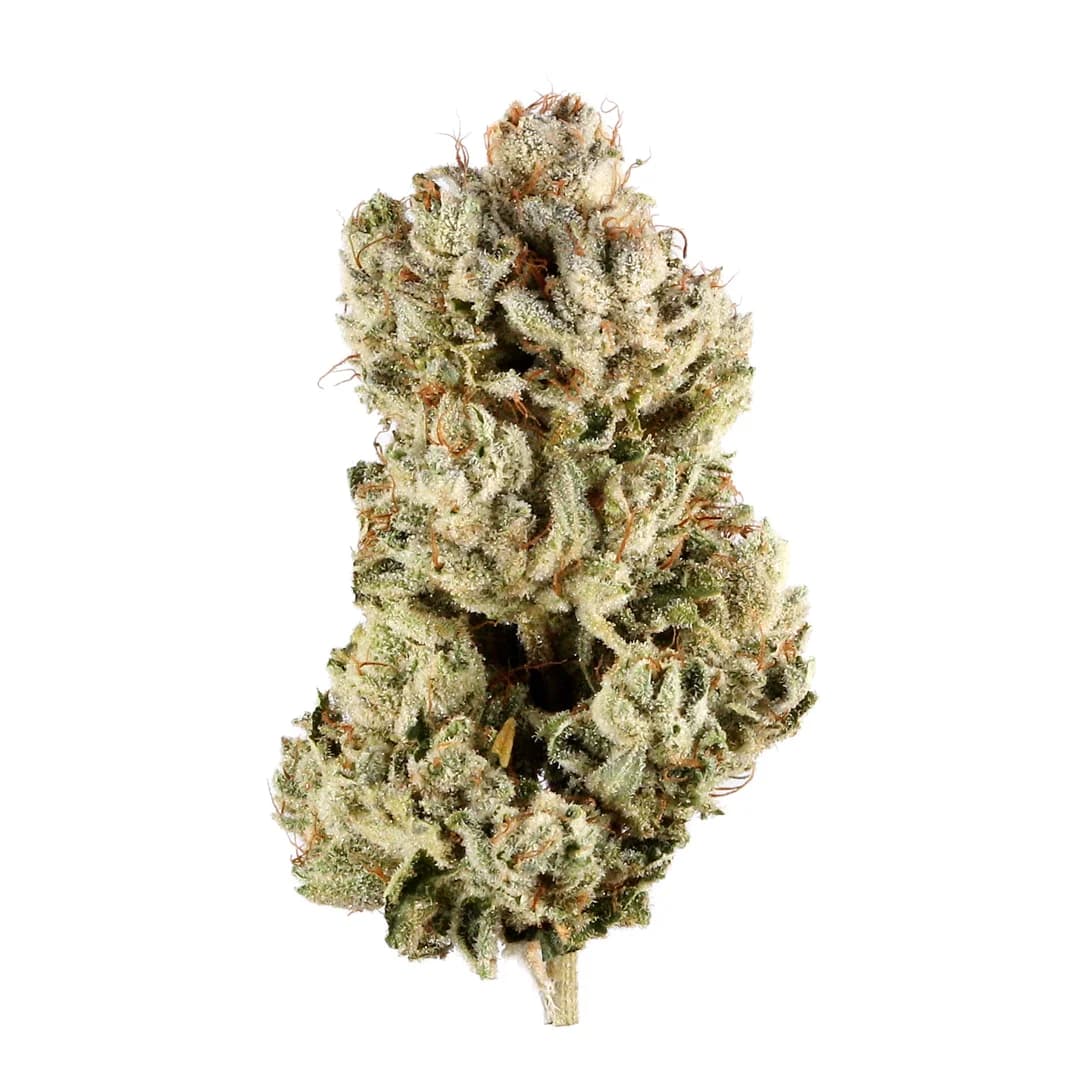
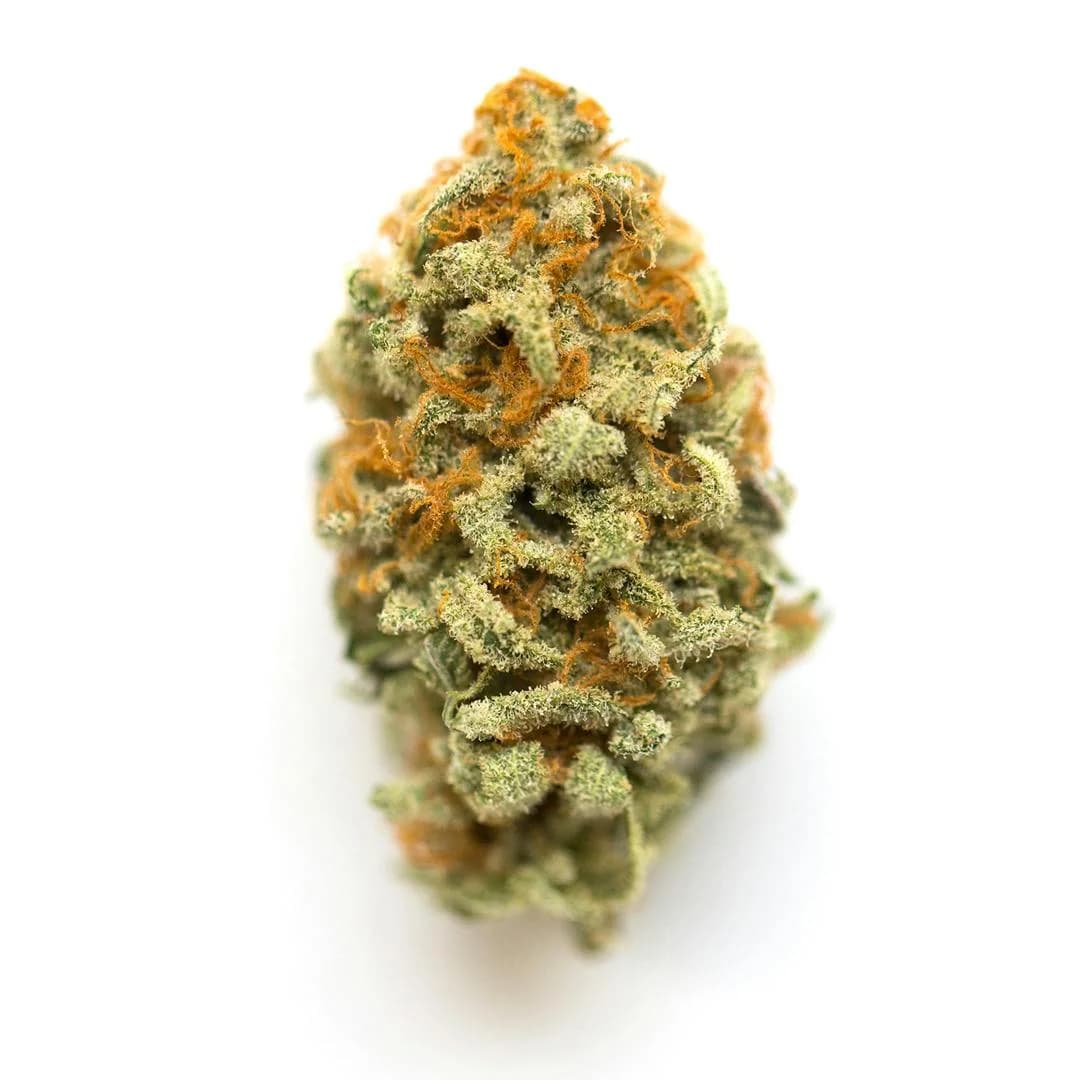
Percentages are catalog reference values, not sample lab results. “Not reported” means the source did not supply a value. Reported effects are subjective tags, not predictions.
Cheese is rooted in a British Skunk 1 selection in Leafly's account, which also describes later Afghani contributions. Those statements describe a family history rather than one universal cross or a single authenticated plant. Cheese, pungent and skunk are reader-reported flavor descriptors, while caryophyllene, myrcene and pinene are listed as catalog terpene labels. The broad name is kept distinct from specific records such as UK Cheese and Blue Cheese. Shared wording alone does not prove identical lineage, chemical composition or effects across products.
Chemdawg is linked by Leafly to the original Chemdog name and a 1991 bag-seed account attributed to breeder Chemdog. Finding seeds in acquired material explains a discovery story, not the identity of both parent plants. The source distinguishes Chem 91, Chem 4 and Chem Sis as variations, which should not be collapsed into interchangeable specimens. Chemical, diesel and pungent are reader descriptors; the names alone do not identify measured ingredients or authenticated genetics.
GG4, commonly called Original Glue, is attributed in the catalog to GG Strains LLC and a reported background involving Chem's Sister, Sour Dubb and Chocolate Diesel. The source does not provide a complete crossing sequence, so those names are retained as attributed ancestry rather than presented as a verified family tree. Earthy, pine and pungent are reader-reported flavor descriptors, while caryophyllene, limonene and myrcene are catalog terpene labels. These fields describe the source record and do not establish the chemistry of every sample sold under the GG4 name.
GMO Cookies is presented by Leafly as a hybrid catalog entry. The source account says: GMO Cookies also appears as Garlic Cookies. Leafly attributes this GSC and Chemdawg cross to Mamiko Seeds, with garlic and fuel associations in its description. This is a source-reported identity, not a genetically authenticated pedigree. This context is retained as an attributed account, not as genetic authentication of every sample carrying the name. Reader-reported flavor descriptors include Chemical, Pepper, Pungent. The catalog lists Caryophyllene, Limonene, Myrcene as terpene labels. Those fields describe different evidence layers and do not establish a fixed chemical profile, medical effect or response for an individual sample.
Headband is cataloged as a hybrid associated with OG Kush and Sour Diesel, with HB recorded as another name in the source profile. The two parent names describe an attributed catalog relationship and do not prove that every plant carrying the Headband name has the same ancestry. Diesel, earthy and pungent are reader-reported flavor descriptors, while caryophyllene, limonene and myrcene are listed separately as catalog terpene labels. The combination helps explain this record but is not a prediction of effects, potency or composition for a particular harvest.
OG #18 is presented by Leafly as a hybrid catalog entry. The source account says: The source explicitly identifies an OG Kush phenotype. No second parent is invented. This context is retained as an attributed account, not as genetic authentication of every sample carrying the name. Reader-reported flavor descriptors include Diesel, Earthy, Pungent. The catalog lists Limonene, Linalool, Myrcene as terpene labels. Those fields describe different evidence layers and do not establish a fixed chemical profile, medical effect or response for an individual sample.
Platinum Cookies is presented by Leafly as a hybrid catalog entry. The source account says: Leafly describes OG Kush and Durban Poison ancestry plus a third unknown strain. The missing identity is not filled with a familiar catalog name. This context is retained as an attributed account, not as genetic authentication of every sample carrying the name. Reader-reported flavor descriptors include Floral, Pungent, Sweet. The catalog lists Caryophyllene, Limonene, Myrcene as terpene labels. Those fields describe different evidence layers and do not establish a fixed chemical profile, medical effect or response for an individual sample.
Skunk 1 is presented by Leafly as a hybrid catalog entry. The source account says: Skunk #1 is associated with Sacred Seed Co. and selection work involving Afghani, Acapulco Gold and Colombian Gold. Its family record represents that multi-generation background rather than a simple two-parent cross. This context is retained as an attributed account, not as genetic authentication of every sample carrying the name. Reader-reported flavor descriptors include Earthy, Pungent, Skunk. The catalog lists Limonene, Myrcene, Pinene as terpene labels. Those fields describe different evidence layers and do not establish a fixed chemical profile, medical effect or response for an individual sample.
Skywalker OG has conflicting pedigree statements within the Leafly profile. Its genetics panel lists OG Kush and Mazar x Blueberry, while the description names Mazar and Blueberry OG. The catalog preserves both accounts instead of choosing one without evidence. Earthy, pungent and spicy or herbal are reader-reported flavor descriptors, with caryophyllene, limonene and myrcene listed separately as catalog terpene labels. The conflicting names are an important part of the evidence record; neither version should be treated as a verified universal pedigree for every Skywalker OG sample.
UK Cheese is presented by Leafly as a hybrid catalog entry. The source account says: The source identifies a Skunk 1 phenotype and the Exodus association. The entry is distinct from later Cheese crosses. This context is retained as an attributed account, not as genetic authentication of every sample carrying the name. Reader-reported flavor descriptors include Cheese, Pungent, Skunk. The catalog lists Myrcene, Ocimene, Terpinolene as terpene labels. Those fields describe different evidence layers and do not establish a fixed chemical profile, medical effect or response for an individual sample.
White Fire OG is presented by Leafly as a hybrid catalog entry. The source account says: The cited catalog page does not establish a complete, authenticated immediate-parent cross for this entry. This context is retained as an attributed account, not as genetic authentication of every sample carrying the name. Reader-reported flavor descriptors include Earthy, Pungent, Woody. The catalog lists Caryophyllene, Limonene, Myrcene as terpene labels. Those fields describe different evidence layers and do not establish a fixed chemical profile, medical effect or response for an individual sample.