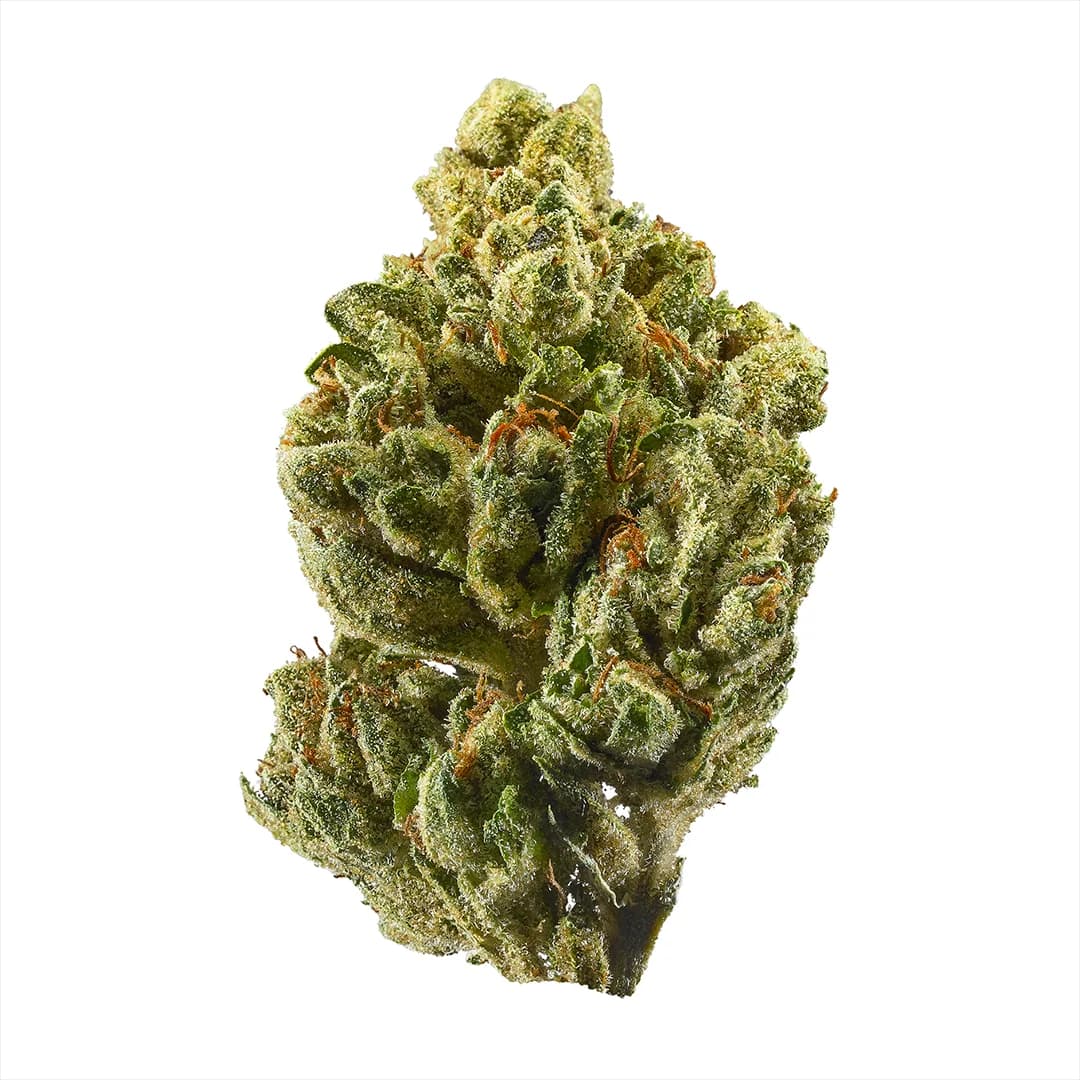
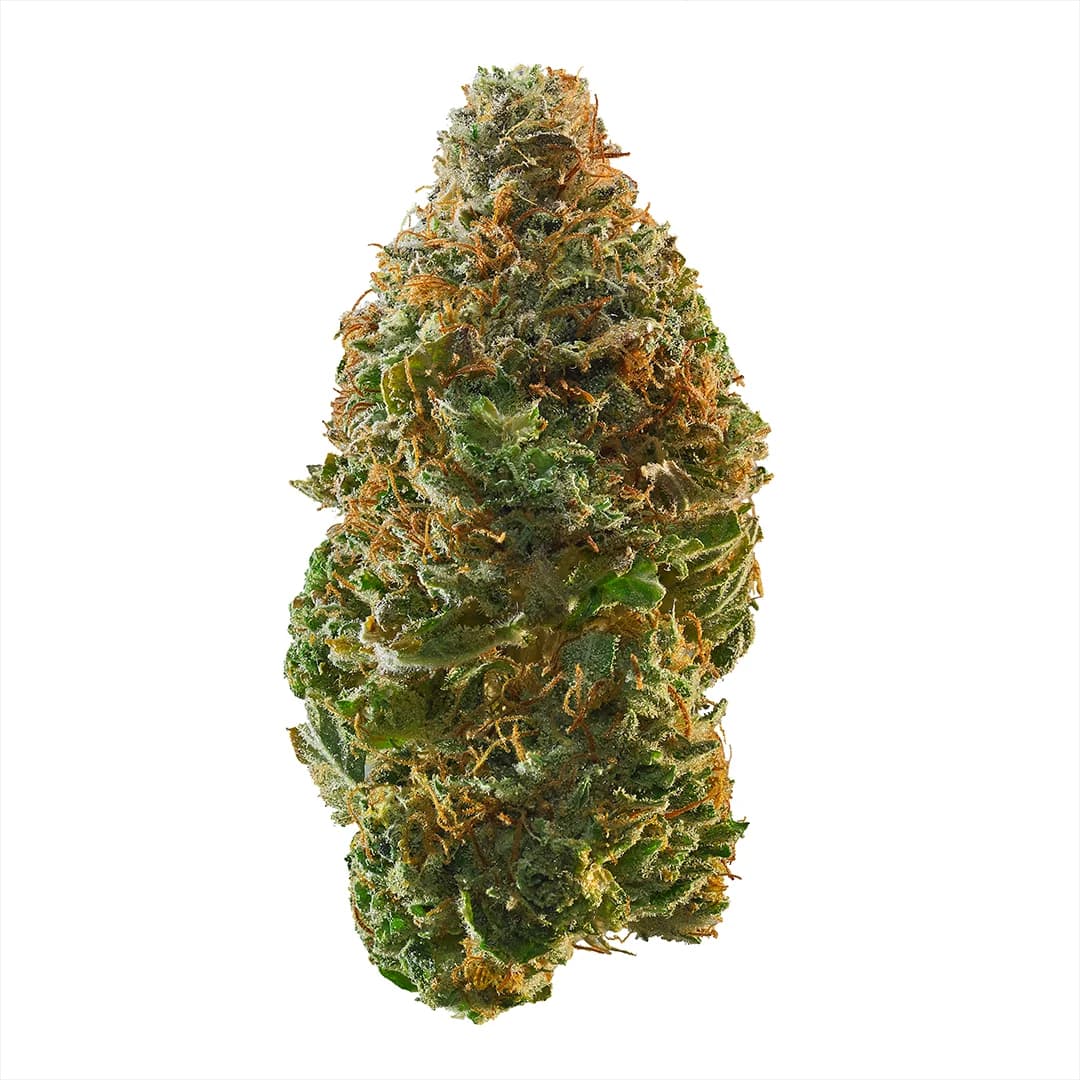
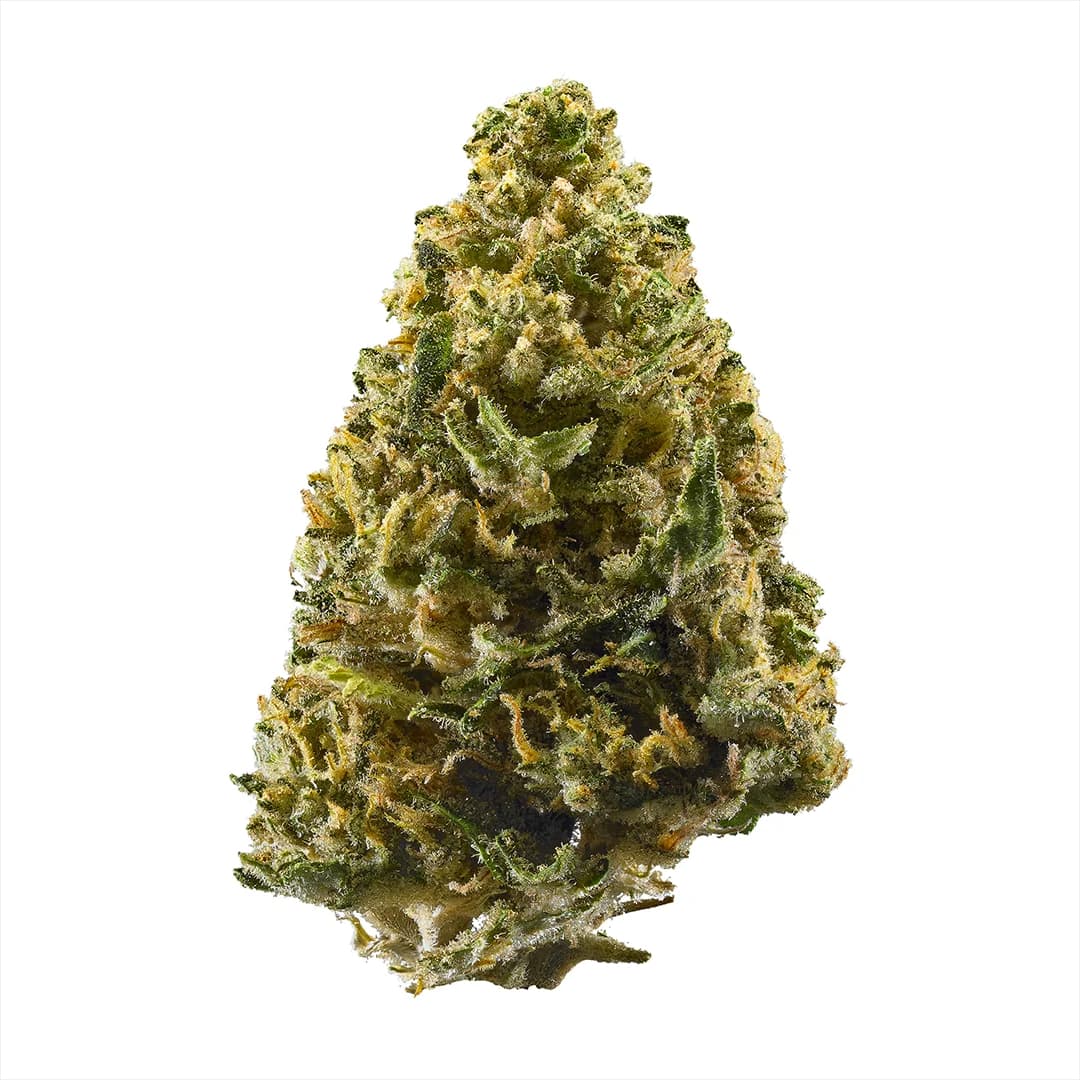
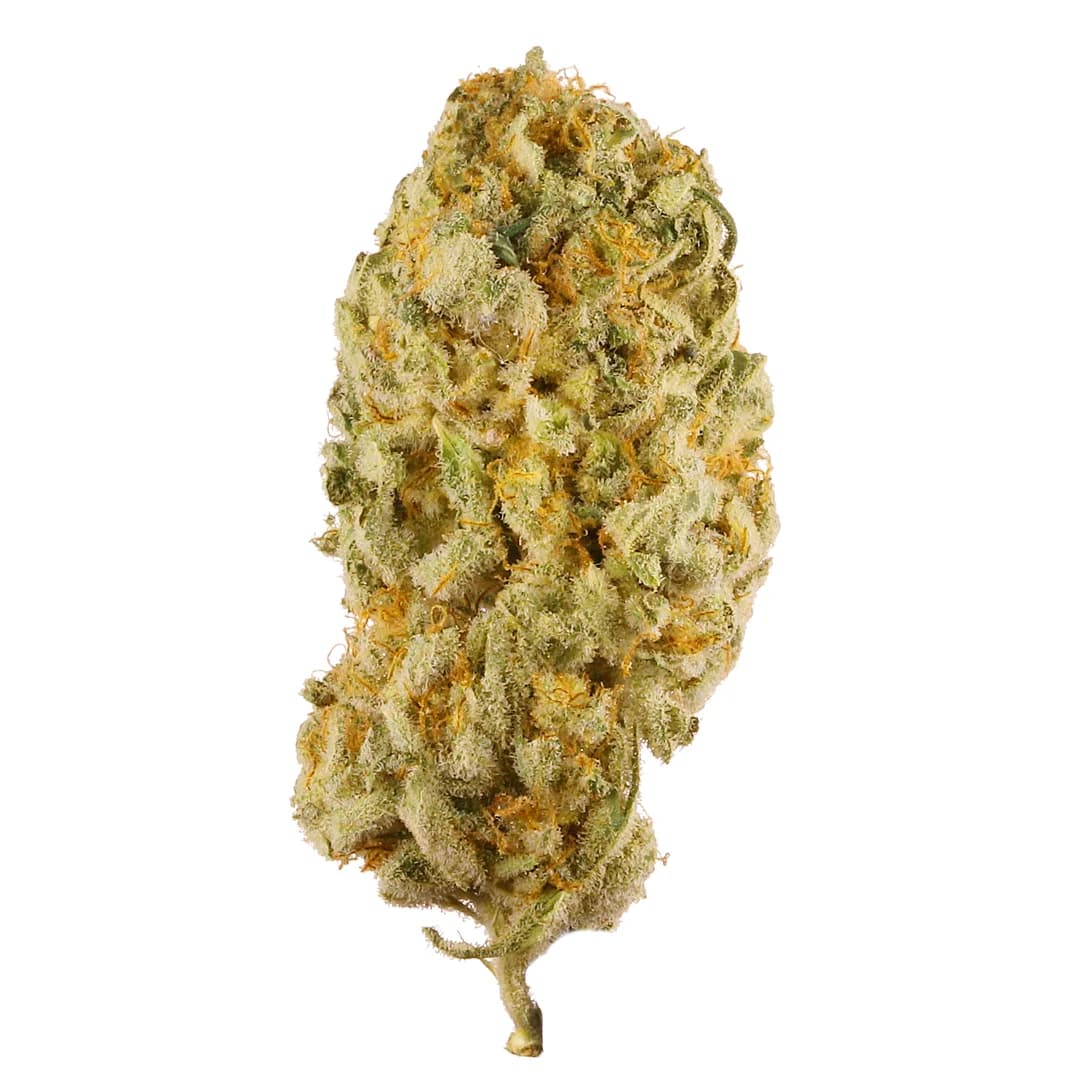
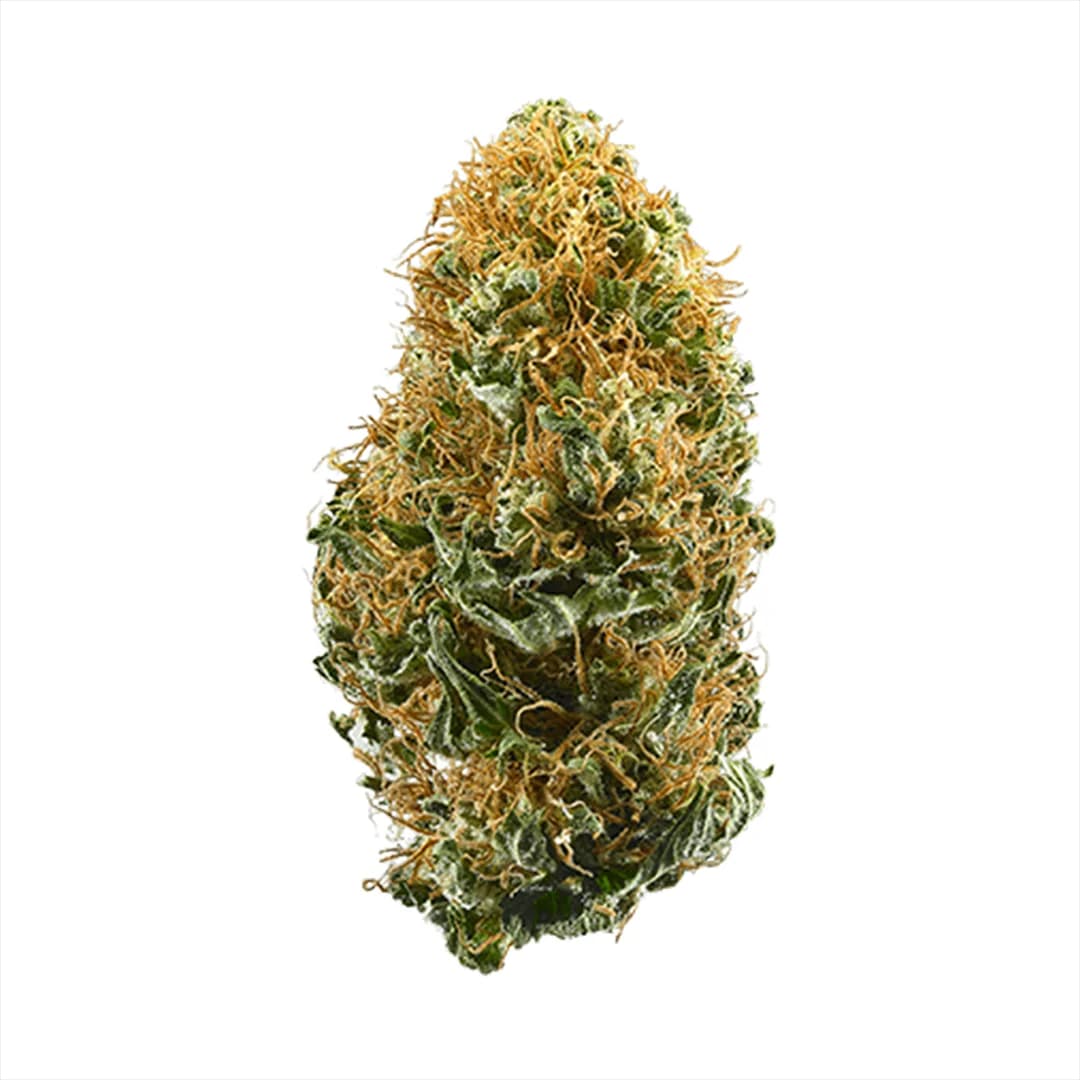
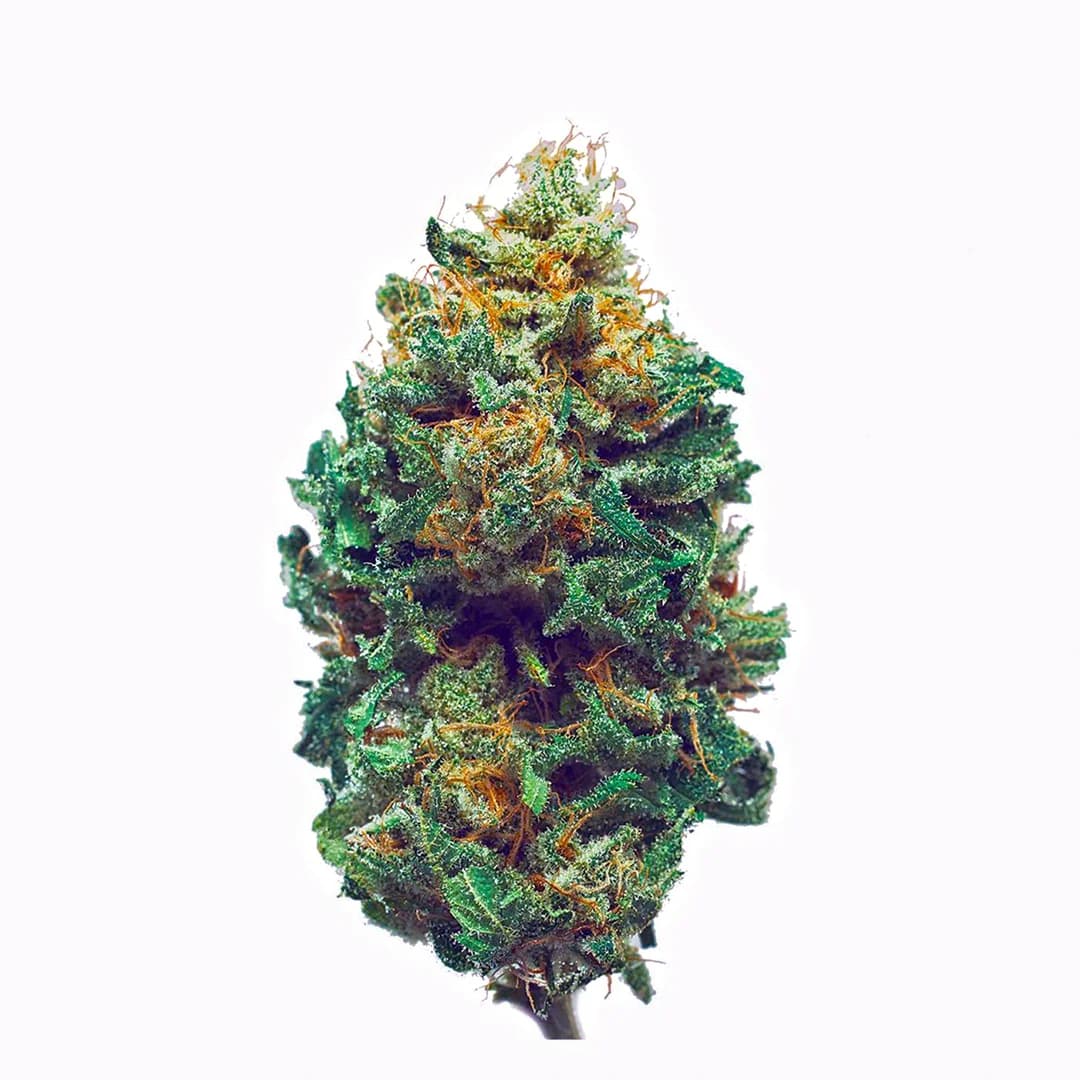
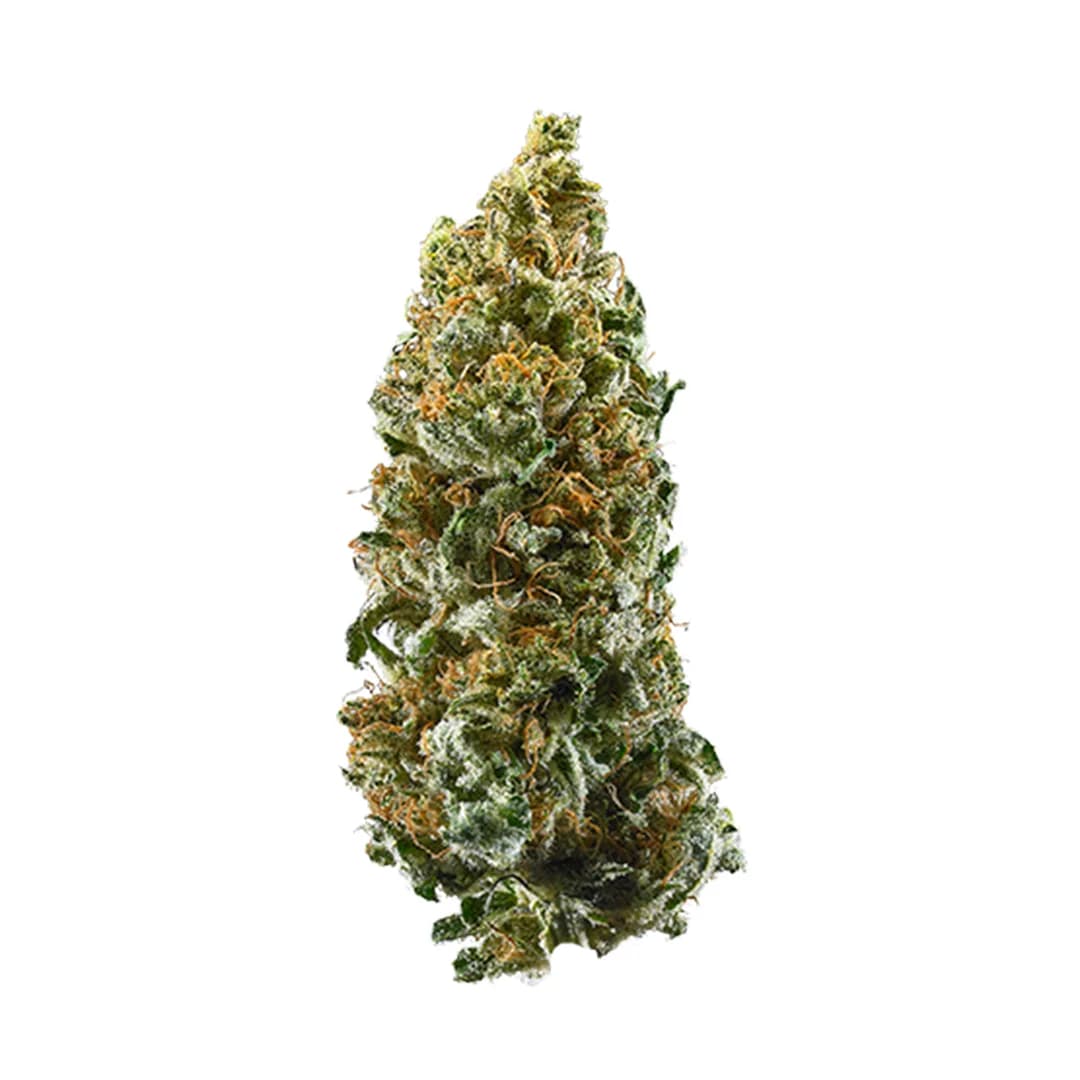
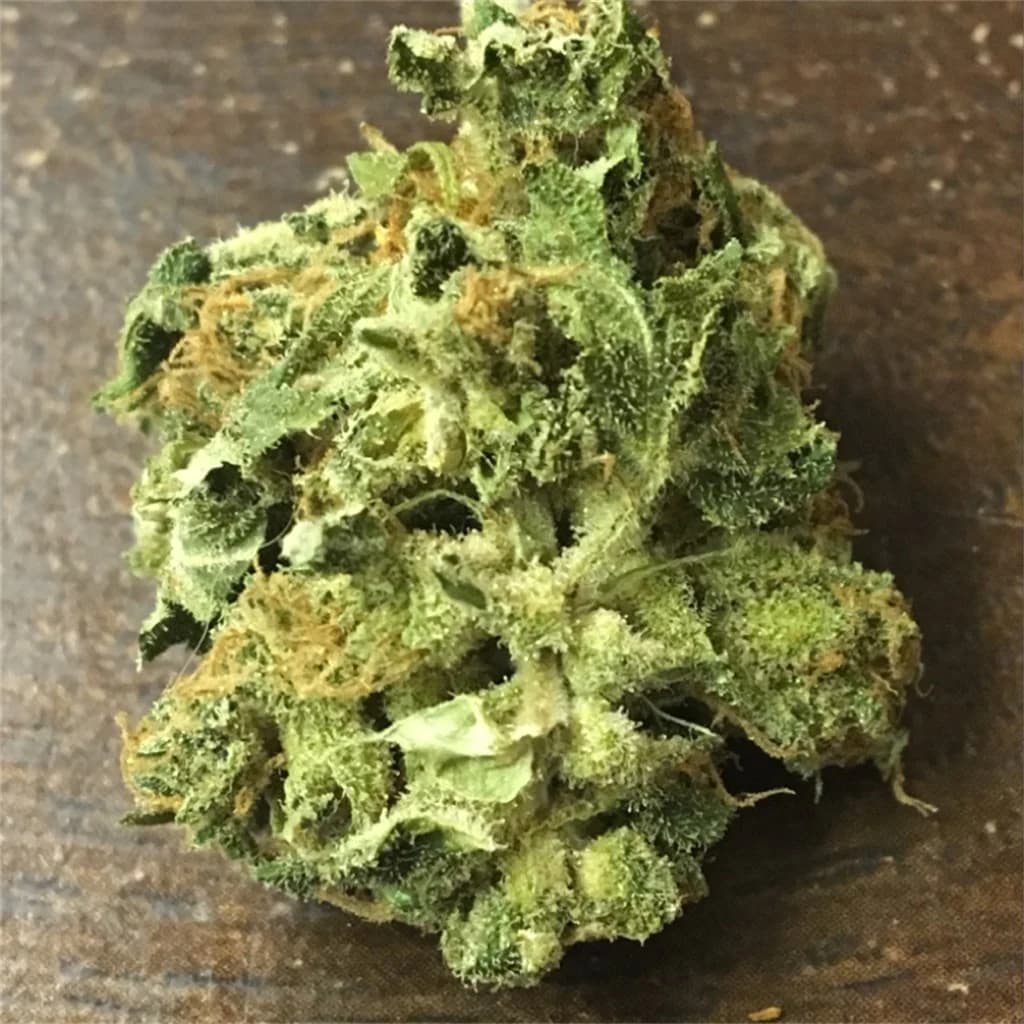
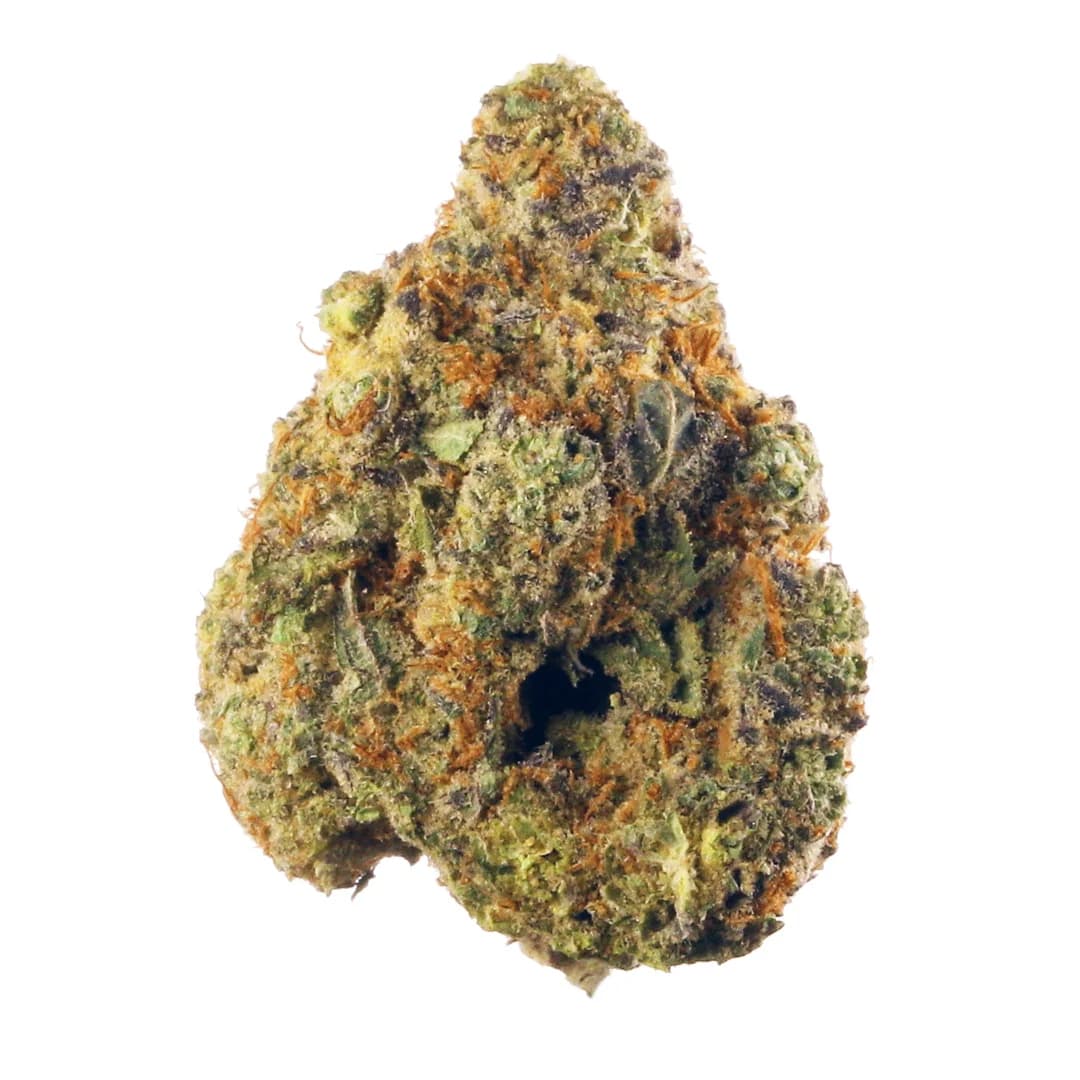
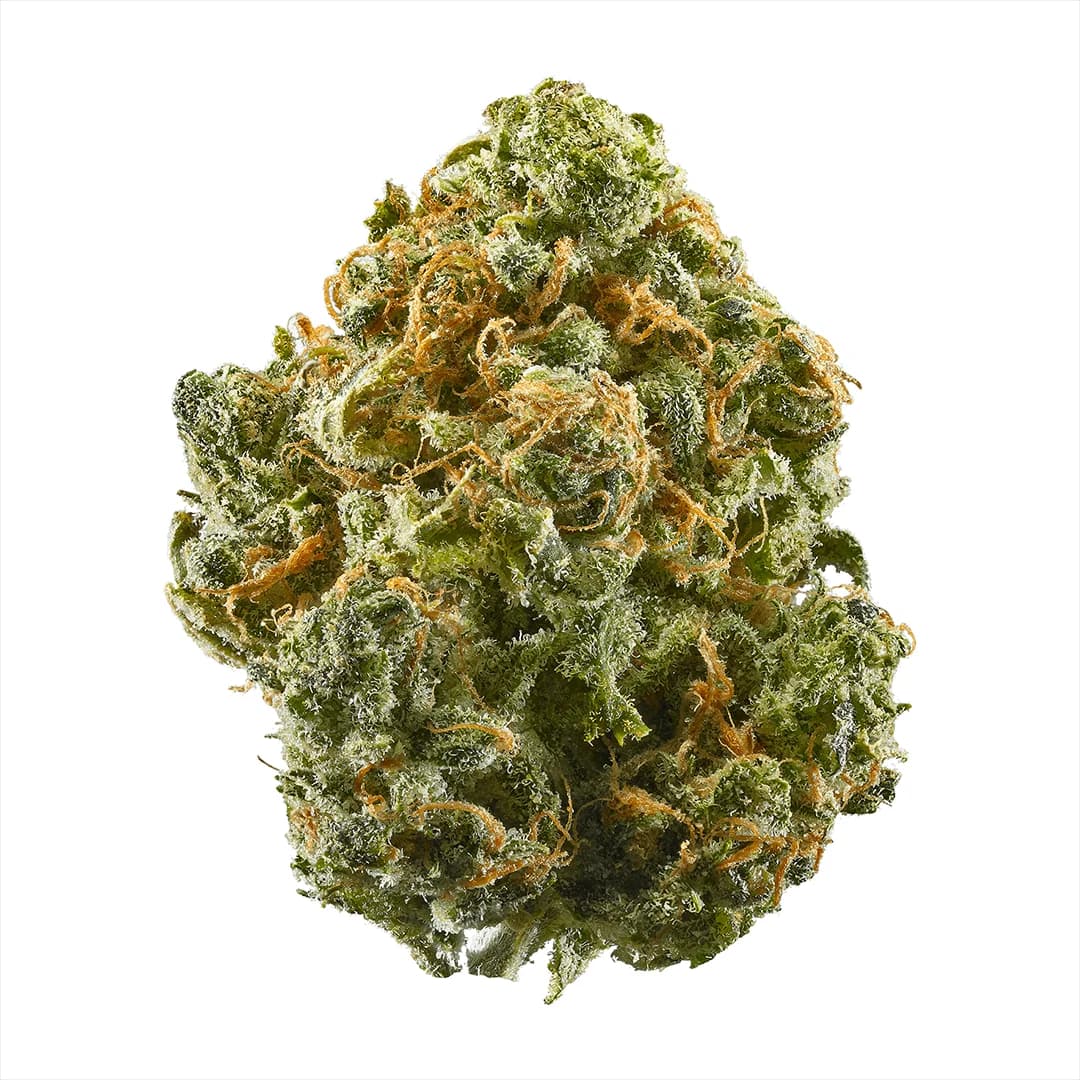
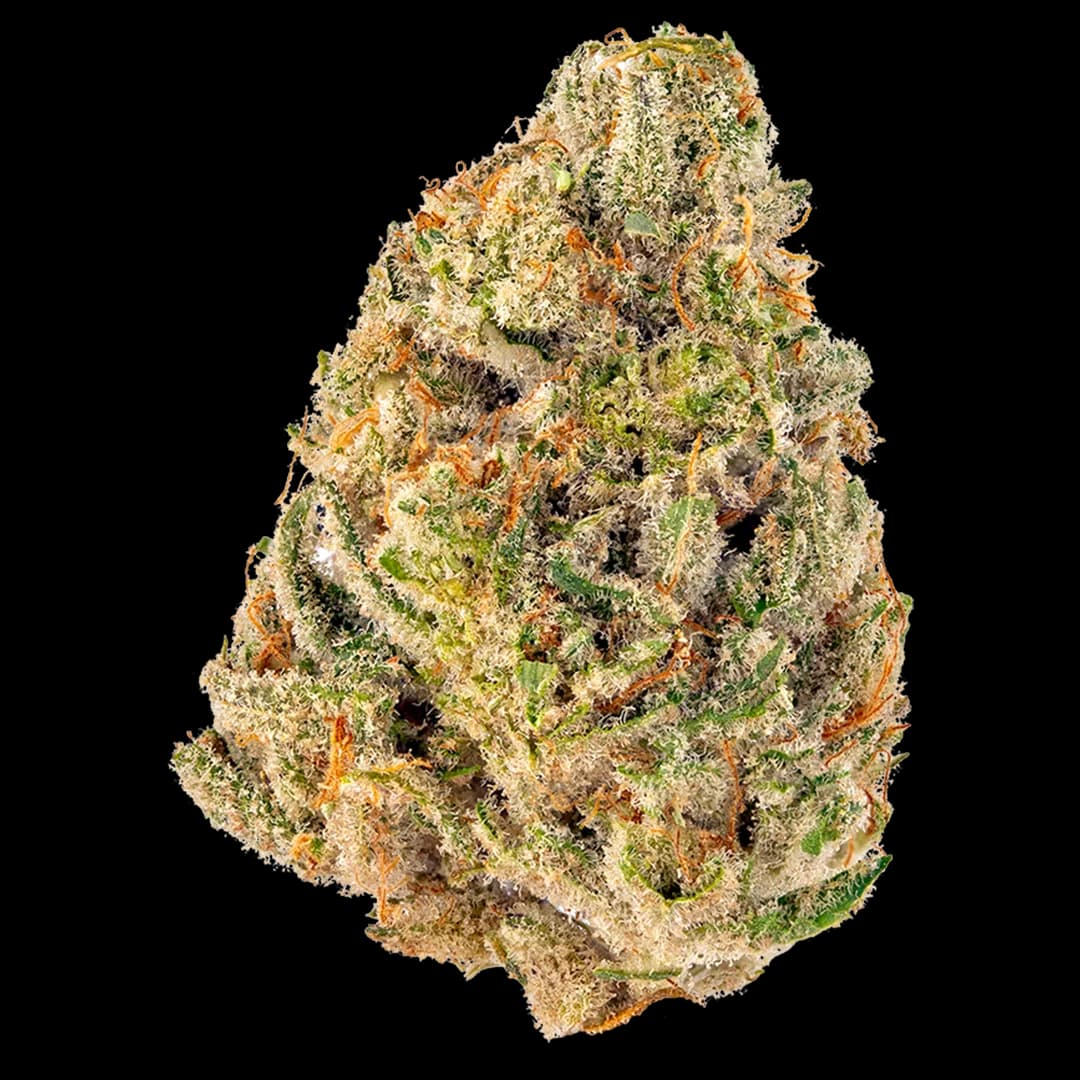
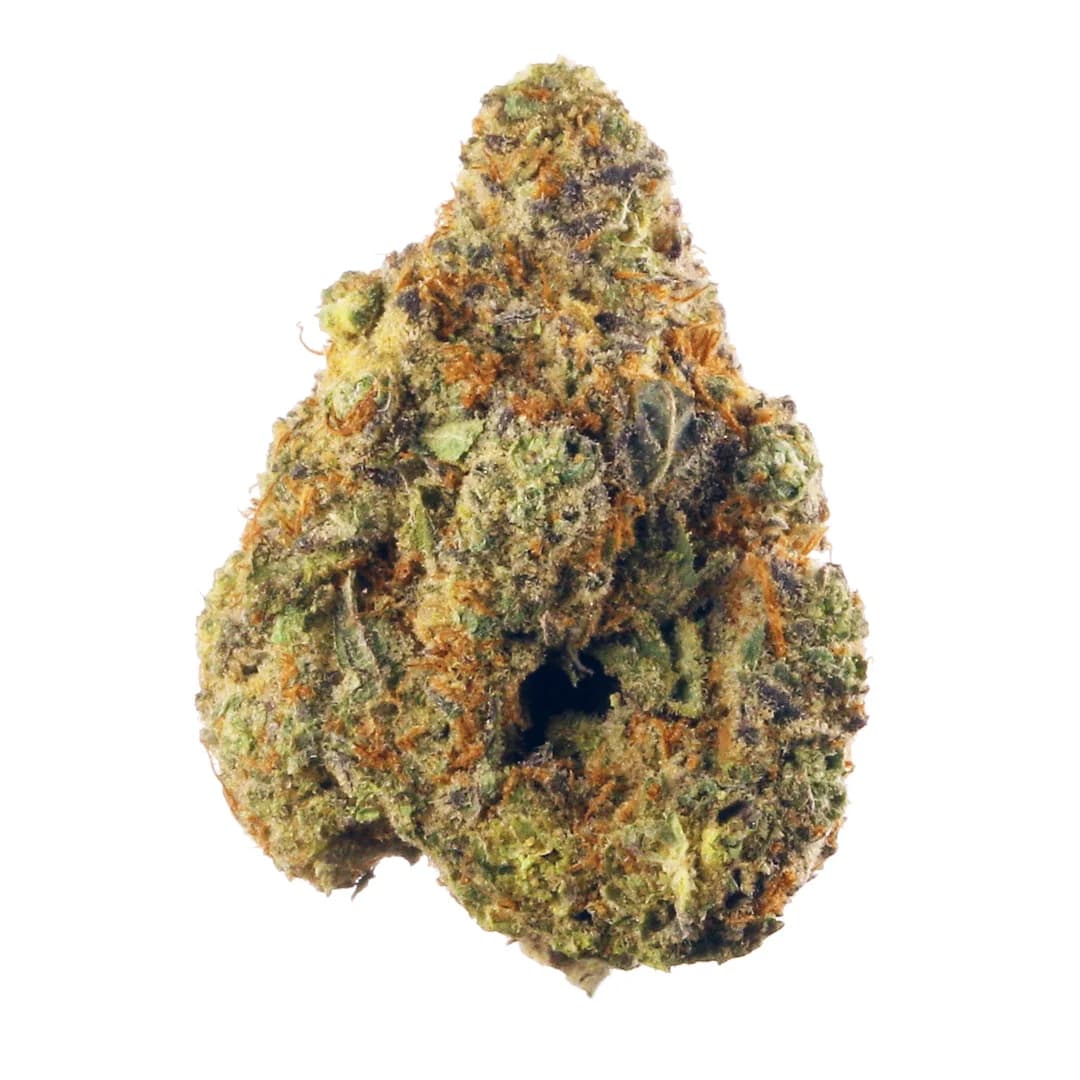
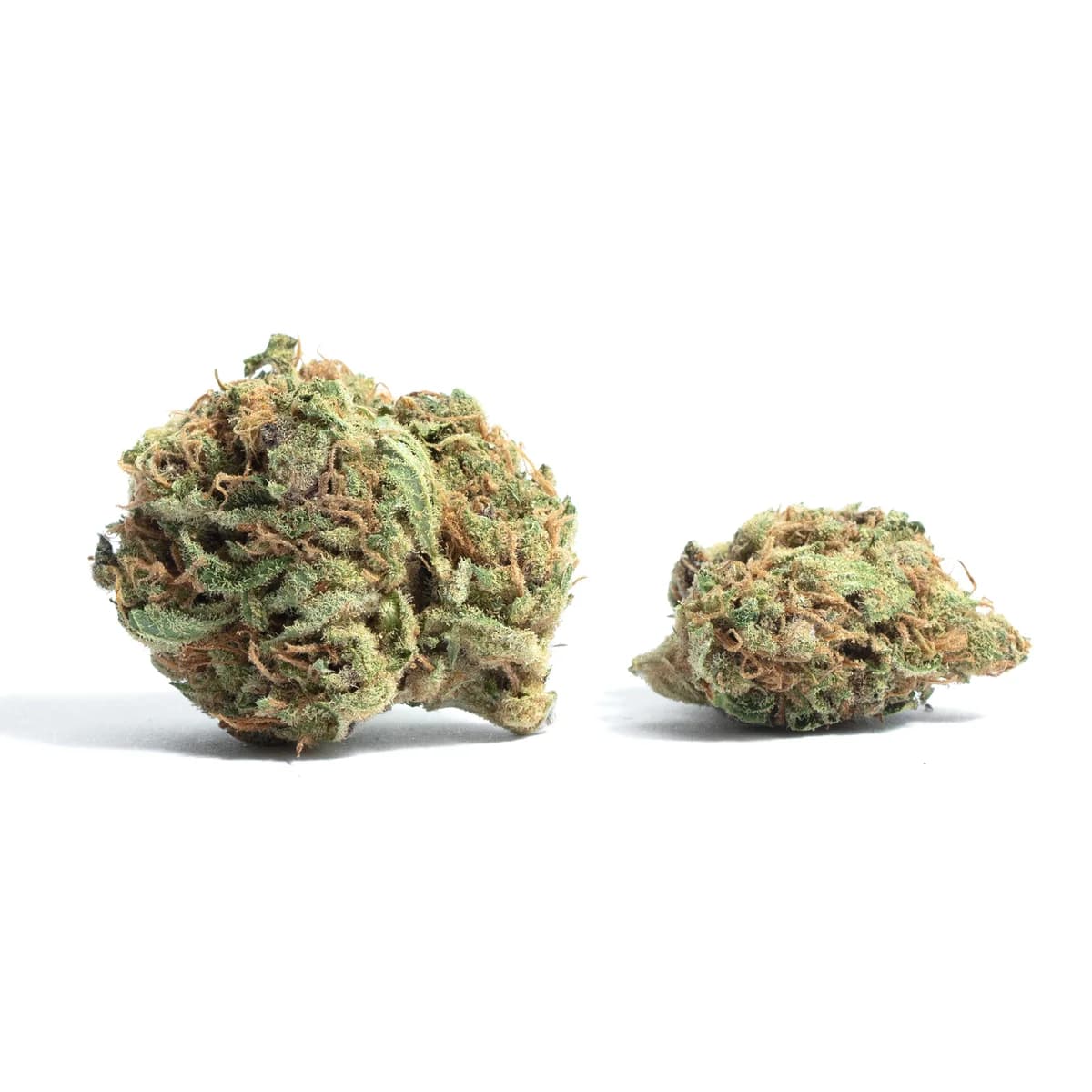
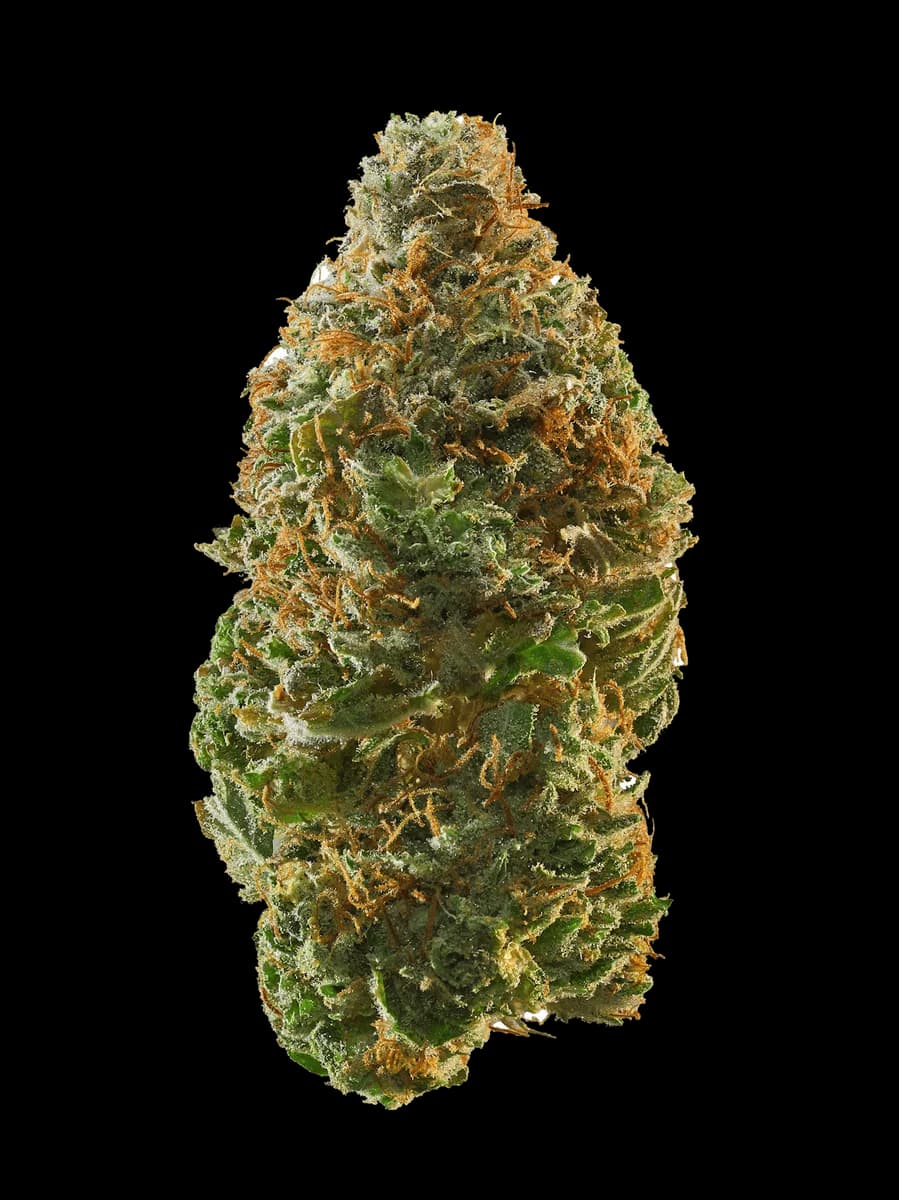
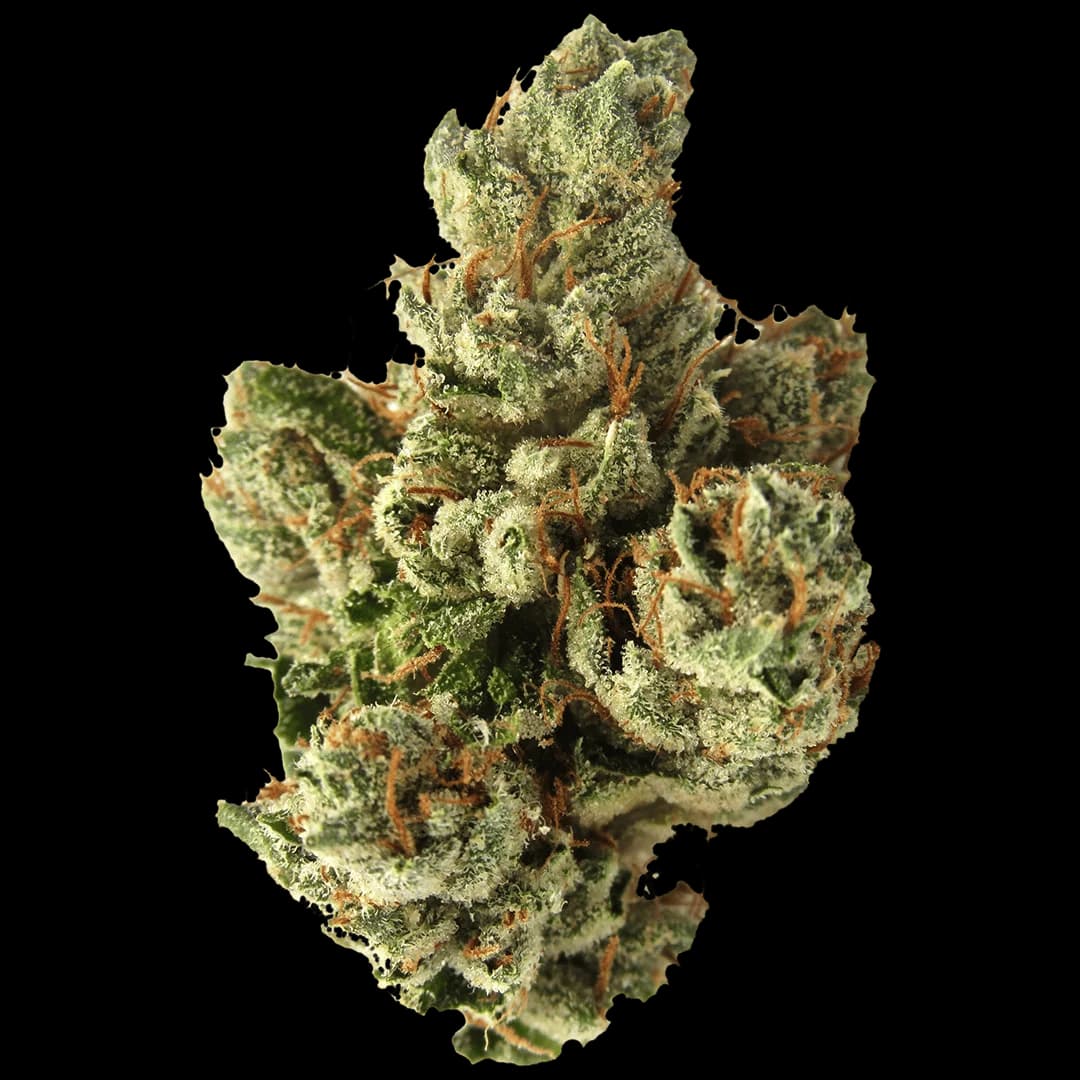
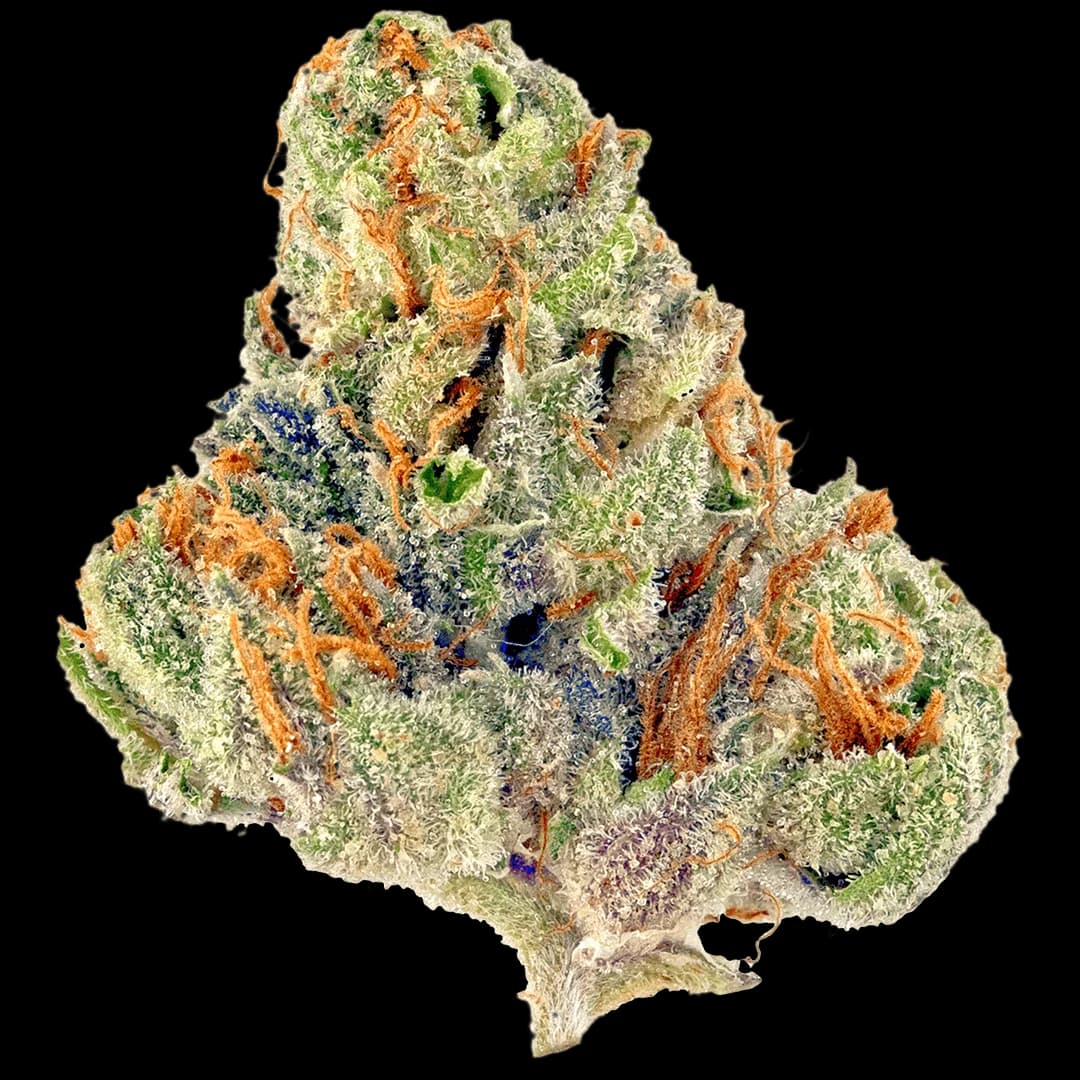
OG Kush is a hybrid name central to several later catalog families, including GSC and Headband. Leafly describes a Florida-to-California history but qualifies the proposed early cross rather than documenting a settled pedigree. Its listed aroma descriptors include wood, pine and earth, while its chemistry section names myrcene, limonene and caryophyllene. The uncertain origin story is retained as an attributed account; a shared OG name does not establish identical ancestry or chemistry.
Trainwreck is associated by Leafly with Northern California and Mexican, Thai and Afghan ancestry. The source offers more than one story for its name rather than a single documented origin. Its summary classifies it as hybrid, while the narrative uses sativa language; these labels should not settle pedigree. Pine, earthy and woody are displayed reader tags, separate from a terpinolene-led catalog profile. The ancestry remains broader than an authenticated pair of immediate parents.
Northern Lights is listed by Leafly as an indica with reported Afghani and Thai ancestry. Its history section treats the Seattle origin story as a rumor and describes later distribution through the Netherlands. That uncertainty is part of the record, not a missing detail to fill by guesswork. Pine, earth and wood appear in its reader flavor tags. Numbered selections such as Northern Lights #5 require their own provenance rather than automatic equivalence with this broader entry.
Jack Herer is named after the author and cannabis activist. Leafly attributes its development to Sensi Seeds and describes a Haze hybrid combined with Northern Lights #5 and Shiva Skunk ancestry. The source acknowledges multiple phenotypes, which matters when interpreting the name as a single record. Its terpinolene-led catalog profile and pine, wood and earth flavor tags describe different evidence types, not a guarantee that every Jack Herer sample shares the same composition.
White Widow is associated in Leafly's account with Dutch breeding in the 1990s and ancestry from Brazil and southern India. These regional descriptions are broader than named, authenticated parent plants. The profile's woody, earthy and floral reader tags sit alongside a myrcene-led catalog terpene listing. They describe the source's record rather than establish a universal sample profile. Historical breeder attribution and the exact ancestral material still need primary documentation.
Harlequin is cataloged as a sativa associated with CBD-rich selections. Leafly links its ancestry to Colombian Gold and Nepali, Thai and Swiss populations; sample chemistry still requires analysis.
Cannatonic is a Resin Seeds cultivar associated with CBD-focused selections. The breeder identifies Reina Madre and NYCD as its cross; this differs from an older lineage still found in some catalogs.
ACDC is described as a CBD-dominant selection from Cannatonic. Its connection is a phenotype selection, so it is shown differently from a cross between two parent cultivars.
Hindu Kush takes its name from the mountain region spanning parts of Afghanistan and Pakistan. This entry documents that regional background and the source's catalog traits without assigning an unsupported parent cross.
Big Bud's reported background combines Afghani, Northern Lights and Skunk #1. Leafly traces its history from the United States to the Netherlands; the three names are recorded as ancestry without inventing a crossing order.
Triangle Kush is associated with Florida, with a name referring to Jacksonville, Miami and Tampa. This catalog records its regional history while leaving the immediate parent identities unresolved.
Afghani is a regional cannabis name associated with Afghanistan and appears in many reported family histories. A regional name can cover varied material, so this profile does not imply one uniform genetic or chemical sample.
Kosher Kush began as a Los Angeles clone-only line and is associated with DNA Genetics. Leafly relates it to OG Kush without documenting a complete two-parent cross.
SFV OG takes its name from California’s San Fernando Valley and is associated with Cali Connection. It belongs to the OG Kush family and differs from the later Afghani-crossed SFV OG Kush.
Tahoe OG is described as a phenotype of OG Kush rather than a separately documented two-parent cross. Tahoe OG Kush is another name for the same catalog profile.